

Jack of all trades and master of none Teezo Touchdown, whose gaudy style has already eclipsed his scant musical output, doesn’t want to be known as simply a rapper. He fancies himself a radical who doesn’t fit neatly into a predetermined categorical box. This is an artist who thought spitting verses over Panic at the Disco’s “I Write Sins Not Tragedies,” one of the most well-known pop-punk songs of the past decade, on 2019’s “100 Drums” was unique in an era where SoundCloud rappers frequently pay homage to such mid-2000s acts.
To be fair, there’s little to no actual rapping on Teezo’s major label debut, How Do You Sleep at Night? He positions himself as a modern-day pop star in the vein of Prince—as a soulful entertainer who can adopt R&B, pop, and rock sensibilities into his musical repertoire at what feels like the drop of a hat. And, to his credit, there are a few occasions throughout the album where he’s able to conjure a magnetic vocal performance in the vein of the Purple One or Rick James—albeit in the most watered-down ways imaginable, such as “Mood Swings,” a stab at retro-funk that’s not all that groovy, swaggering, or even much fun.
Most of the material on How Do You Sleep at Night? is underdeveloped, lacking in either lyrical perspective or much in the way of sonic evolution. Tracks like “Too Easy” and “You Thought,” the latter of which features a fairly thankless guest spot from Janelle Monáe, contain interesting beat switches midway through their respective runtimes but are content to throw a quick musical curveball and little else. Choices like these, as well as the many times that Teezo substitutes lyrics with a corresponding sound effect—a fire alarm replaces the word “beep” at one point—don’t suggest canny creativity so much as superficial decoration.
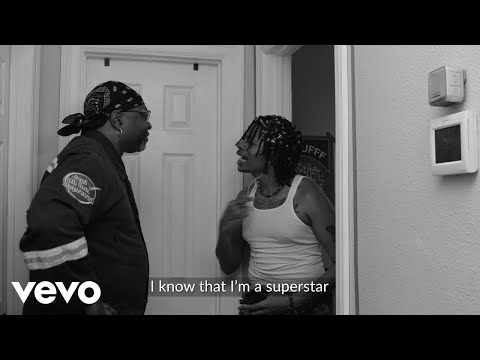
A general lack of specificity mars much of Teezo’s songwriting, where it often feels like he’s simply thinking out loud instead of making a coherent point. On “Impossible,” a wannabe misfit anthem dedicated to those who can’t seem to catch a break, he gives a litany of reasons for why young aspiring artists may be encouraged to give up their dreams but ends on a confused note, suggesting they’re not trying hard enough. Likewise, the relatively stripped-back “Daddy Mama Drama” conveys a palpable sense of familial frustration, but outside of a stray line about generational trauma, it’s so lacking in detail that it doesn’t justify its sought-after catharsis.
The worst offender in this regard is “Uuhh,” where even as Teezo aggressively claims over a series of rapid guitar riffs that he “know[s] what’s on your mind” and that he can “read between the lines” to a shy lover, he proceeds to play coy. Rather than getting straight to the point, he belts the song’s titular expression every time he’s about to divulge a potentially explicit carnal desire. Considering how Teezo is aiming to be this generation’s Super Freak, it further exposes how cursorily he understands his own reference points.
The few tolerable moments across How Do You Sleep at Night? come from either outside voices, including a minute-long verse from Fousheé on “Sweet” that outclasses the bulk of Tezzo’s trite observations, or whenever Teezo is shamelessly copying from others, as he does on “Mood Swings” and the Steve Lacey-lite “Familiarity.” But as Teezo himself puts it on the closing track of the same name, “the original is better.” For as much as Touchdown wishes to present himself as a game-changing talent, his music continues to tell a much more pedestrian story.
Since 2001, we've brought you uncompromising, candid takes on the world of film, music, television, video games, theater, and more. Independently owned and operated publications like Slant have been hit hard in recent years, but we’re committed to keeping our content free and accessible—meaning no paywalls or fees.
If you like what we do, please consider subscribing to our Patreon or making a donation.


This review will be re-done in 5-10 years and be 4.5-5 stars. And it will be embarrassing for this reviewer, who clearly doesn’t have the perspective to understand what Teezo did with this album, nor can he see the future where this inevitably shifts pop music and we begin seeing more and more Teezo-alikes. This is going to be influential on the level of 808s & Heartbreak for modern popular music. You’re extremely far off on this one. It’s good that reviews are not an objective measure of quality!
I totally agree with Levi’s comment! I’m an artist myself and can’t believe how many critics are blinded by optics and miss the pure quality of Teezo touchdowns album. This project is the best I’ve heard all year!