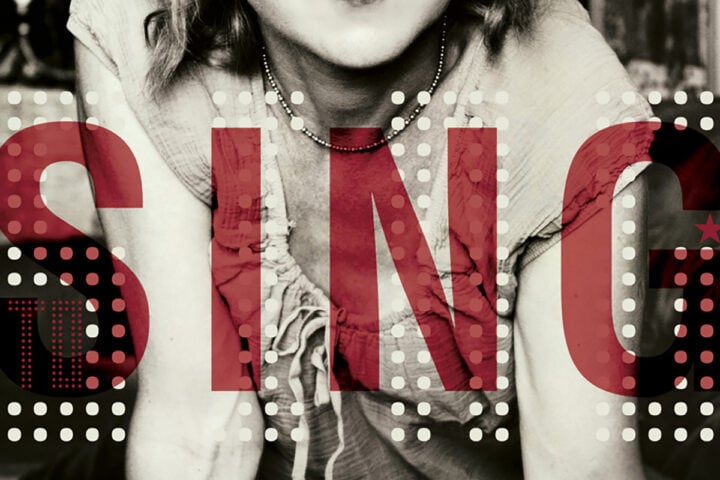
With her spare, acoustic-driven solo work, Kristin Hersh sought to distinguish herself from the harder, post-punk sound of the singer-songwriter’s band Throwing Muses. A dozen albums in, she’s successfully carved out her own lane, maintaining a touch of the Muses’s jaggedness while largely eschewing electric instrumentation. While her latest album, Clear Pond Road, isn’t as radically stripped down as her earliest solo efforts, it’s still a departure from 2018’s more rock-oriented Possible Dust Clouds.
Clear Pond Road draws from a wide range of influences: The album’s cello arrangements take a page from the psychedelic pop of Love and the Beatles, while “Palmetto” is infused with the Delta blues in the vein of Son House. In the end, though, Hersh’s acoustic guitar is the album’s driving force, while at the same time avoiding the obvious tropes of roots music.
The album’s production embraces the inherently rough edges of Hersh’s songs, with her guitar allowed to cross into distortion, as on “St. Valentines Day Massacre.” In the absence of a full drum kit, with just the occasional bells and tambourine as accompaniment, guitar functions like percussion here, letting Hersh’s voice direct the melody of her songs.

Nearly 40 years since Throwing Muses made their debut, that voice hasn’t lost any of its power to startle. Hersh stretched it to its limit, a la Sioxusie and the Banshees, on the band’s early records, but even at her most abrasive, her range was impressive. With age, Hersh’s voice has deepened—though it’s processed to frayed fuzz on the second verse of the standout “Ms Haha.”
As is often the case, Hersh’s songs feel intensely personal but opaque. Indeed, the lyrics on Clear Pond Road read like diary entries turned inside out, filled with hazy recollections of people and places, especially earlier relationships. “Dandelion” suggests a look back at a relationship with a lover with a drinking problem, but that’s only one possible interpretation.
Throughout Clear Pond Road, Hersh evokes moods in lieu of telling linear stories, but those stories feel vivid and alive with details: “The Mickey D’s arches free-falling over I-5,” she sings on “Thank You, Corner Blight,” which lays out a vision of an unhappy life in Los Angeles. Field recordings, like a birdsong on “Dandelion,” add to the album’s wistful tone.
Hersh published an autobiography, Rat Girl: A Memoir, in 2010, and Clear Pond Road similarly looks back on her extraordinary life. But it does so in a far less straightforward manner, conveying narrative through mood and imagery rather than traditional storytelling. Like Hersh herself, the album resists convention and refuses to be pinned down.
Since 2001, we've brought you uncompromising, candid takes on the world of film, music, television, video games, theater, and more. Independently owned and operated publications like Slant have been hit hard in recent years, but we’re committed to keeping our content free and accessible—meaning no paywalls or fees.
If you like what we do, please consider subscribing to our Patreon or making a donation.