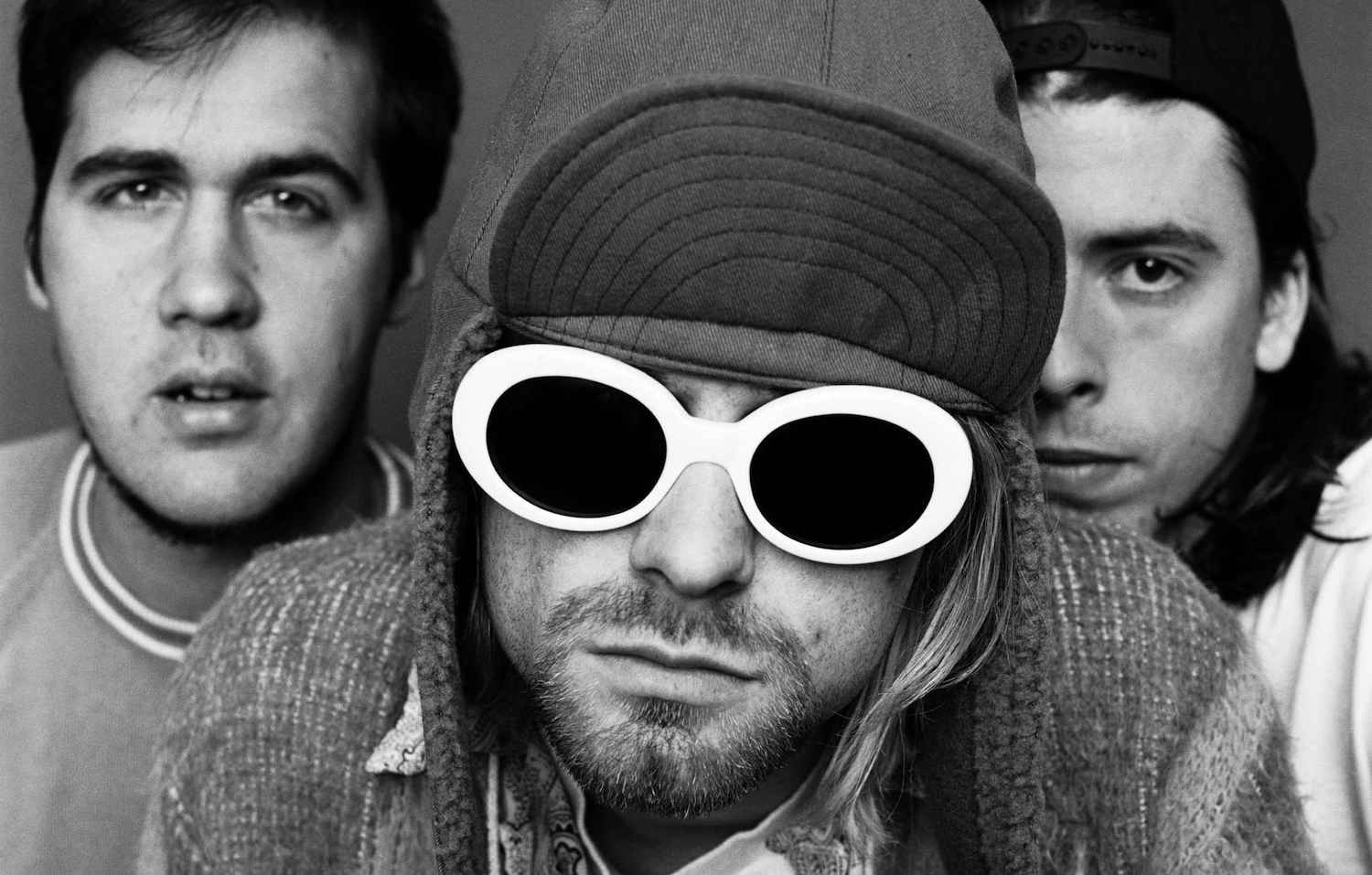
Aside from the frequency with which contemporaneous news footage reporting on Kurt Cobain’s death in 1994 still pops up in documentaries about the era, In Utero’s place in both the Nirvana and rock canon might be the clearest expression of how much the singer’s death still reverberates today. But the popular interpretations of the album as a quasi-suicide note not only miss its emotional breadth and sly humor—regularly understated when discussing Cobain as a lyricist—but also what it represented 30 years ago: With In Utero, Nirvana showed that something akin to “success on your own terms” was indeed possible.
Even being the biggest band on the planet in 1993 didn’t insulate Nirvana from having to put up with rumors about squabbling between the group and Geffen Records over whether the album was unlistenable. Despite claims from producer Steve Albini, both the band and David Geffen publicly denied that there was any interference from the label. Still, the fact that In Utero came out at all feels like a glitch in the matrix.
The dissonant, diagonal opening chord of the album’s opening track, “Serve the Servants,” comes as the first of many gestures toward Cobain and company’s stubborn refusal to play the radio-rock game, while the drowsy, Beatles-by-way-of-Wipers arpeggio on the song’s verses serves as a reminder of why the band got subsumed by it in the first place. Conversely, “Scentless Apprentice” follows with drummer Dave Grohl’s thunderous intro, a screechy guitar riff, and Krist Novoselic’s tossed-off bassline, creating a primal scream of grisly sludge rock. “Get away!” Cobain screams on the ear-splitting chorus.
It’s a seesawing act that repeats throughout In Utero: For every infectious, sing-along chorus (“Heart-Shaped Box,” “Pennyroyal Tea”), there’s a scuzzy noise bomb to balance it out (“Milk It,” “Tourette’s”). This is the sound of a band wrestling with its disparate artistic impulses—a knack for sugary melodies brushing up against a desire for noise-rock abrasiveness—and underground roots. In one of the album’s most frequently quoted lines—“Teenage angst has paid off well/Now I’m bored and old” on “Serve the Servants”—Cobain lays bare the complex interplay between authenticity and commodification that Nirvana’s music represented, safety-pinning a dejected “oh no” to the fatalistic titular mantra.
It didn’t take long for the alt-rock gold rush that followed Nirvana’s 1991 breakthrough, Nevermind, to give rise to all manner of corporate-flavored copycats. In Utero, as well as the controversy surrounding its recording and initial reception, illustrated just how complicated rock had become by the mid ’90s. Cobain reacted to his own disillusionment with bratty sarcasm and impish subversion: A barrage of feedback and choppy rhythms marks “Radio Friendly Unit Shifter,” while the album’s most straightforward grunge song is given the not-so-radio-friendly title of “Francis Farmer Will Have Her Revenge on Seattle.”
Despite debuting at number one on the Billboard charts, In Utero would eventually be outsold by Pearl Jam’s Vs., released just two weeks later. Though lumped into the alt-rock bucket, that album comprised what could best be described as melodic hard rock. Thirty years later, “alternative” describes a vague aesthetic that everyone from artsy losers to coked-up investment bankers can cloak themselves in.
Fittingly, Nirvana has been fully integrated into a larger corporate strategy. Case in point: Geffen’s various 30th anniversary reissues of In Utero arrive, just a decade after the album’s previous anniversary treatment, filled to the brim. The Super Deluxe edition comes with eight LPs, a removable front cover panel, and assorted posters, fliers, and ticket stubs.
While the 20th anniversary reissue certainly succeeded at illuminating a different dimension of the classic album with its new mix, nothing here is particularly essential. The 53 “unreleased tracks” are live cuts from a 1993 show in Los Angeles and the final show Nirvana played in Seattle in 1994. At the very least, these cuts prove how deftly the band fused arena rock with Flipper-esque punk chaos (the idea of a platinum-selling group doing an extended “feedback jam” on stage seems ludicrous these days).
There’s a certain irony to the fact that Nirvana’s ostensible return to no-frills musicality has been fussed over for three decades now. The Super Deluxe edition’s steep price tag makes clear that, post-Cobain, Nirvana is more of a commodity than ever. Luckily, In Utero’s rip-roaring songs remain every bit as angry, smart, and infectious as they were three decades ago.
Since 2001, we've brought you uncompromising, candid takes on the world of film, music, television, video games, theater, and more. Independently owned and operated publications like Slant have been hit hard in recent years, but we’re committed to keeping our content free and accessible—meaning no paywalls or fees.
If you like what we do, please consider subscribing to our Patreon or making a donation.