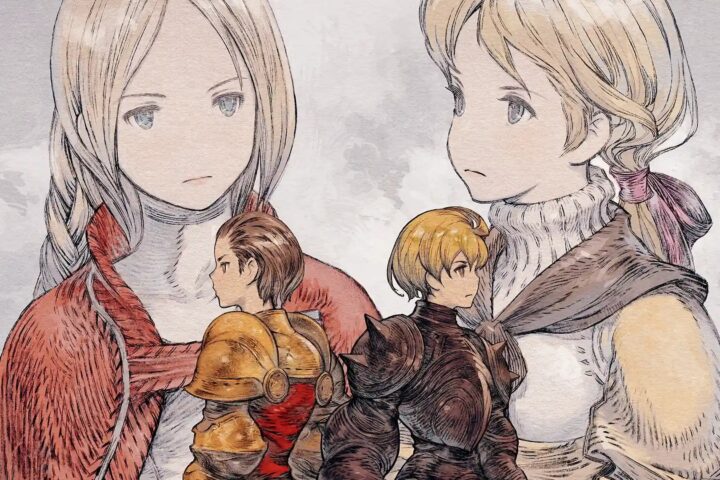
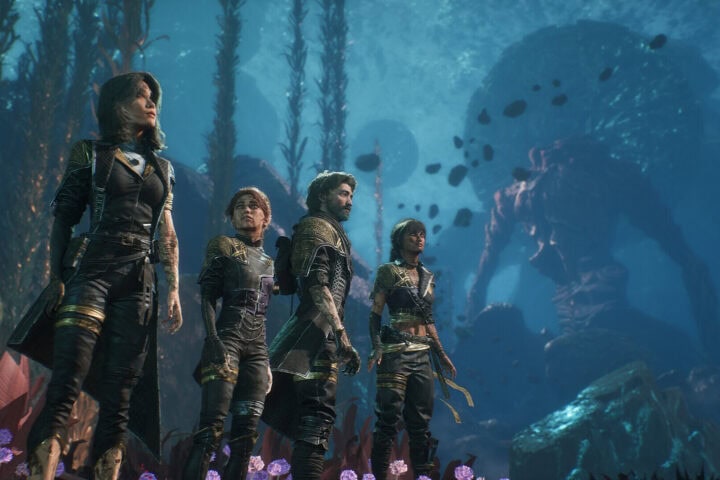
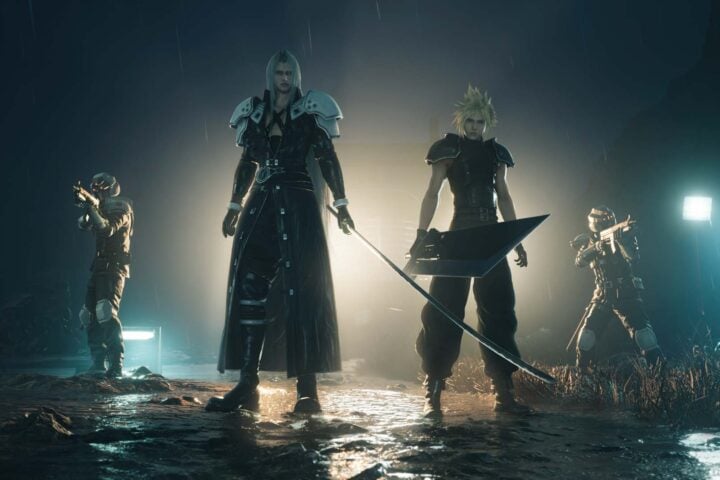
Think of Theatrhythm: Final Bar Line, a love letter to the music of the Final Fantasy series, as the Super Smash Bros. of rhythm games. By progressing through the main Series Quest mode, players can unlock over a hundred popular heroes (and villains), from Mystic Quest’s Benjamin and Crystal Chronicles’s Ciaran all the way up to Final Fantasy XV’s four Warriors of Light. These characters can then be leveled up and taken into battles where their damage dealt (and received) is largely determined by how well players match the beats of nearly 400 songs, tapping or holding buttons or swiping the analog sticks in specific directions.
The game’s controls are smooth as a whistle, which makes the experience consistently enjoyable, but Final Bar Line contains almost twice the amount of musical content as its 2014 3DS predecessor, Curtain Call, and it somewhat staggers under the weight of how that content is organized. You can argue that this is apt, given that Chaos has been the big bad of every Theatrhythm game to date, though you wouldn’t know that from playing Final Bar Line.
All your favorite characters are just here fighting for Rhythmia points, which makes the abrupt appearance of a final boss and end credits more than a little surprising. Final Bar Line is a musical museum, but it’s a self-guided one that could, especially for those who aren’t connoisseurs of Final Fantasy soundtracks, benefit from a bit of curation.
Take, for instance, the presentation of the Series Quest mode, which just drops roughly 30 titles on the screen for you to scroll between. But their ordering is essentially arbitrary, and it’s hard to celebrate the series’s three-decade history when a non-canon title like the 25-minute anime Last Order gets recognition here but full-length spin-offs like Dirge of Cerberus are ignored. Your favorite songs are probably part of this collection, but unless they’re from a mainline numbered entry, you may have to do some digging through ambiguously titled catch-all buckets like “Final Fantasy Series” to find the right needle-drops in the haystack.
That said, even if Intergrade’s “The Runaround” is missing, pretty much every song in this game’s massive jukebox is stellar. That’s by and large why Final Bar Line’s best (and most honest) mode is its unlockable Endless World, which literally has no end goal, and where the songs are randomly selected. This allows the focus to remain entirely on the music rather than any of the light RPG flourishes, and leaves it to players to stumble upon and make their own connections between, say, the choral arrangement of FF-Type 0’s “Tempus Finis” to the balladic refrain of FFIX’s “Melodies of Life” all the way to the bouncy jaunt of FFVIII’s “Shuffle or Boogie.” (The game’s maximalist approach also means that you can play through interpretive deep cuts like the Siena Wind Orchestra’s brassy performance of FFV’s “Mambo de Chocobo” right alongside popular classics like FFVII’s “One Winged Angel.”)
At worst, Final Bar Line is a missed opportunity to elevate the Theatrhythm series. Persona 4: Dancing All Night used its music to present another compelling case for its Investigation Team. Beatles: Rock Band used its level design to showcase how the Beatles’s musical sensibilities evolved. Final Bar Line just throws everything at the wall, putting the music and characters from mobile-only titles like Record Keeper and Mobius on equal footing with mainline entries.
Without an overarching narrative to anchor the individual quests, the RPG-lite functionality comes across as a pointless grind. Yes, you’ll last longer on a difficult track if your characters are at a higher level or have healing spells, and, yes, you can gather CollectaCard artwork for fulfilling objectives like killing a foe with Ice magic or quickly dispatching a boss with physical damage, but this does nothing to celebrate Final Fantasy’s music.
Thankfully, these systems can largely be ignored at your discretion. There’s even a Music Player (and an Auto mode) for those who just want to listen to the songs instead of tapping along to them. The game doesn’t do anything to demonstrate a sense of history or growth between its 385 songs, but it doesn’t need to. No matter how much Final Bar Line may flatten its inspirations down to a single two-dimensional chibi art style, the music sings for itself.
This game was reviewed with code provided by fortyseven communications.
Since 2001, we've brought you uncompromising, candid takes on the world of film, music, television, video games, theater, and more. Independently owned and operated publications like Slant have been hit hard in recent years, but we’re committed to keeping our content free and accessible—meaning no paywalls or fees.
If you like what we do, please consider subscribing to our Patreon or making a donation.