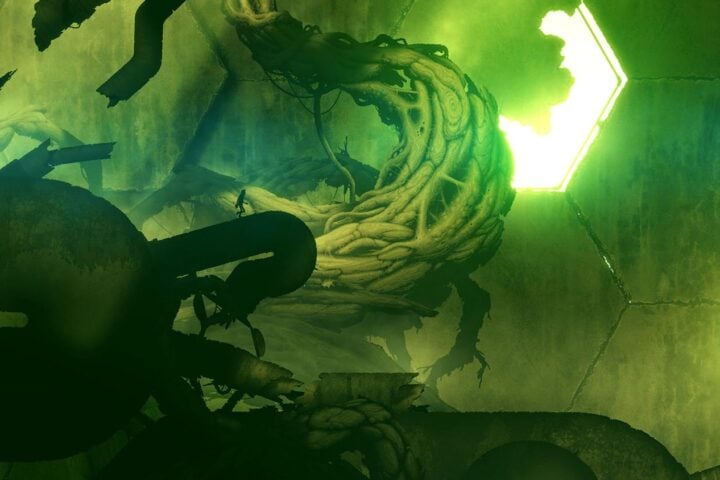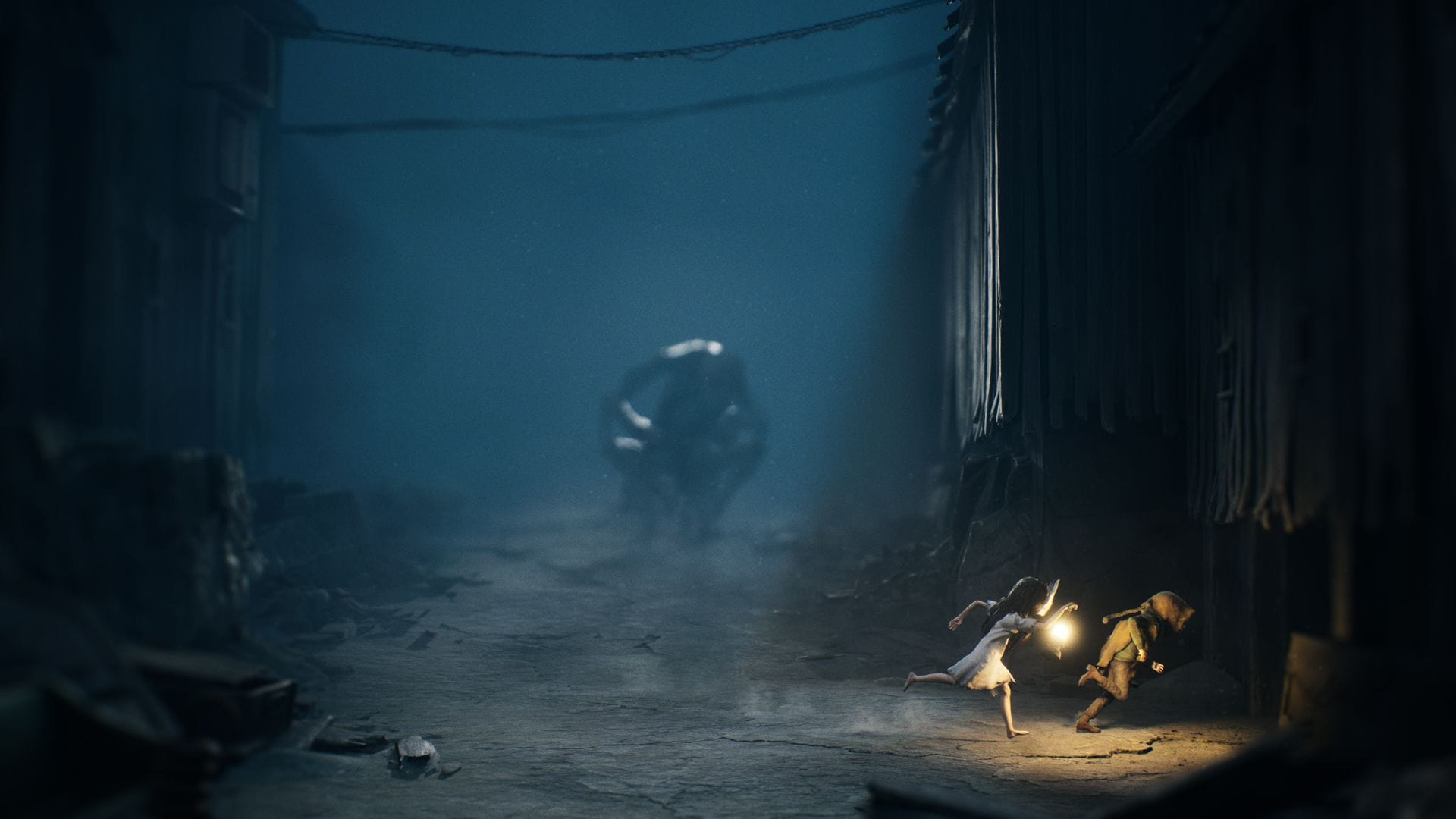
Let it never be said that Tarsier Studios doesn’t know a winning formula. Reanimal doesn’t even attempt to hide the fact that it’s another Little Nightmares game going by another name. Virtually everything that entails is present here, including masked children fleeing from monstrous adults through a series of increasingly spooky environments.
The game does everything it says on the tin, not much more or less. It does ratchet up the surreality quite a bit into more blatantly hostile and violent territory. (Imagine if the Goya painting of the god Saturn eating his son came to life but took place in a post-apocalyptic seaside town, and you have an idea of what Reanimal is like.) Blood flows freely, there are scripted moments of Boschian chaos that are at least memorably unnerving, especially in the second half, and, yes, the game isn’t above visiting all these terrors violently on its child protagonists.
There’s also the added wrinkle of Reanimal being fully explorable 3D rather than a side-scrolling puzzle platformer, but mechanically, the game doesn’t do much with that added dimension. Like Little Nightmares, Reanimal is still an extremely rudimentary co-op puzzle game that mostly winds up being a test of the player’s sense of observation than ingenuity.
As long as you can spot which tiny object in the environment is interactive, one can do pretty well for some time. That functions just fine for a casual experience, but combined with the greater focus on graphic body horror and abject cruelty, the relative ease of the game means that its abominations feel less like a threat and more like ungodly sights in a haunted hayride.
There are still thrills to be mined out of such an experience, to be fair. This is the perfect game for someone who’d be easily frustrated by the far more kinetic and challenging It Takes Two or Split Fiction. One can even imagine it as a sort of bridge game for kids getting their first horror fix from Little Nightmares before graduating to a Resident Evil. It’s just that Reanimal is also likely to teach those same kids about the perils of a horror franchise becoming too predictable.
Since 2001, we've brought you uncompromising, candid takes on the world of film, music, television, video games, theater, and more. Independently owned and operated publications like Slant have been hit hard in recent years, but we’re committed to keeping our content free and accessible—meaning no paywalls or fees.
If you like what we do, please consider subscribing to our Patreon or making a donation.