Given enough time, the horror genre subsumes all the trappings of childhood. It has long since claimed dolls, clowns, and Chuck E. Cheese animatronics as its own. Now, in brother developers John and Evan Szymanski’s first-person survival horror game My Friendly Neighborhood, the genre comes for Muppets in tongue-in-cheek fashion.
As a repairman named, natch, Gordon, you arrive at a TV studio that was once the headquarters of the titular Saturday-morning puppet show. The antenna on top of the abandoned studio has mysteriously begun to broadcast reruns, and it’s up to Gordon to disable the device. What he finds, though, is a place that’s far from empty. At the front desk, a sock puppet moves and speaks to him of its own accord, and in the rest of the studio, he encounters the canceled TV program’s colorful cast of much larger puppets who all chase him down on sight.
To say that the puppets attack Gordon isn’t accurate per se, as they seem sincere about their claims that they want to be his friend. But all of them are clearly out of their minds, to the point that their aggressive affections will damage and eventually kill you. They loiter everywhere across MFN’s stages and back rooms, babbling lines as though they’re on TV, and their skewed lessons are often as strange as they are overtly disturbing. One moment they’ll be encouraging kids to swallow their fists or turn a friend into mushy piles of arts-and-crafts material, but the next they’ll go on about the virtues of brushing your teeth with mayonnaise.
The game’s sense of horror is largely restrained, given the absence of the gory scenes one might expect from a premise seemingly primed for easy shock value. Instead, My Friendly Neighborhood derives its tension from the sheer constancy and repetition of noise. For one, the monologues that the puppets perform to no one are quite lengthy and delivered in squawking voices, creating a bit of sensory overload especially when several are chattering at once.
Progression through the game’s environments is more or less standard issue for the survival horror genre. Gordon, who first wields a wrench and then firearms that shoot giant letters, travels from room to room, revealing elaborate puzzles and doors locked by themed keys. Though the puzzles are clever enough and the combat is serviceable, the copious backtracking can grow tedious, particularly since it forms the backbone of My Friendly Neighborhood’s resource management. There are limited quantities of healing items, ammunition, and other helpful tools, with the game even requiring you to spend currency in order to save.
But nothing is particularly scarce on the game’s default difficulty setting. In fact, your only truly tough decision will be whether you want to spend time fighting the puppets all over again on any return visits to a room after you’ve exited it, since they get right back up as soon as you do so. The only way to incapacitate them for good is to expend your limited quantities of duct tape to tie them up, but because the drain on your resources isn’t of much consequence, you’re essentially plotting routes and planning who to tie up in order to minimize any annoyance. And all that busywork saps a lot of the intended tension from the gaming experience.
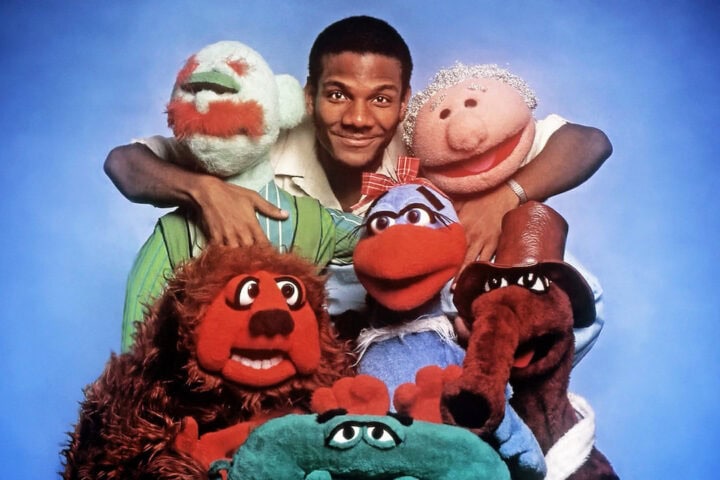
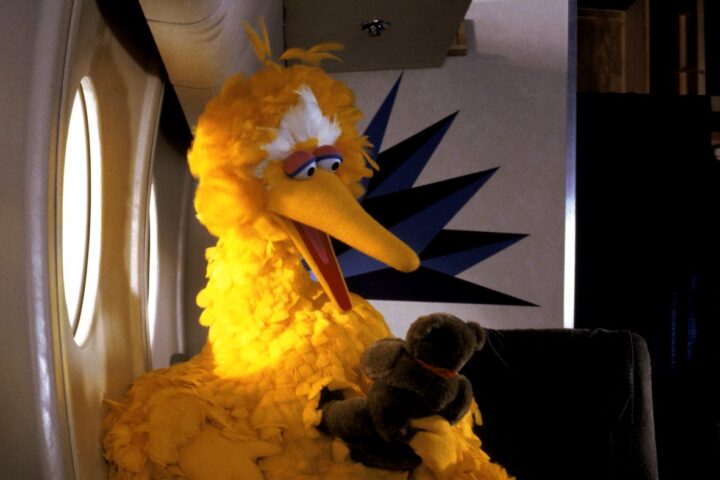
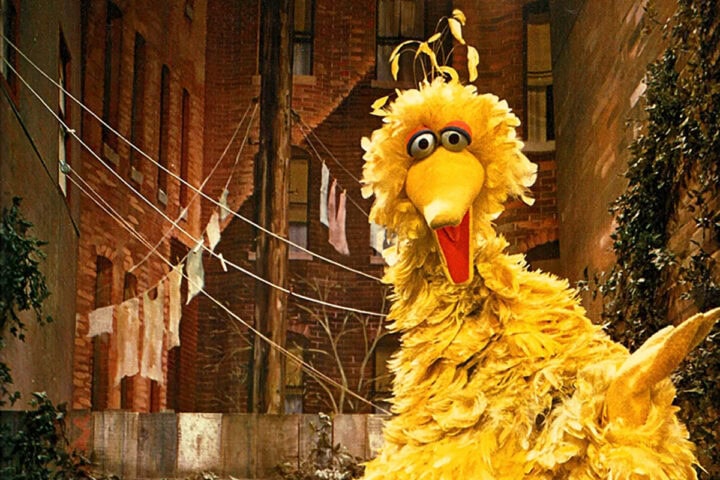
But even if My Friendly Neighborhood isn’t all that scary or all that tense, its approach to horror and, especially, its sense of place is distinctive and truly exceptional. The puppets are all fabulously convincing, varied and animated as they make their way toward you while babbling in voices meant to evoke iconic Sesame Street Muppets like Bert, Ernie, and Elmo. It could have easily been one-note, but My Friendly Neighborhood follows Gordon through a surprising array of environments while adding new characters into the mix like a round hungry monster, a grouchy critter that dwells in sewer pipes, and, yes, a bird that is quite big.
As for the MFN offices, they’re full of detailed memorabilia like posters, props, and episode scripts, to the point where simply taking it all in is perhaps the game’s main appeal. There’s a tangible love and care that has gone into making the game’s equivalent of Sesame Street studios feel plausible, as well as a clear delight in warping our memory of a show that opened up a world of imagination for generations of children into something darker.
This game was reviewed with code provided by ÜberStrategist, Inc.
Since 2001, we've brought you uncompromising, candid takes on the world of film, music, television, video games, theater, and more. Independently owned and operated publications like Slant have been hit hard in recent years, but we’re committed to keeping our content free and accessible—meaning no paywalls or fees.
If you like what we do, please consider subscribing to our Patreon or making a donation.