
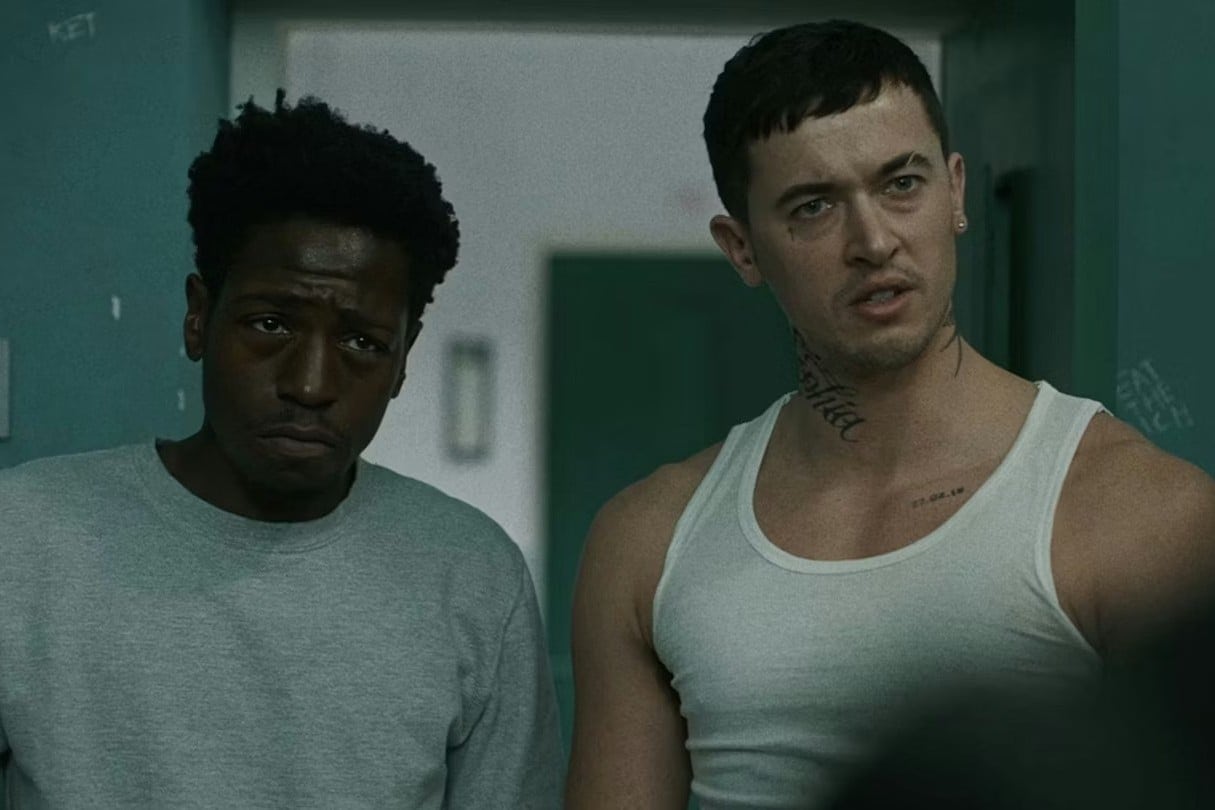
Cal McMau’s Wasteman, written by Hunter Andrews and Eoin Doran, illustrates why a powerful paradox about prisons makes them such a popular staging ground for psychodramas. These institutions are at once set apart from society and act as funhouse-mirror reflections of the outside world. Masculine survivalist instincts flare up in these pressure-cooker environments where sheer might determines the de facto pecking order.
It’s against this backdrop that a tense two-hander between a pair of Britain’s strongest rising actors emerges. David Jonsson’s withdrawn, reactive Taylor begins the film with the surprising possibility of parole presented to him by a corrections officer. The release comes less as a reward for good behavior. Indeed, Taylor still privately struggles with addiction. In an ironic twist, his sentence is under review to relieve pressure on an overtaxed penal system.
But a new cellmate, Tom Blyth’s volatile Dee, proves to be an impediment to his progress. This towering figure arrives dead-set on establishing himself as the new boss of the facility. Blyth fills a room with rambunctious energy, be it carrying himself with blustery swagger or embracing his character’s off-color wisecracks. Jonsson, for his part, manages to ably shrink away from this riotously erratic force without disappearing from the center of the narrative.
Taylor is reluctant to be involved in Dee’s contraband trade, especially with the possibility of finally getting to meet his now teenaged son in reach. Wasteman feels as if it sacrifices the details of how the two grow close enough to become partners in crime in favor of keeping a brisk pace; how Dee seduces his timid bunkmate into the underground enterprise is only glimpsed in fragments during a montage. But Jonsson and Blyth make for a captivating yin-and-yang pair as the roommates consolidate their status over the prison’s hierarchy.
The tentativeness of Taylor offers a counterweight to the tenacity of Dee, which makes them a uniquely dynamic duo within an ecosystem that tends to prioritize brute force above all else. To the film’s great benefit, McMau never strays far from their combustible relationship. Seeing how each learns from and incorporates the other’s approach into their own, often just with the subtlety of body language, provides a thrill beyond the boilerplate gang saga.
Wasteman proves Billy Wilder’s adage about what makes a good movie: “three good scenes and no bad ones.” The script doesn’t reinvent the prison genre, but it engagingly explores factional conflicts and outside-inside tensions felt by prisoners on the verge of release. The story balances specificity with narrative economy, ensuring that the film never feels blandly derivative.
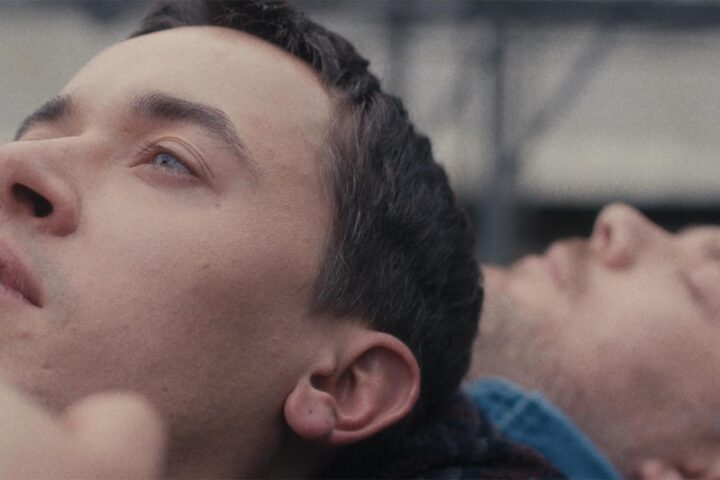
While the film is largely verité in approach, it introduces several breaks in style to emphasize big moments. The camera occasionally accentuates this immediacy by tapping into a first-person perspective within the heat of big brawls, making the bystanders feel like participants in the melee—even down to splattering some blood on the lens and obscuring the gaze.
Yet in other instances, McMau makes clear that the camera’s eye represents a point of view from directly inside the world of the film. Grainy social media-style videos captured by the inmates through illicitly acquired cellphones give the incarcerated men, many of whom are played by former prisoners, an opportunity to control the imagery of themselves.
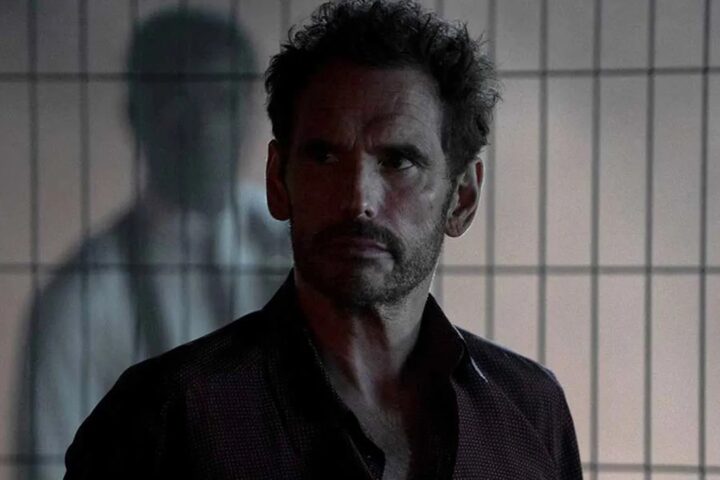
By contrast, footage from drones filming from just outside the facility hints at the specter of surveillance. It’s from this perspective that McMau sources the film’s ominous final image. Though it’s shot with a cellphone from behind the prison’s bars, the chilly remove of its observation drives home the terrifying truth of a broken justice system. Some may escape the vigilant eye of these carceral facilities, but someone will always be watching over them.
Since 2001, we've brought you uncompromising, candid takes on the world of film, music, television, video games, theater, and more. Independently owned and operated publications like Slant have been hit hard in recent years, but we’re committed to keeping our content free and accessible—meaning no paywalls or fees.
If you like what we do, please consider subscribing to our Patreon or making a donation.


Erm, surveillance is not why the drones are hovering the prison. Also on a point of order, all drones are unmanned, dad.