
Cyril Schäublin’s Unrest is an intelligently structured portrait of a community of Swiss watchmakers in 1876 who are at once isolated from the rest of the world and deeply connected to the vagaries of a globalizing market. Inspired by the memoirs of Pyotr Kropotkin, who found in the industrial handworkers a dedicated group of fellow anarchists trying to bend the course of history in workers’ favor, the film takes as its subject the dictum of Marxian dialectics that the capitalist system produces the means of its own destruction.
In Swiss, unrueh is “unrest,” which, in a fitting metaphor, is an alternate term for the balance wheel—a mechanism without which the system of a clockwork wouldn’t function. There’s a certain logic, then, to the rigorously depersonalized structure that Schäublin devises for his story. It’s very loosely centered around a visit by Kropotkin (Alexei Evstratov) to the watchmakers’ valley in the Jura Mountains in his role as a cartographer developing an “anarchist map” of the region. But Kropotkin doesn’t quite function as the focal point.
Schäublin draws our attention away from the potentially more sensational story of any given character’s personal “unrest” and toward the milieu of an emergent modernity. Coming in and out of focus throughout are narrative threads about the high-stakes local election, a pair of photographers wandering about to document life in the valley, the anarchists’ dispassionate but serious organization efforts, and the first inklings of a synchronized world time standard. Like a mechanism that operates with a certain amount of unrest, Unrest diverges into extended looks at the fastidious craft of watchmaking, and often in extreme close-up.
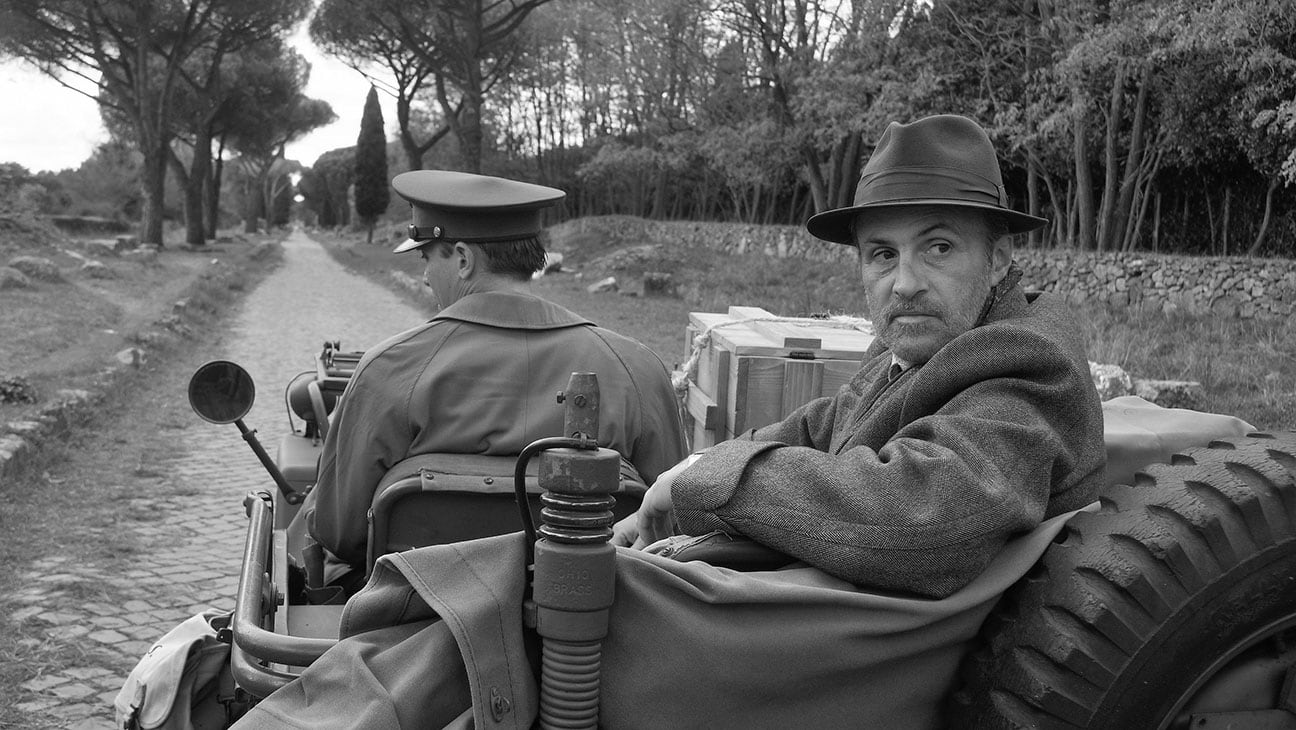
The sleepy Swiss village in the Jura Mountains is learning to balance the local and the global, and both the anarchist and capitalist characters are acclimating to a timely interchange with a networks of allies across the globe. The watch factory’s director, Roulet (Vincent Merz), gets updates on the condition of global markets, while Kropotkin uses the local telegraph office to correspond with anarchists in Chicago. Reflecting this threading together of village life and the outside world, Schäublin frequently cuts directly between the close-ups on the miniscule springs, gears, and escapements within watches and long-shot exteriors.
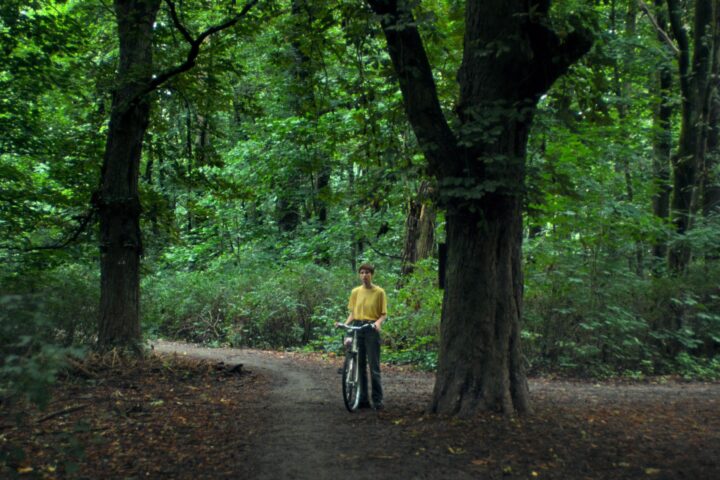
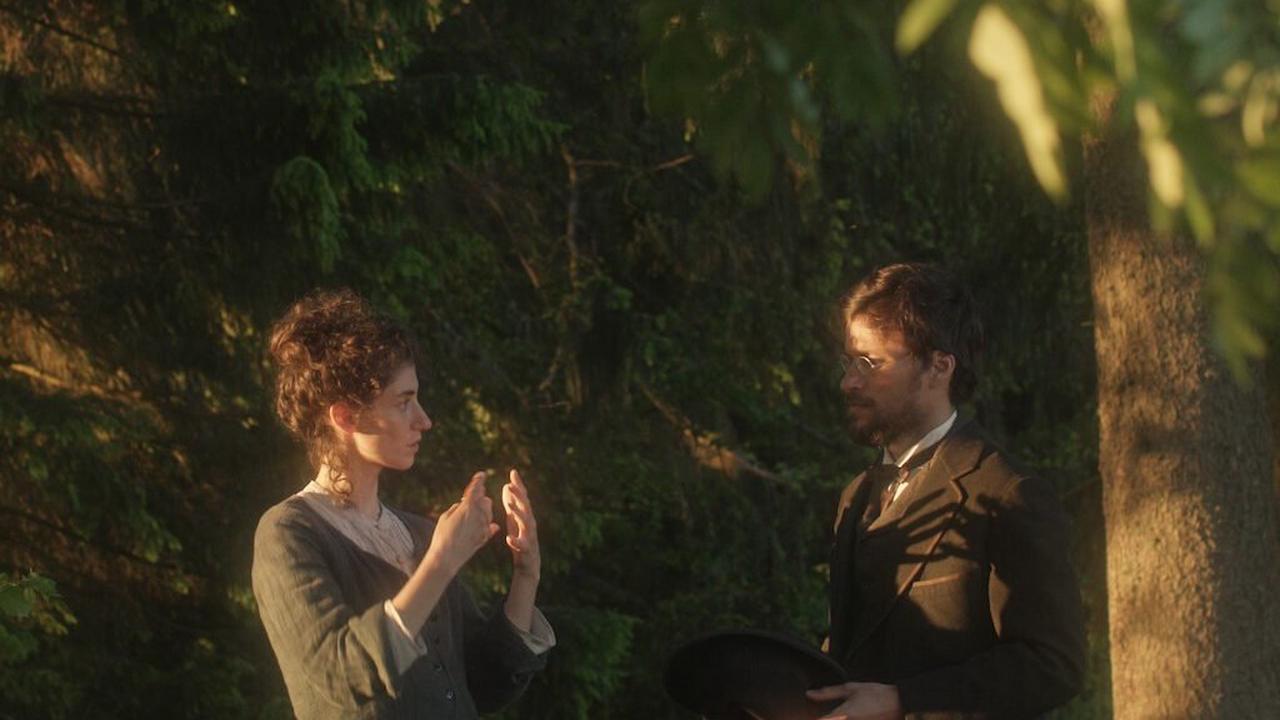
These outdoor scenes, where most of the significant dialogue takes place, decenter the characters, with the audio track often attuned to a conversation taking place on the extreme margins of the frame. Throughout, the deep-focus cinematography keeps the foreground and background in focus simultaneously; characters in the distance often seem not just framed but also hemmed in by surrounding buildings. Such devices make for an aesthetic that challenges viewers not just to connect micro and macro matters, but also to probe the image, to find its import and place in a narrative that eschews conventional forms of character identification.
Unrest brandishes its historical-materialist bona fides through this de-emphasis of psychology in favor of social dialectics. As a study of a world on the precipice of discovering the immense power of standardized time, it’s a fascinating and, at times, almost hypnotic look at the skilled but exploited hands that enabled the world to tick to the same beat. At the same time, however, its highly intellectual approach can feel too far removed from the stakes of a leftist movement that, after all, had the humanity of the worker at its core.
It’s not so much that the story needs, say, a romance or more emphasis on the squalor of 19th-century workers’ lives. But its depiction of struggle can feel abstract to the point that one wonders whether any of the characters—namely Josphine Gräbli (Clara Gostynski), the one we spend the most time with—actually has strong feelings on the issue of workers’ liberation.
Of course, not every film about 19th-century socialist activism has to be in the key of Mike Leigh’s Peterloo. Still, while the sweeping feelings provoked by such righteously indignant depictions of anti-worker violence may feel a bit too simplistic to some, there may be such a thing as overcorrection. Unrest certainly offers a novel and intriguing glimpse into the clockwork of a world about to go global, but in true dialectical fashion, its primary virtue contains the seeds of its own downfall. In short, Schäublin’s precisely framed snapshot of a microcosm of timekeepers ends up being a bit too, well, mechanical.
Since 2001, we've brought you uncompromising, candid takes on the world of film, music, television, video games, theater, and more. Independently owned and operated publications like Slant have been hit hard in recent years, but we’re committed to keeping our content free and accessible—meaning no paywalls or fees.
If you like what we do, please consider subscribing to our Patreon or making a donation.