A film’s characters do not always need motivations to explain or justify their actions. But the protagonists of Arnaud Desplechin’s Two Pianos are so inexplicable in their decisions and actions that they may as well be directed by Magic 8 Ball. Mathias (Francois Civil) is a pianist undergoing a life crisis, while Claude (Nadia Tereszkiewicz) is a mother suddenly forced to confront a secret from her past. Given these circumstances, one would expect some degree of rash, over-emotional behavior, but Mathias and Claude’s outbursts, sudden reversals, and all manner of manic episodes rapidly become as wearisome as they are baffling.
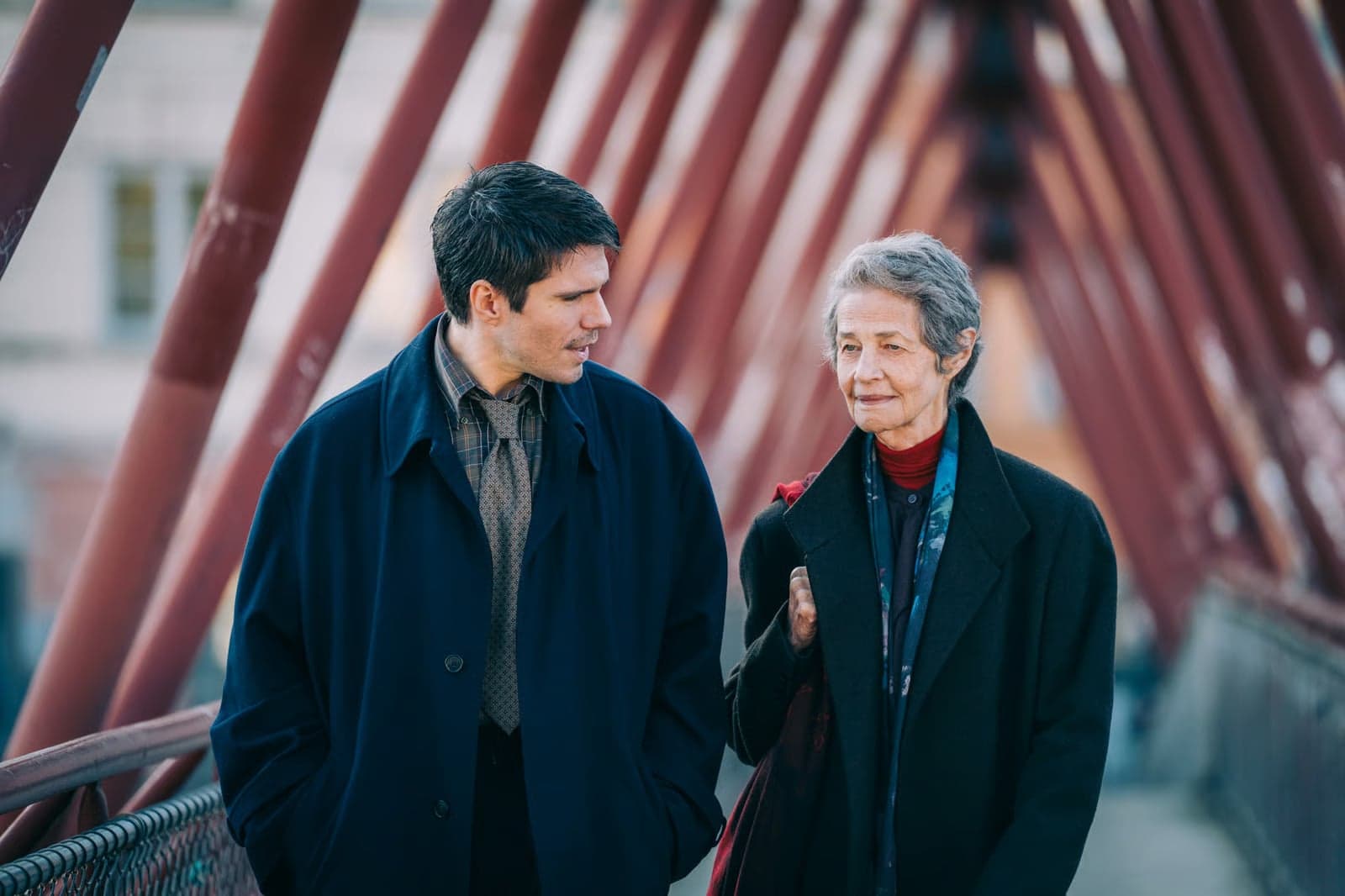
Initially, this deeply odd melodrama, as written by Desplechin and Kamen Velkovsky, has potential. Mathias is returning home to Lyon, France, after many years living in Japan. A onetime prodigy who’s viewed by the classical music community as having inexplicably thrown his career away, he’s been effectively summoned back home by his mentor, Elena (Charlotte Rampling). Played by Rampling with a resplendent and quick-witted hauteur, Elena issues declarations to Mathias about the demands that their talent requires of them and strongly hints that he’s to take her place in the local music community following her retirement.
Elena’s entreaties seem to fall on deaf ears, with Mathias letting himself be sidetracked by a pair of surprise developments. First is running into Claude, whose shame over their secret history leads her to run away and him to faint before getting drunk and ending up in jail. Second is his spotting a young boy, Simon (Valentin Picard), who looks the spitting image of Mathias at that age. Even viewers not paying close attention will put those developments together and realize there’s more to Mathias and Claude’s past than a brief affair from years before.
Two Pianos is two stories running in tandem and, unfortunately, the less engaging one dominates the narrative. Mathias and Elena’s relationship is given short shrift but could have been a feature film on its own. Their scenes have a riveting clarity, largely due to Rampling’s compellingly tart performance. The conflict between her demanding expectations—that Mathias get back to touring and securing the praise that she believes he deserves—and his desire for a different life generates sparks early on, suggesting the potential for Two Pianos to start engaging with questions about the sacrifices made for art.
But once the film starts to focus more on Mathias’s re-engagement with the married Claude, it begins to bounce awkwardly between light-hearted romanticism and earnest seriousness. In some sense, the characters are made for each other, as both are given to whims and don’t have much work to occupy their days. But Desplechin’s inability to present their relationship with emotional coherence and his reliance on deus ex machina (including one convenient and almost comically inserted tragedy) to move it forward give the story an artificial sheen.
As the character holding the Elena and Claude strands together, Mathias should be the film’s focus of attention. Like many art monsters, he’s standoffish, narcissistic, and manipulative, but he’s also needy, as evidenced by the admirers who surround him and cannot get enough of his legendary talent and mystique. But while a perfectly adequate portrait of a type, Desplechin’s representation doesn’t show much curiosity about whether anything besides immaturity lies beneath Mathias’s blandly grumpy veneer. Given that inattentiveness, it’s hard to muster up much interest in where these characters are going or why.
Since 2001, we've brought you uncompromising, candid takes on the world of film, music, television, video games, theater, and more. Independently owned and operated publications like Slant have been hit hard in recent years, but we’re committed to keeping our content free and accessible—meaning no paywalls or fees.
If you like what we do, please consider subscribing to our Patreon or making a donation.