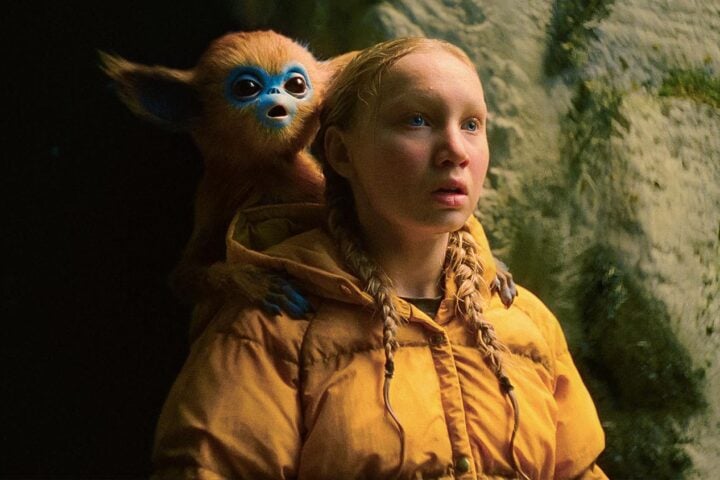
Plunging headlong into the murk of exploitative missionary work and environmentally destructive capitalism, Transamazonia is a film with undeniable import and sociopolitical urgency, which its muddled narrative can’t completely dampen. Pia Marais’s fourth feature centers around American faith healer Lawrence (Jeremy Xido), who preaches the Gospel to an impoverished Brazilian village in the heart of the Amazon, aided by his daughter, Rebecca (Helena Zengel), the sole survivor of a plane crash that killed her mother. Their role in the community is troubled when a conflict arises between a local Indigenous tribe and a violent gang in the employ of the logging industry laying waste to their homeland.
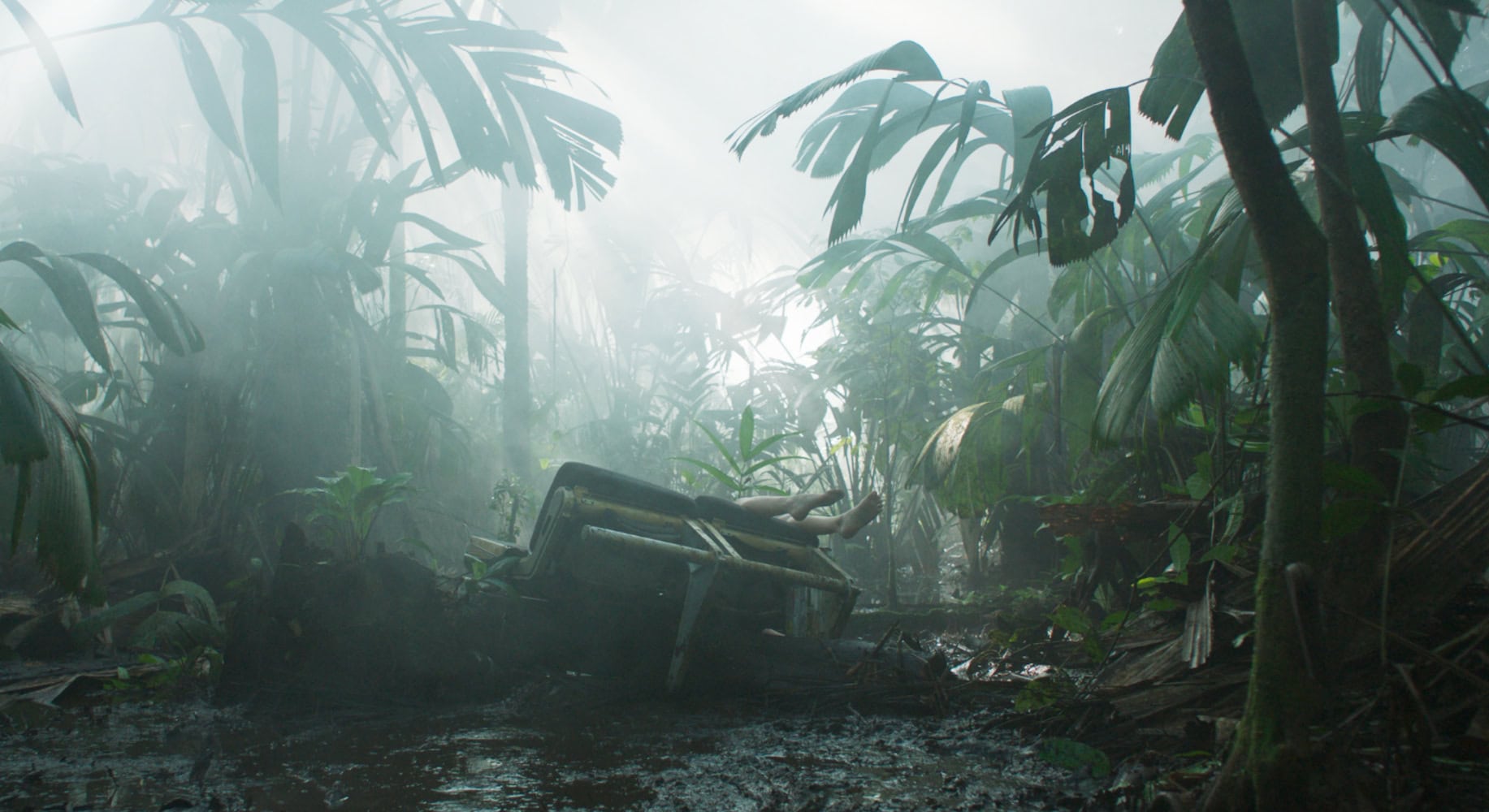
Following a striking, wordless sequence in which an infant Rebecca is discovered in a rainforest clearing and carried to the relative safety of a hospital room, where her new status as a global media sensation disrupts a reunion with Lawrence, a nine-year time jump reveals the pair successfully capitalizing on her “miraculous” deliverance in the present day. As the film’s dynamic, off-kilter camerawork and kinetic editing convey a palpable sense of communion that’s indifferent to the truth of what’s being expressed, the recounting of Rebecca’s survival captivates an impassioned congregation, during a sermon that culminates in a wheelchair-bound woman apparently rising up and walking under the encouragement of those in the room.
This powerful opening clearly establishes both the sincerity of faith and the morally dubious connection between spirituality and performance. But this is one of the last times in which this subdued, ponderous film, written by Marais, Willem Drost, and Martin Rosefeldt, is able to illustrate its fundamental themes in an engaging way. Though tastefully rendered throughout, the tale is weighed down by an unrelentingly somber tone and a general lack of focus.
There seems to be a clash here between the demands of exposition and the impressionistic approach favored by Marais and cinematographer Mathieu de Montgrand, which tends to foreground the intoxicating effect of the rainforest setting. Through lingering shots of ants crawling over skin, light breaking through foliage, or Rebecca’s feet shifting under a mosquito net as she sleeps, the oppressive, sublime force of the natural world is conjured vividly.
Parallels could be drawn to Claire Denis’s provocative explorations of post-colonial malaise and unconventional familial ties—that is, if the film was willing to exhibit more ambiguity and some of the psychosexual dimension that usually accompanies the French auteur’s surrender to the elements. Transamazonia’s linear, somewhat overstuffed plot ends up limiting the potency or relevance of its digressions, meaning that the languorous pace can often become frustrating.
Another hindrance is that Lawrence remains an enigma, with Xido rarely allowing him to exude anything more than a troubled earnestness. Taking it upon himself to provide spiritual balm to local believers while also defusing the escalating tensions between tribal practices and the aggressive demands of capitalism, he has an interestingly conflicted position that’s summed up by one logger who insists that he only saw the Amazon as an opportunity to make money, whereas Lawrence “wanted their souls.” But the character only comes to life during the occasional interactions in which the man makes a show of his religious faith, which prevents any deeper understanding of what’s at stake for him personally, as well as limiting the emotional impact of a crucial late revelation about the aftermath of the plane crash.
The film’s sprawling canvas and uneven pace means that it also struggles to function as a story of Rebecca’s coming of age, though her own enigmatic qualities are more understandable as those of a rootless adolescent in the process of discovering a sense of self. As she increasingly invests in real-world, material struggle, she’s able to move beyond the symbolic role that has been imposed upon her by tragic circumstances beyond her control and the incessant needs of others. It’s a shame that Marais’s elegant, often admirably nuanced mood piece couldn’t liberate itself with a similar kind of risk-taking and an equally clear idea of what it wanted to do.
Since 2001, we've brought you uncompromising, candid takes on the world of film, music, television, video games, theater, and more. Independently owned and operated publications like Slant have been hit hard in recent years, but we’re committed to keeping our content free and accessible—meaning no paywalls or fees.
If you like what we do, please consider subscribing to our Patreon or making a donation.