

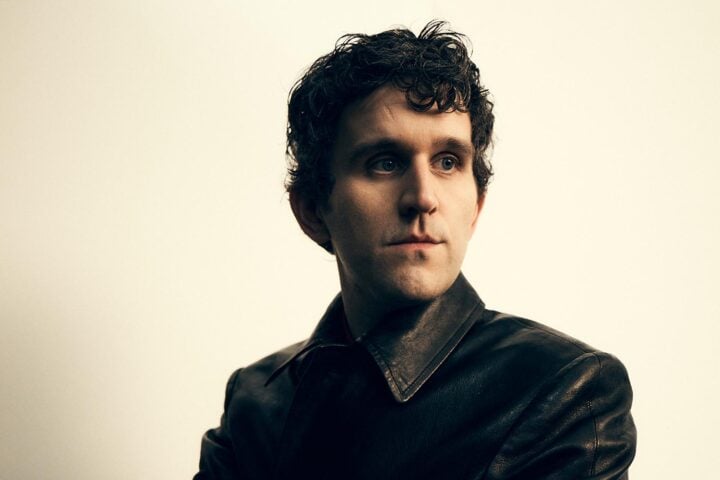
Based on the 2003 novel of the same name by Louis Bayard, Scott Cooper’s The Pale Blue Eye brings us the fictionalized origin story of Edgar Allan Poe. Set during the time that the author actually spent at West Point, the film reimagines Poe (Harry Melling) as a spirited young man who, when he isn’t being tormented by fellow students, finds inspiration in his writing and the mystery surrounding the recent murder of a cadet on the academy’s grounds.
When a local detective, Augustus Landor (Christian Bale), is brought in to investigate the murder, Poe eagerly jumps at the chance to surreptitiously assist him by infiltrating the social circle to which the main suspects belong. Then, when the victim’s heart is cut out and stolen from the morgue, and others show up dead, the case takes on more than just a macabre edge, but also a mystical one, intentionally recalling the works that Poe would go on to publish.
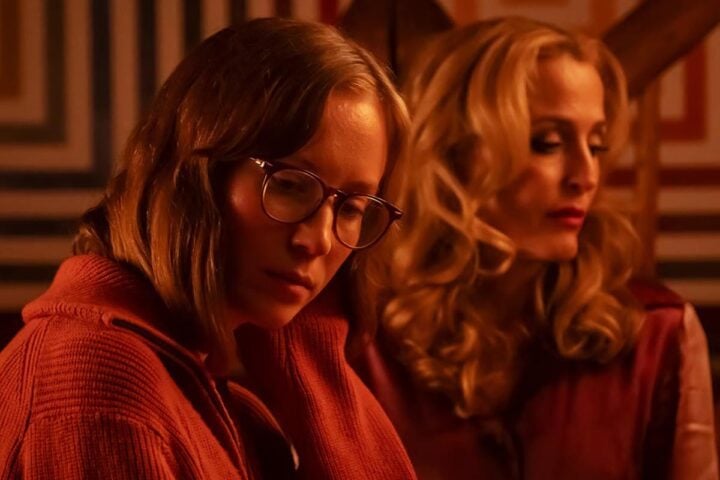
It’s a clever idea on paper to present a slow-burn whodunnit as the seed for what would become the legacy of the godfather of detective fiction, but in execution, The Pale Blue Eye is somber, clinical, and sluggish. And its glacial pacing and monotonous mood are only enlivened in brief spurts when Cooper allows a certain campiness to seep into the proceedings, especially across the outlandish final act. Case in point: Gillian Anderson’s strange and delightfully skittish performance as Julia Marquis, the flirtatious wife of the suspicious surgeon played by Toby Jones, even if it makes it seem like she’s in a different film than her fellow actors.
For much of its runtime, though, the film is a humorless slog, and a literally pallid one at that, given how the visual palette is drained of color. The soporific score by Howard Shore’s is uninspired, and even the dependable Christian Bale seems to be sleepwalking through his role. But worst of all, The Pale Blue Eye simply isn’t that compelling as a mystery. It becomes clear early on who’s deeply involved in the murders, and while the film delivers a few choice surprises late in the game, the breadcrumb trail of clues to the solution of the mystery is conspicuous in ways that leaves the over-the-top finale feeling less like the culmination that the film has been building up to than a rug pull intended solely as a shock to the audience.
Where the film’s central mystery is primarily a nonstarter, its portrait of the artist as a young man is a bit more convincingly rendered. Melling brings an intelligence and sensitivity to Poe that makes his trajectory from naïve, optimistic artist to a more embittered, cynical one more intriguing than it’s written by Cooper. And while his romance with a young woman, Lea (Lucy Boynton), is completely undercooked, the emotional arc it takes him on nicely reflects how the author would come to find his niche in Dark Romanticism. Unfortunately, for all of The Pale Blue Eye’s attempts to capture the magic of Poe’s eerie literary worlds, it too often feels like one of the many corpses in its story: cold, lifeless, and without a heart.
Since 2001, we've brought you uncompromising, candid takes on the world of film, music, television, video games, theater, and more. Independently owned and operated publications like Slant have been hit hard in recent years, but we’re committed to keeping our content free and accessible—meaning no paywalls or fees.
If you like what we do, please consider subscribing to our Patreon or making a donation.


The baddest review I ever seen on a movie. Clearly saying that a movie is “without heart” proof everything a critique can tell: nothing. You may just have said “I didn’t like it”. It would had be faster and more honest.