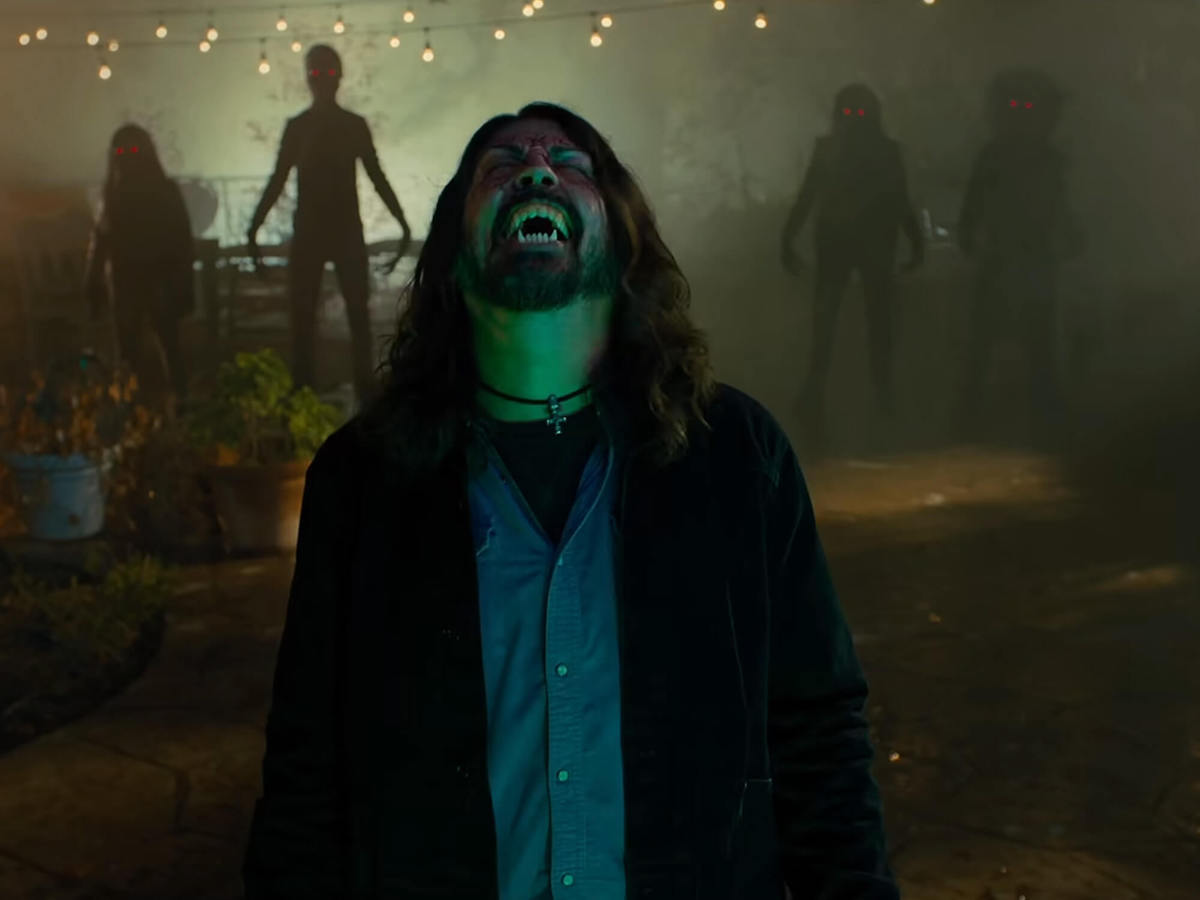
An affable, middle-aged dad whose long hair and tattoos can’t mask his fundamental dorkiness, Foo Fighters frontman Dave Grohl is the perfect avatar for rock ‘n’ roll in an era when loud guitars and pounding drums have sunk into near-total irrelevance. It’s fitting, then, that BJ McDonnell’s Studio 666, which casts Grohl and his bandmates as goofball versions of themselves recording an album in an abandoned Encino mansion that harbors a demonic history, feels pleasantly, if dully, out of step with contemporary pop culture.
Studio 666’s very first joke takes a jab at that mustiest of punching bags—Kevin Reynolds’s film maudit Waterworld—and the references only get more dated from there, with the filmmakers poking harmless fun at the likes of Sting, Rush, Led Zeppelin, and Pearl Jam. Lionel Richie even shows up in a one-joke cameo as if to drive home the point that this is a film by and for Gen Xers who checked out of the cultural conversation a couple decades back.
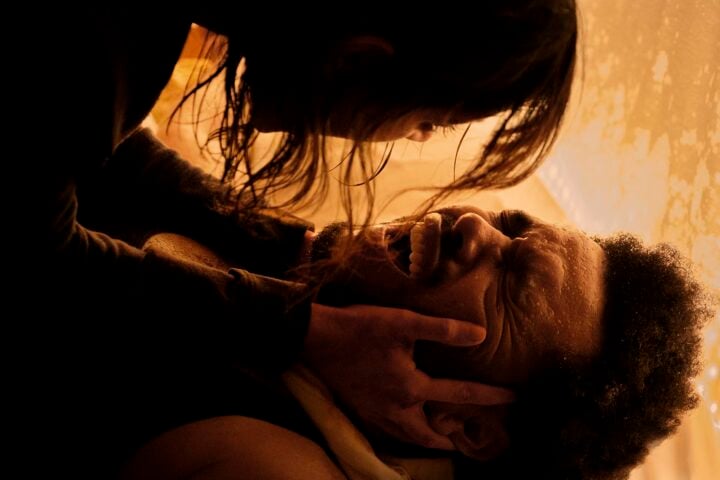
Nonetheless, the film’s behind-the-times sensibility is, ironically, the freshest thing about it. In its giddy hyperviolence, Studio 666 is kin to Sam Raimi’s Evil Dead films and heavy metal horror staples like Trick or Treat and Rock ‘n’ Roll Nightmare. Once Grohl becomes possessed by an ancient demonic force, he dispatches his bandmates and other unlucky victims in increasingly outrageous fashion—decapitating a demo-hawking delivery guy (Will Forte) with hedge clippers, grilling up Chris Shifflett, and, in a blood-soaked kill worthy of Peter Jackon’s Dead Alive, slicing a couple in half with a chainsaw as they’re having sex.
Unfortunately, the film’s funny and shocking gore too often plays second fiddle to meandering comedic bits revolving around the band’s recording sessions. Mildly amusing gags, such as the demon-possessed Grohl forcing his band to record a never-ending song in an impossible key, get run into the ground through monotonous repetition. It’s not even clear the film recognizes one of its best jokes: that the supposedly demonically inspired hard rock concept album that Grohl is so excited about sounds like little more than a couple of warmed-over Kyuss riffs.
Meanwhile, the band’s limitations as actors can be charming in small doses, but it gets a bit wearying when they start engaging in strained, cornball banter. Ringers like Forte, Whitney Cummings, and Jeff Garlin inject some comedic energy in peripheral roles, and Slayer’s Kerry King and John Carpenter (who also helped compose the film’s giallo-esque synth theme) have fun in bit parts. By and large, though, Studio 666 is ultimately The Grohl Show.
Grohl’s “musical constipation” serves as the thin narrative reed upon which much of the incident in the film hangs. While the rocker is surprisingly engaging in gloomy, self-doubting mode, such as when he’s ordering late-night chicken parms and checking out YouTube instructional videos on how to write a riff, there isn’t enough here to drive the film forward during the protracted scenes when Grohl is simply moping around the house.
Since 2001, we've brought you uncompromising, candid takes on the world of film, music, television, video games, theater, and more. Independently owned and operated publications like Slant have been hit hard in recent years, but we’re committed to keeping our content free and accessible—meaning no paywalls or fees.
If you like what we do, please consider subscribing to our Patreon or making a donation.