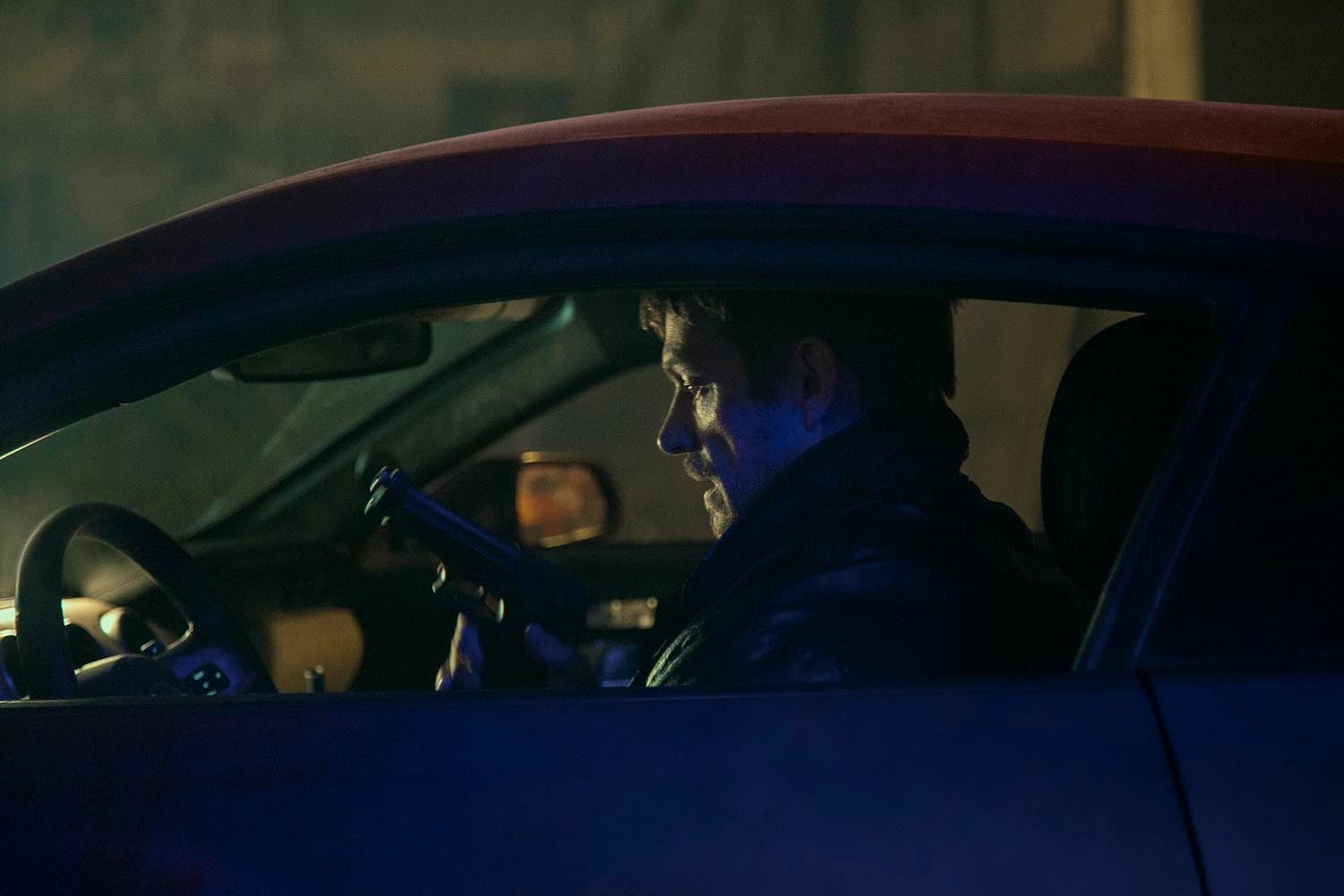
John Woo’s Silent Night is, in its content and form, about fulfilling a set goal through limited means. In the case of the former, this ethos is personified by Brian Godluck (Joel Kinnaman), who tries to make due with whatever he can get his hands on in order to seek bloody retribution for the death of his son amid gang crossfire. The latter, meanwhile, is rendered through the film’s near-total absence of dialogue, with Woo relying on the power of his images to convey what the spoken word is usually tasked with in commercial cinema.
As Brian lost his voice due to a throat injury sustained during the shooting that claimed his son’s life, the film’s story beats are largely articulated through visual means. One of Silent Night’s most impressive feats is the sound design that gives the film’s world a lived-in quality though an emphasis on small details, from the ping of phone notifications to leaves rustling in the wind, but front and center is the way that Brian moves through Woo’s frames. Silent Night is akin to a silent two-reeler, only one where almost everyone meets their end in the second reel, and Kinnaman’s physical presence bringing to mind the great stone face that was Buster Keaton.
In far less accomplished hands, the film’s near total lack of dialogue would seem like a cheap gimmick—a means of arriving at the next big set piece as quickly as possible. Here, Woo lingers on the relatively slower and more emotionally charged passages for far longer than one might expect given the setup. Brain, for one, doesn’t take immediate steps toward vengeance; in accordance with Woo’s usual penchant for unabashed melodrama, he must first hit his lowest point and isolate himself from his friends and family before he takes action. And Brian’s descent toward rock bottom is a long and arduous one at that, filled with spells of unruly alcoholism and painful memories of his past life that haunt him like a recurring nightmare.
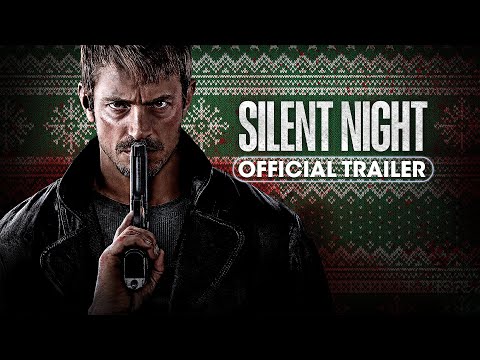
Woo underscores Silent Night’s initially sullen tone through flourishes that find their greatest potency when he applies them for solely pathos-wringing purposes. A swelling music cue will commence right as a bereaved Brian stumbles through his son’s now-vacant room, one of the many dimly lit spaces in his mausoleum-like suburban home. A continuous shot of Brian running up a flight of stairs while battling a bunch of goons later on is electrifying, as is the big, climactic showdown that’s kicked into motion by a Grimes needle drop. But watching Woo apply his craft to comparably more humdrum episodes and bring poeticism to the prosaic is a welcome reminder that his gifts extend beyond orchestrating fierce shootouts.
When Silent Night does finally kick into high gear, the action is as artful as anything that Woo has whipped up throughout his storied career. Having a mute protagonist sheds a lot of the unnecessary fat that’s become par for the course in big-budget studio fare over the years, and it allows Woo to home in on the things he excels at: kinetic, rhythmically beautiful hand-to-hand combat sequences; large-scale acts of vehicular fury; and knowing how to stage massive gunfights with a keen awareness for mapping out cinematic space.
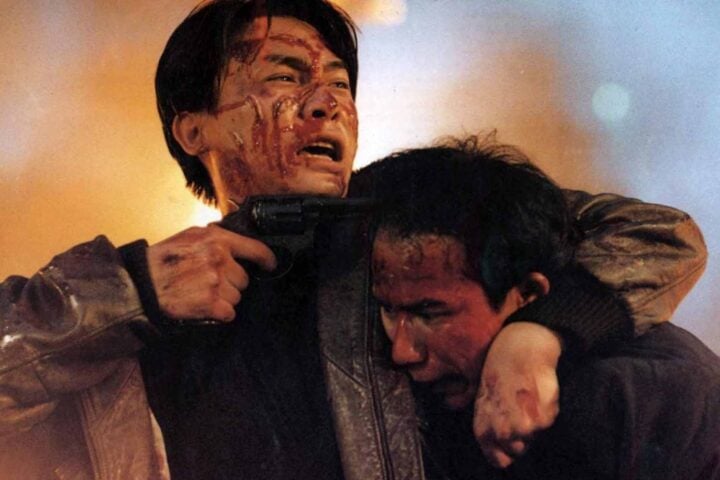
Much like Woo’s The Killer, Silent Night ends on an incredibly dour note that acknowledges how much of an empty gesture Brian’s rampage amounts to. While this Sisyphean conclusion may not sit well with some, there’s something both deeply touching and surprisingly mature about a film of this ilk recognizing the impossibility of ever fully moving on from the loss of a loved one—that anger, no matter how justified, only begets more anger. Silent Night, then, is as much a revenge-thriller as it is a thorny look at how the voiceless, when pushed far enough, will do whatever they can and by whatever means necessary, to make themselves heard.
Since 2001, we've brought you uncompromising, candid takes on the world of film, music, television, video games, theater, and more. Independently owned and operated publications like Slant have been hit hard in recent years, but we’re committed to keeping our content free and accessible—meaning no paywalls or fees.
If you like what we do, please consider subscribing to our Patreon or making a donation.