Many artists appear to discover the power of minimalism in their older age: the beauty of paring their art down to bare essentials, the profundities that come with evoking more by saying less. That appears to be how the late pianist and composer Sakamoto Ryuichi approached his art in the last years of his life before passing earlier this year from throat cancer. The evidence of this can not only be heard in his final studio album, 12—dominated as it is by hauntingly austere piano and electronic textures—but it can also be heard and seen in his son Neo Sora’s concert documentary Ryuichi Sakamoto | Opus.
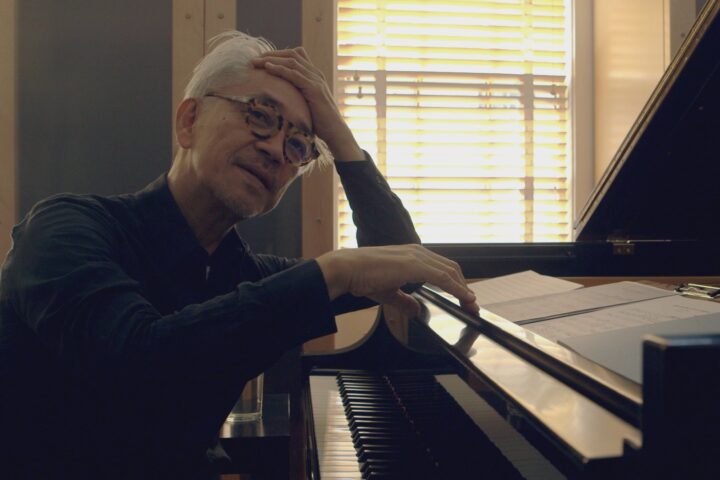
This, though, is no ordinary concert film, beginning with there being no audience. Sakamoto, having by late 2022 sworn off live concerts as a result of his declining health, decided to perform 20 of his works on a piano in NHK Broadcast Center’s 509 Studio in Japan, with only Sora and a camera crew present to capture it all. In essence, the film boils down to just Sakamoto playing his works on a piano. The result makes for a uniquely affecting last will and testament.
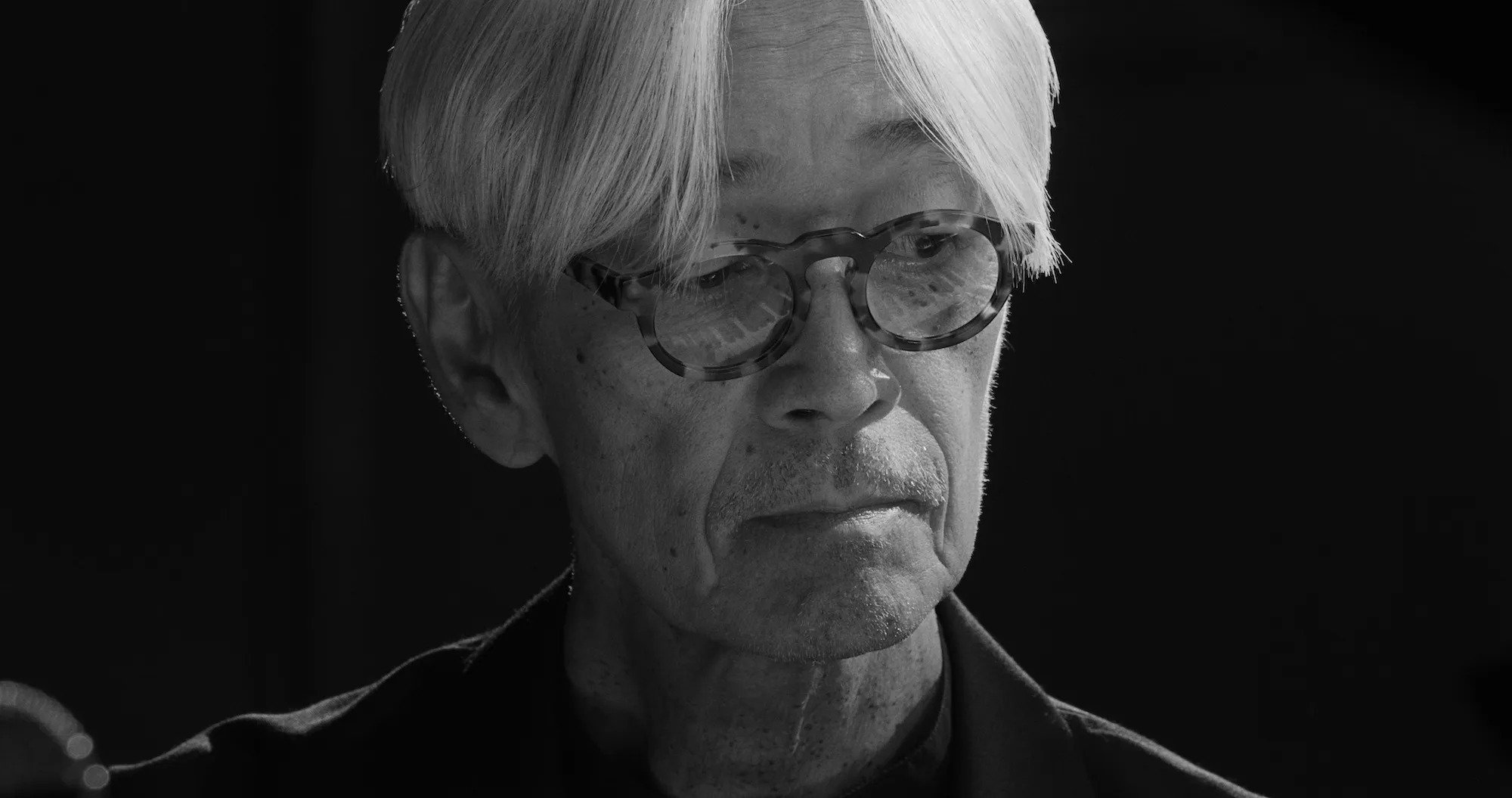
Some of that emotional power comes from the knowledge that this was the last thing Sakamoto performed and filmed before he died. But there’s more contributing to the film’s affect besides biographical context. Sora and cinematographer Bill Kirstein captured Sakamoto in crystal-clear 4K black and white—a visual choice appropriate for a performance that has the quality of a valedictory leave-taking, an intimate encounter with one’s encroaching mortality. There’s also Sakamoto himself, playing the piano as if in a meditative trance, occasionally raising his hands from the keys at the ends of pieces like a conductor hesitant to let the music go.
Above all, there’s the music. Sakamoto’s program covers a fairly wide swath of his career—including selections from his scores for Merry Christmas, Mr. Lawrence, The Last Emperor, Tony Takitani, and other films—all presented in solo piano arrangements. Even when Sakamoto’s harmonies become spare, dissonant, or even mechanical-sounding (he performs one piece, “20180219,” for prepared piano—i.e., with screws and other such objects placed on or between piano strings), a wistful melancholy pulses through all the pieces. That includes “tong poo,” a jaunty tune that first appeared on his 2009 album BTTB and which is drastically slowed down here to allow Sakamoto to bask in its underlying mournfulness.
Sakamoto’s performances are mesmerizing enough that one sometimes regrets the need for a director at all. Under Sora’s direction, each number becomes a mini-study of Sakamoto and the grand piano he plays on, with Sora, Kirstein, and editor Takuya Kawakami trying to find different ways, through lighting, camera placements, and editing rhythms, to give them formal variety. Sora does come up with some impressive images; a couple reflections of Sakamoto off the gleaming surfaces of his piano are particularly memorable. Mostly, though, the shots and cuts seem less expressive of the performer and his music than of the director’s own desire to liven up what some might feel to be an emotionally monochrome program.
Still, even when his technique occasionally threatens to distract from Sakamoto’s performances, Sora’s love for his father consistently shines through. He even includes a moment or two when Sakamoto falters technically during performances, reminding us of the mortality he was facing down with this performance. And certainly Sora deserves credit for coming up with the documentary’s poetic final image: that of the last bars of the eponymous number “Opus” being performed, player piano-style, without Sakamoto on the bench. Sakamoto may no longer be with us, the moment surrealistically suggests, but at least his music endures.
Since 2001, we've brought you uncompromising, candid takes on the world of film, music, television, video games, theater, and more. Independently owned and operated publications like Slant have been hit hard in recent years, but we’re committed to keeping our content free and accessible—meaning no paywalls or fees.
If you like what we do, please consider subscribing to our Patreon or making a donation.