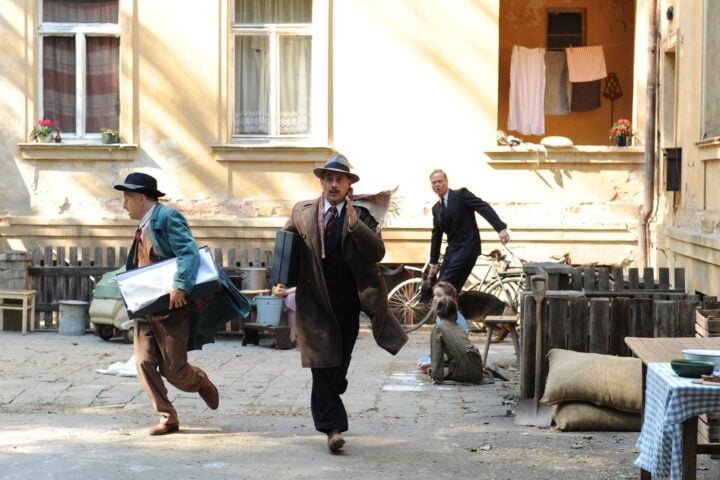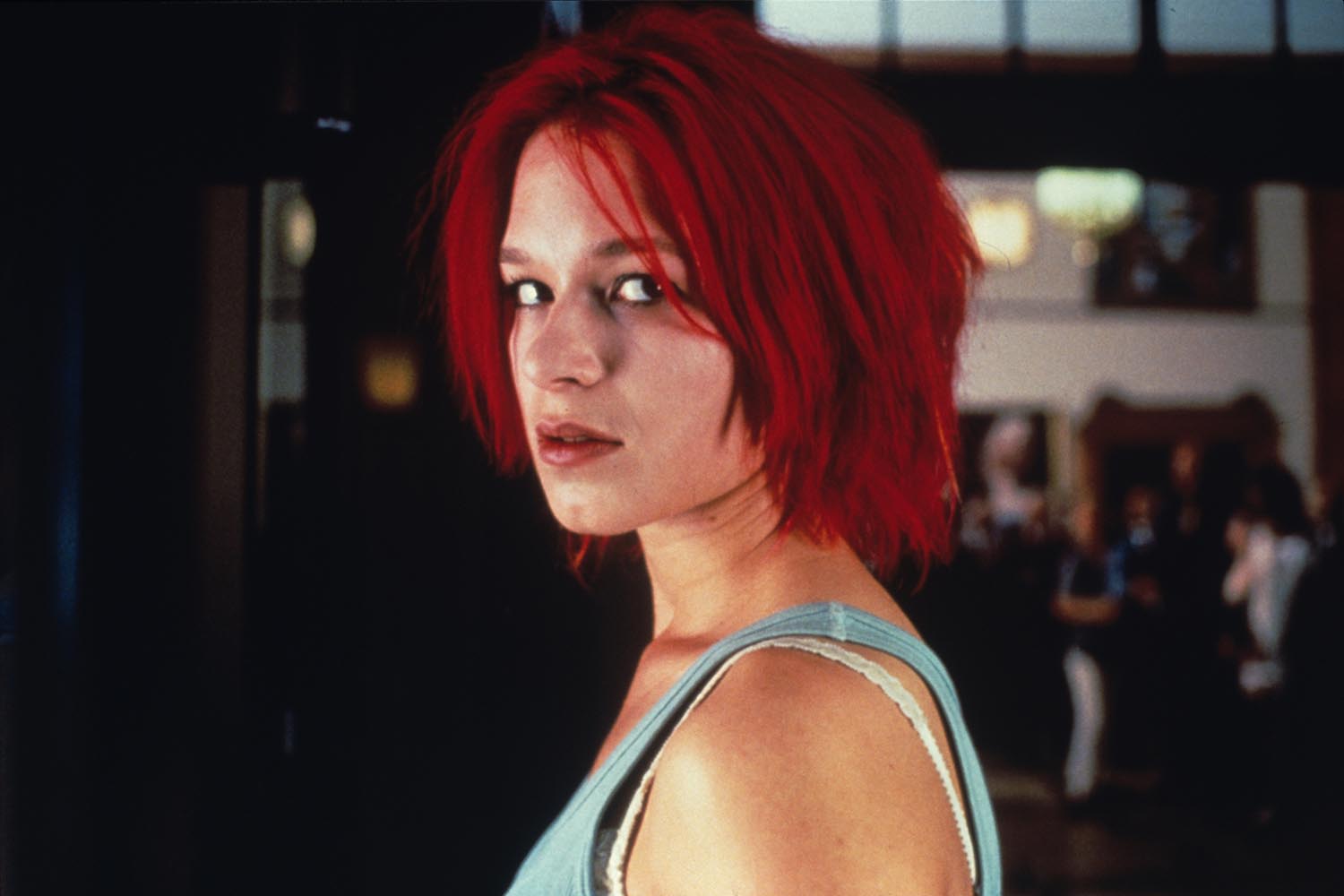
Thank god for Run Lola Run’s electrifying playfulness or its exploration of the butterfly effect would feel too glib by half. Tom Tykwer’s film is an adrenalized shot of concept art, laced through and through with Kieślowskian philosophizing. And through it all, every beat of the thumping score is ferociously cued to Lola’s (Franka Potente) running through the streets of Berlin as she seeks to save boyfriend Manni (Moritz Bleibtreu) from himself.
Amid the high-octane flash-forwards that reveal the fates of various characters (triggered by the collisions with the ever-running Lola), the film’s compassion becomes unmistakable. But it’s our heroine’s ferocious jaunts through Berlin that truly grip the imagination—and the senses—as she and Manni’s love story is told from three differently angles, each vastly different outcome predicated on any number of split-second decisions and chance encounters that Lola makes during her journey from home and the supermarket where she’s supposed to meet Manni.
“What if” stories of this sort usually boil down to an admission of defeat—in short, if our destinies are pre-ordained, what’s the use putting up a fight? But Run Lola Run puts a wrench in this master plan. When a desperate Lola unleashes a blood-curdling wail in order to control a game of roulette, this woman warrior sends the ultimate fuck-you to the gods above. To hear her roar is to believe that fate, like love, can be grabbed by the horns.
Since 2001, we've brought you uncompromising, candid takes on the world of film, music, television, video games, theater, and more. Independently owned and operated publications like Slant have been hit hard in recent years, but we’re committed to keeping our content free and accessible—meaning no paywalls or fees.
If you like what we do, please consider subscribing to our Patreon or making a donation.