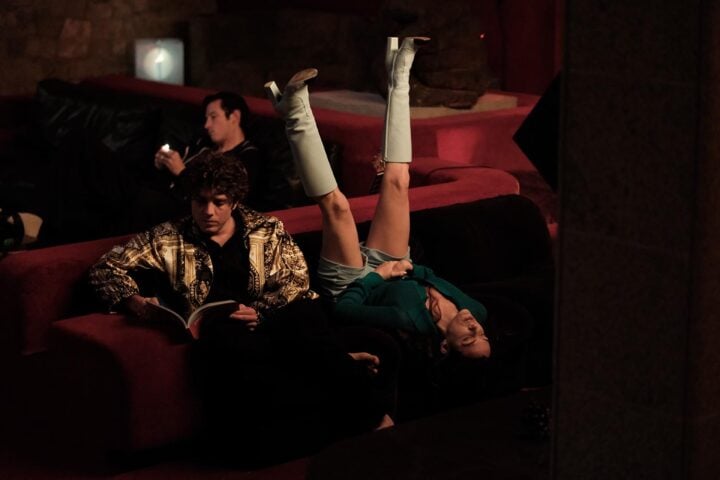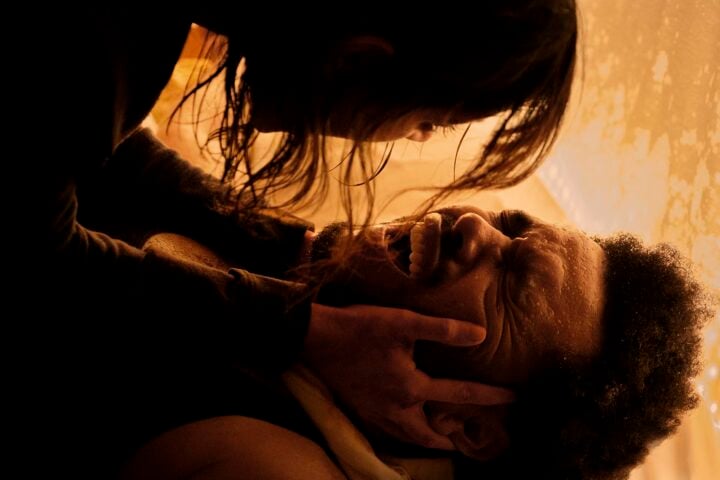
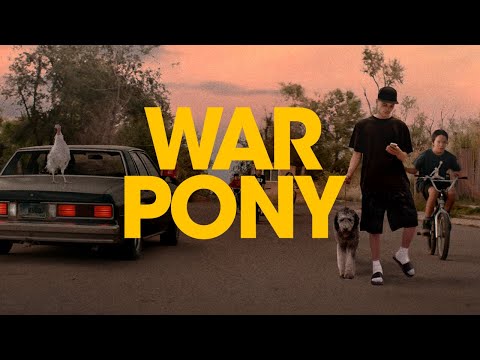
The story of Riley Keough and Gina Gammell’s War Pony, which traces the lives of members of the Oglala Lakota tribe on the Pine Ridge Reservation, starts on the set of another film. As she awaited filming a scene in Andrea Arnold’s American Honey, Keough struck up a friendship with extras Bill Reddy and Franklin Sioux Bob from Pine Ridge. She would later visit them at the reservation with Gammell, her producing partner, and the quartet’s energy began funneling the energy of their friendship into a cinematic form.
“The spirit of that summer informed War Pony,” Keough admits. Just as American Honey’s egalitarian end credits don’t attribute hierarchical titles to the artists involved in the film, so, too, does War Pony embody a spirit of collaborative creativity. In conjunction with the wider Pine Ridge community, Bill and Franklin’s experiences and stories of growing up on the reservation began cohering into a screenplay. While the film provides a portrait of Pine Ridge at large, avatars for those two co-writers form the backbone of the narrative.
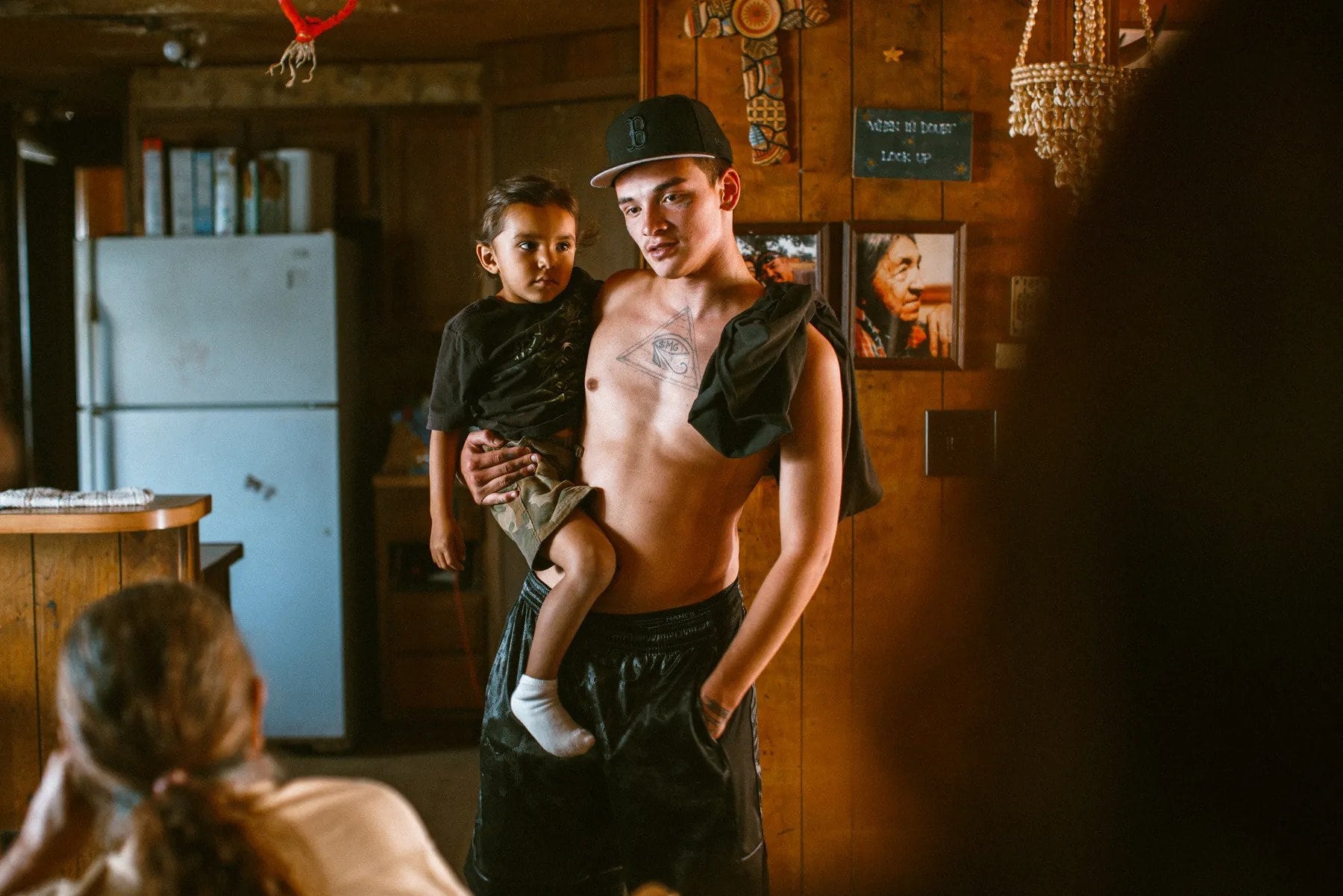
Twenty-three-year-old Bill (Jojo Bapteise Whiting) tries to balance his own ambitions for financial success with a shady businessman, Tim (Sprague Hollander), while still providing support for the young child he shares with Echo (Jesse Schmockel). Meanwhile, 12-year-old Matho (LaDainian Crazy Thunder) gets caught up in using and selling drugs to feel more like a man. Taken together, the interlacing journeys paint a vivid portrait of the challenges inherent in coming of age anywhere without sacrificing the specificity of their cultural context.
Prior to War Pony’s theatrical release, I spoke with writer-directors Keough and Gammell, co-writers Reddy and Sioux Bob, actors Whiting and Schmockel, and producers Pte Cante Win Poor Bear and Willi White about how, in everything from the dialogue to the camerawork, the project was made with the utmost commitment to authentic representations of the reservation. The conversations also covered the level of buy-in on the project from both tribal elders and non-native crew people in the interest of maintaining the film’s energy.
There was a conscious effort in War Pony to avoid the gritty handheld docudrama style. How did you settle on what it was, not just what it wasn’t?
Gina Gammell: It was a collaborative process not only with our DP [David Gallego] but with Franklin and Bill, about what we wanted the movie to look like. In the same way that we approached the script, it was very much about making this as honest and no-frills as possible. Not trying to avoid anything, but also not trying to make a meal out of anything. There’s a lot of very raw, natural beauty in South Dakota. There’s an innate grittiness to parts of the world in the film, but we were very sure about not trying to highlight or minimize anything.
We were very much on sticks and dollies for most of the film. It’s very composed. We really relied on the actors to carry the scenes. We approached it quite traditionally in that way. At the direction of Frank Bill, we avoided the typical kind of handheld, “find the movie” style. We had a script that we feel strongly about, and we had actors who we think can carry the script. Let’s go shoot this with coverage and setups in a way that we feel is cinematically elegant and the camera only moves because there’s a reason for it to move. That’s what we committed to, and that was through lots of conversation and collaboration at every step of the way.
Franklin Sioux Bob: Besides getting away from the handheld, it was easy to capture because you didn’t have to create this world. This world exists, [so] all you have to do was showcase it right. The actors, as long as they matched the personalities of what was in the script and could clash together, it would work because everyone [is from the] rez. We just needed to be showcased differently from the usual handheld or focusing on poverty porn or one subject matter. You didn’t have to do that. The world and these people exist, so you just had to capture ‘em.
How do you remain honest about the hardships of the reservation without devolving into gawking or poverty porn?
FSB: That’s home. There are places in the world that are like that, it’s just that they’re not being showcased. And even if they are, that’s just a part of reality. There are really good places and really bad places. We just happen to come from in the middle. We’re just showcasing a world that people know about. They just don’t acknowledge [it].
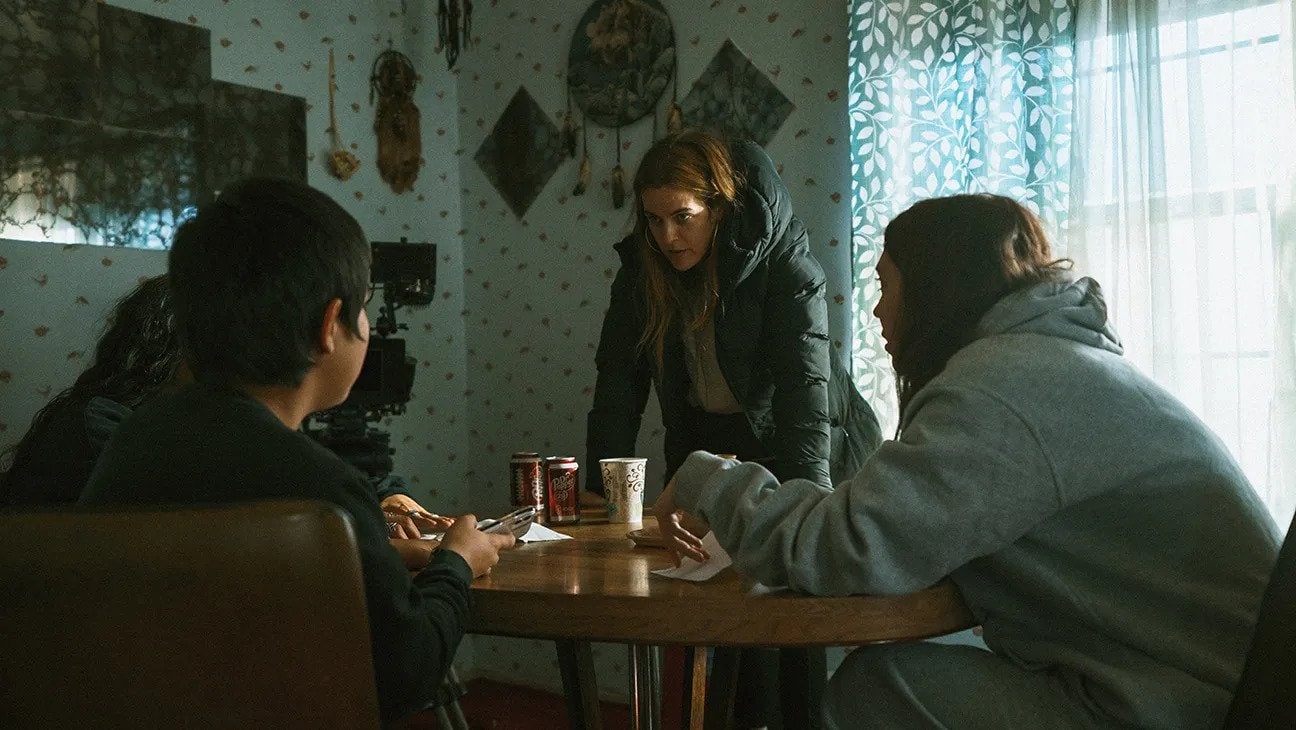
The scale of the production did necessitate bringing in some outside crew that weren’t from the community. How did you all as leaders of the set go about recreating that cohesion?
Riley Keough: We shot the movie four or five years [after meeting], so we had a lot of time to think about that and spend time with our friends and family. The closeness of all of our relationships led to the tone on set, which was a collaboration in which we were very comfortable with each other. We were comfortable telling each other when we don’t like something. The actors were definitely vocal about wanting to change things. Jesse would rewrite her scenes sometimes. It was just very collaborative in the moment, and that was the nature of that summer as well. It was very spontaneous.
When it came to the “cultural competency” lessons for the non-Indigenous crew, what were the most important things you wanted them to learn?
Pte Cante Win Poor Bear: Being part of that initial summer that everybody met and realizing once it started turning into a script, I knew it was important that we needed to go to the elders. When you’re working with indigenous communities, you want to follow indigenous protocols and don’t want to be offensive. Nor do you want to do anything that the indigenous population may take as inappropriate. Following those protocols, we went to the elders first and took them gifts. Riley, Gina, and I talked to them about the mission, the script, how it was an organic process that came about, and that we wanted to get their permission. We went throughout the whole reservation, and the elders all said that they were on board.
That was the initial start of it. And then you have to realize, too, that indigenous people have endured a lot of traumas. You have to be delicate with your interactions, be cognizant of that, be supportive, and have a lot of resources around the actors and actresses. Especially because it’s something that’s new and different for them and their environment.
RK: Gina and I have spent a lot of years in Pine Ridge, but the crew hadn’t. We were bringing in a group of people who, some of them, we didn’t even know personally. We’d never spent time with them, so we were just hoping that it was going to go well. There were definitely issues that came up, and I think it’s good to be honest about collaboration within a community. How can you learn if you don’t discuss things you have a hard time with? It was hard to feel responsible for a whole crew of people and bring them into Pine Ridge.
It wasn’t an ideal setup. I would have personally loved to have more indigenous crew. At that moment, we tried, and most of the recommendations [of indigenous talent] we got were working. We did our best, and we had a lovely crew of kind, wonderful people. But you’re still going into a reservation as a white person. There’s distrust there. Something cool that Babe [Pte Cante Win Poor Bear’s nickname among friends] did before we started was sit everybody in a room [where] we prayed, we smudged, and she taught the crew a quick history lesson.
PCWPB: We went over some key moments that happened to our nation of people over time so that they could see the type of traumas that we’ve endured and the type of policies and laws that were put in place to annihilate us, really, just to give them an idea of what they were stepping into. Generationally, the timeline was important, so I set them up in a circle and gave them all dates talking about each thing that happened to the Lakota people and unpacking that. I think we did it in a day. It brought up a lot of emotion, and we all shared that moment together. It was a bonding and grounding moment for all of us. I felt like the crew that came in felt a little bit more comfortable knowing what they were stepping into. This just isn’t the average movie you’re making. We’re dealing with a population of people that endured a lot.
We see culturally specific practices that aren’t given extensive explanation. How did you determine what you could trust an audience to pick up on their own?
RK: That came from why we’re making the film. We were making it for Frankie and Bill and Jesse and LaDainian [Crazy Thunder] and Babe and our friends and family in Pine Ridge. We weren’t making it for the world. The world happened to respond to it. We weren’t going, “How do we explain this moment to the Western world?”
PCWPB: In the beginning, we actually went up to one of our sacred sites that we’ve prayed at for thousands and thousands of years. We set some really powerful intentions for ourselves up there and for each other. Throughout the process of the movie, and all the corners and curves and turns and hills and everything, there was a spirit of War Pony. We periodically will mention the spirit of or energy around War Pony and how it’s pulling us in this or that direction. Because we followed those indigenous protocols and were intentional with how we were dealing with the crew and the actors, the energy has its own force and spiritual energy in the movie.
As actors, was it helpful to have Frank and Bob as resources, or did you have to find your own way into these characters?
Jojo Bapteise Whiting: I didn’t really have to find my own way because there are similarities. I didn’t really have to act as much because I’ve already been through it or am going through it. We both come from the same place. I did have trouble going through it. It did bring out a different type of person or feeling. I’ve been through a lot of stuff, and I haven’t really found an easier way to get stuff out. Playing this character helped me express myself a little bit more.
Jesse Schmockel: A lot of times, the women and girls around here are crazy about their men. It was funny to [re-enact things] because there are a lot of undealt issues around here. People just get too attached to things. It was cool to put it out there in a way where people don’t have to be embarrassed about it. Especially with the younger kids using, I think that that was really good to get out there because it’s something that we need to focus on and not try to brush under the rug.
RK: Jesse, tell him what you would do when you’d get a scene and wanted to change it. How would you make it relatable to you if you didn’t like it?
JS: This was long ago, but we would reword it and do the whole part over. I would just say it how I thought that I would say it if I was in that situation.
RK: We’d have a scene and then give it to Jesse or JoJo, and then they would rehearse it because they’d need to learn the lines. Often, they would change the lines to something that felt more natural to them. They were adding a little bit of themselves into the characters. A lot of them are very different from their characters in real life. Jesse would sit there, take her notebook, and rewrite words. She’d cross things out and go, “I wouldn’t say that, that’s stupid,” and change it. In rehearsal, we would figure out a version that felt authentic to the actors. Then they would learn that, and those would be their lines basically. They weren’t improvising, but they were tweaking the scenes prior and fixing them to make them feel authentic.
PCWPB: I think that’s where a lot of the slang came in too. There’s indigenous slang, and each tribe has its own slang words. Some are relatable to other tribes, but a lot of the indigenous slang in here is really relatable to Lakota people. Again, that’s the audience that can relate to it.
Did you feel like you could be more natural in front of the camera with the feeling that this project was made primarily for your own community?
JS: A lot of times around here, people don’t really get noticed unless you’re a good basketball player, a powwow dancer, or you do something in the community that’s good. A lot of us who struggle with mental health issues like anxiety, depression, or PTSD don’t put ourselves out there in that type of way. When this movie came around, it was good for me because I got out of my comfort zone and put myself out there in a good way. We filmed it years ago, and I’m glad that it’s coming out now because I went through a really hard time in my life these past couple of years. I’m sober now going on two years. This is something that came back to me in a good way.
PCWPB: I’m so proud of you, my girl.
What does it mean to be and become a man, especially in the setting of a reservation?
JBW: Everybody’s got a different opinion, but I believe that it’s about growing up and realizing you’re only going to get older. I recently went back to the rez because I got honored by my tribe, and it was a real eye-opener. In life, there are cycles. You either gotta do something about ‘em, or they’re gonna repeat. Everybody was telling me, “Don’t go back,” because I know what’s back there. It’s a good place, but I have hardships. I hit rock bottom there. It was a big step for me.
When I went back, I thought there was gonna be a change, but there were just the same people doing the same stuff. If it ain’t that, then it’s just new people doing the same stuff the other people were doing. I’ve been away for a year now, and I’ve accomplished so much. That’s just from believing in myself to get myself where I’m at. When I went back, all they kept saying was, “You know what, keep doing you, I’m still gonna be here. I’m always going to be here.” This was my all-in poker hand. Either I grow the fuck up, become a man, and I face my fears, or else I become weak and fall into negativity. Ruin my life or make it better. It all depends on you.
Willi White: As an identity for people who grew up on the rez, there’s a whole complex issue that exists around why we are in the situations we are today. People can Google that and find that history. There’s this long history of warriorhood and providing for the community that a lot of men had. A lot of our identity was lost when we were put on reservations. It was a really dark time in the history of our ancestors and our people. The struggle today to find that identity again is something that a lot of our men go through on the rez, and it manifests in different ways. Some people are still figuring it out. For myself, as someone who continues to live and work on the rez, that was the question brought up with me growing up. Stories like this are really important, especially for young men, to illuminate that journey.
FSB: I don’t necessarily live on the reservation anymore. But as long as you hold your own and remain loyal to your family, that’s all we have on the reservation. Regardless if they’re dysfunctional or not, that’s still my people.
Since 2001, we've brought you uncompromising, candid takes on the world of film, music, television, video games, theater, and more. Independently owned and operated publications like Slant have been hit hard in recent years, but we’re committed to keeping our content free and accessible—meaning no paywalls or fees.
If you like what we do, please consider subscribing to our Patreon or making a donation.