“Yorgos Lanthimos does Succession” probably seemed like a good idea on paper. From the twisted mind of Efthymis Filippou, co-writer of all but one of the Greek director’s original screenplays since Dogtooth, Rosebush Pruning shares that familiar Weird Wave combination of familial dysfunction, dark humor, and bizarre psycho-sexual fixations, as well as introducing a voguish wealth porn element with which it meshes neatly. However, Karim Ainouz’s film is mostly notable as an example of how this established brand of prestige absurdism tends to fare without Lanthimos’s involvement, or perhaps as a rebuttal to anyone suggesting that he might have taken too much credit for the aforementioned collaborations.
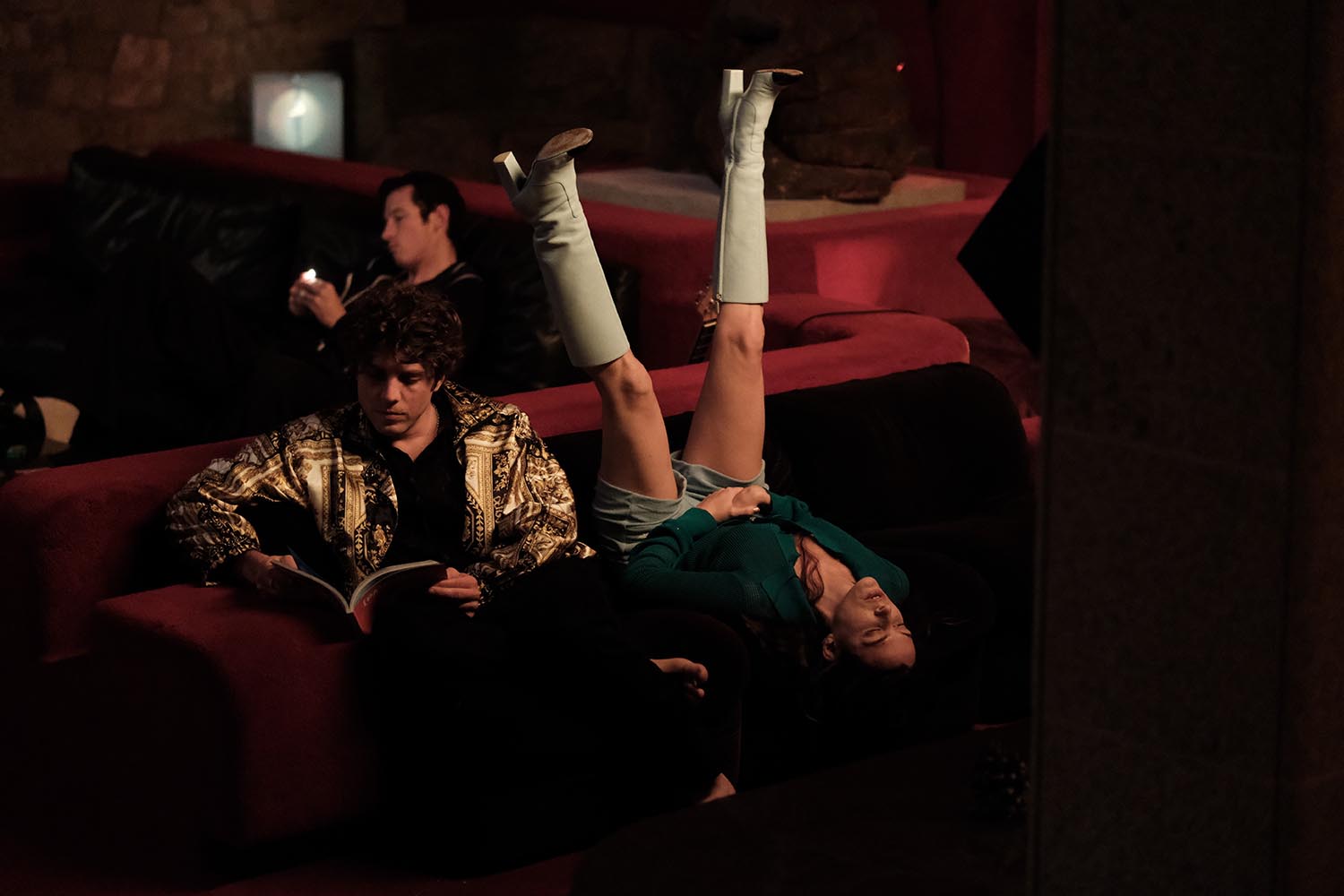
Rosebush Pruning takes place primarily in and around an opulent modernist house in the Spanish countryside, home of a stern, wealthy patriarch (Tracy Letts) and his four adult children. As noted in the extended introductory narration by fashionista and would-be aphorist Ed (Callum Turner), he and the other kids are choosing to remain there indefinitely in coddled luxury, with their entitlement and laziness enabled by their father’s money. Giving Ed the self-awareness to acknowledge this explicitly is the first of many odd choices by Filippou that only serve to defang any class critique present in the film, while the character’s recurring voiceover itself renders the unceasing freakishness strangely mundane.
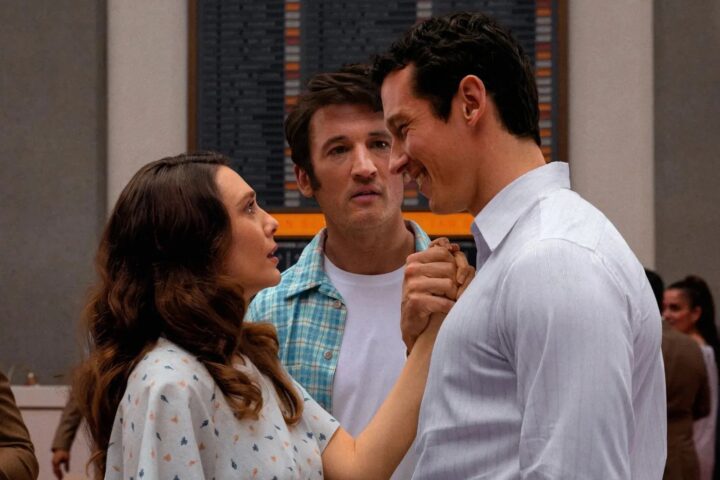
The household’s isolation from the outside world and the decades-long arrested development of the children appear to have allowed a range of unconventional habits and desires to propagate, most unsettling of which is the incestuous attraction of both Robert (Lukas Gage) and Anna (Riley Keough) to their older brother, Jack (Jamie Bell), the most independent and capable of the family members. Once the film has finished with its unnecessarily protracted process of laying out the family dynamics, the main thrust of its plot sees Jack attempting to turn his siblings’ various perversions against them, as part of a plan to escape the family forever and move in with his musician girlfriend, Martha (Elle Fanning).
Between its pleasingly vivid color scheme and occasionally bold compositions, the film can be aesthetically arresting, but it leans toward the cartoonish more often than not. Aїnouz’s choices emphasize the surface-level silliness of the events rather than burrowing into their dark psychological undercurrents, so that only cheap shock value can be gleaned from Rosebush Pruning’s cavalcade of blood, semen, animal carcasses, dick pics, and erotic toothbrushing.
Also, as with so much contemporary media satirizing the ultra-rich, the film’s slick visuals frequently glamorize what they purport to be exposing in a way that betrays a lack of conviction or sincerity. The cruelty and grotesquerie accompanying the ostentatious displays of wealth suggest less a genuine shake of the head than a shaky alibi for the filmmakers’ gleeful indulgence of late-capitalist fantasy. The lady doth protest too much, essentially. Or at least she doth protest more than the marketing heads at Bottega or Balenciaga will protest the frequent namedrops of their brands and products, the siblings’ obsession with which is probably supposed to seem sociopathic but is instead perhaps their most relatably human characteristic.
In fact, had Rosebush Pruning embraced its own complicity with the evil it portrays a little more, it probably would have been a lot more enjoyable. As it is, most of the comedy falls flat, besides several line readings by Pamela Anderson in a key supporting role (it would be a minor spoiler to explain who her character is, though the relevant plot twist is relatively easy to predict and somewhat pointless). She seems to be the only performer here comfortable with the campiness that the film is elsewhere too sneering and self-satisfied to pull off.
There’s some fun to be had when the violence between these characters starts to ramp up in the final act, but by that point it’s much too late to save face. And even that climax ultimately fails to achieve its desired effect, its rushed incoherence detracting from any potential catharsis.
Rosebush Pruning is loosely based on Marco Bellocchio’s provocative 1965 family drama Fists in the Pocket, which presaged a revolt in Italy against both bourgeois values and those of the neorealist cinematic movement. While it’s unfair on Aïnouz and Fillipou to point out that their film is unlikely to have a similar impact on contemporary culture, there’s something potentially revolutionary in what this tedious debacle says inadvertently about commercialism’s hostile takeover of the artistic modes of taboo-busting and satire. It’s an annexation that’s apparently keeping us all—discerning consumers, faux-edgy creators, and scheming corporate interests alike—trapped inside our own banal version of Rosebush Pruning’s infantilizing decadence, pushing each others’ buttons effortlessly, relentlessly and to no effect.
Since 2001, we've brought you uncompromising, candid takes on the world of film, music, television, video games, theater, and more. Independently owned and operated publications like Slant have been hit hard in recent years, but we’re committed to keeping our content free and accessible—meaning no paywalls or fees.
If you like what we do, please consider subscribing to our Patreon or making a donation.