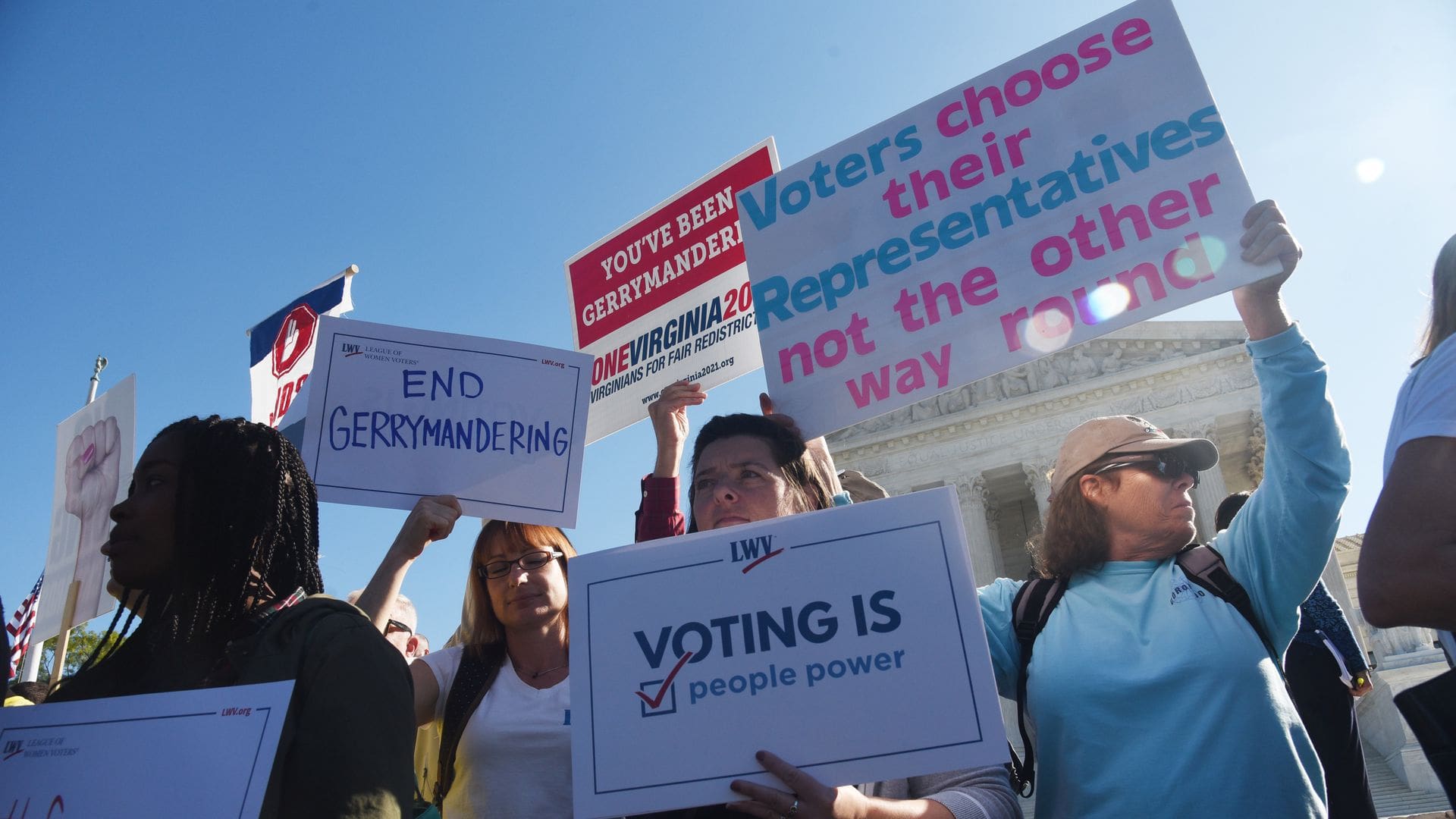
Since the 2010 census and the arrival of vociferous Tea Party lawmakers in Congress the following year, partisan gerrymandering has become a considerably powerful weapon for right-wing D.C. think tanks and the Republican politicians who enact their will. Barak Goodman and Chris Durrance’s Slay the Dragon treats this hacking of democracy with all the urgency of a constitutional crisis. The film—with a sense of purpose and a notable chip on its shoulder—is suitably direct, clear-eyed, and exhaustive in documenting the massive impacts that gerrymandering has, particularly on communities of color.
The filmmakers are unapologetically partisan in their righteous indignation, and while their anger is certainly just, their approach does lead to a few too many futile attempts at shaming the shameless, such as Chris Janowski, the Republican strategist who founded the Redistricting Majority Project, and who’s perfectly willing to appear on camera and gloat about his victories. However, the film’s comprehensive illustrations of the underhanded means with which nefarious redistricting not only ensures politicians’ re-elections, but guarantees Republicans a significantly larger share of state representatives than the popular vote would indicate, offer a crucial means of both understanding and combating the problem.
The simple, straightforward manner of Slay the Dragon’s explanations of the extent of gerrymandering over the past decade, complete with a recurrent use of graphics and charts, occasionally suggests a PowerPoint presentation designed to preach to the choir. But while certain stretches of the film certainly resemble an uncinematic information dump, the filmmakers decision to focus specifically on two communities’ battles against the shady political tactic lend it a human touch that works both as a galvanizing call to action and a frightening exposé on the seemingly inexhaustible amounts of dark money and legal hoops that must be surmounted to have even the slightest chance of reversing the trend.
Slay the Dragon’s accounts of two initiatives—one in Michigan, another in Wisconsin—to end gerrymandering help the film to attain an edifying specificity that moves it beyond a mere diagnosis of a blatant yet seemingly insurmountable problem and toward posing workable solutions. In Wisconsin, we follow a legal case that makes it all the way to the Supreme Court, straddling the time before and after the deciding vote, Justice Anthony Kennedy, was on the bench. This more strictly legal court battle is nicely complemented by the people-driven movement in Michigan, led by Katie Fahey, a young woman with no background in politics who’s fighting to get an anti-gerrymandering proposal on the state ballot.
In both cases, the documentary highlights the importance of individual action and communal organization in gradually expanding these statewide campaigns. And given the enormity of the tasks at hand, and the great odds against their success, there’s a built-in suspense to the act of watching these processes play out over a period of months and years. But it’s through the contrary outcomes of these two movements that Slay the Dragon makes its most lasting impression, leaving the audience to bear witness to both the joys of a triumph against injustice and the terrifying machinations that guarantee such victories remain a rarity.
Since 2001, we've brought you uncompromising, candid takes on the world of film, music, television, video games, theater, and more. Independently owned and operated publications like Slant have been hit hard in recent years, but we’re committed to keeping our content free and accessible—meaning no paywalls or fees.
If you like what we do, please consider subscribing to our Patreon or making a donation.