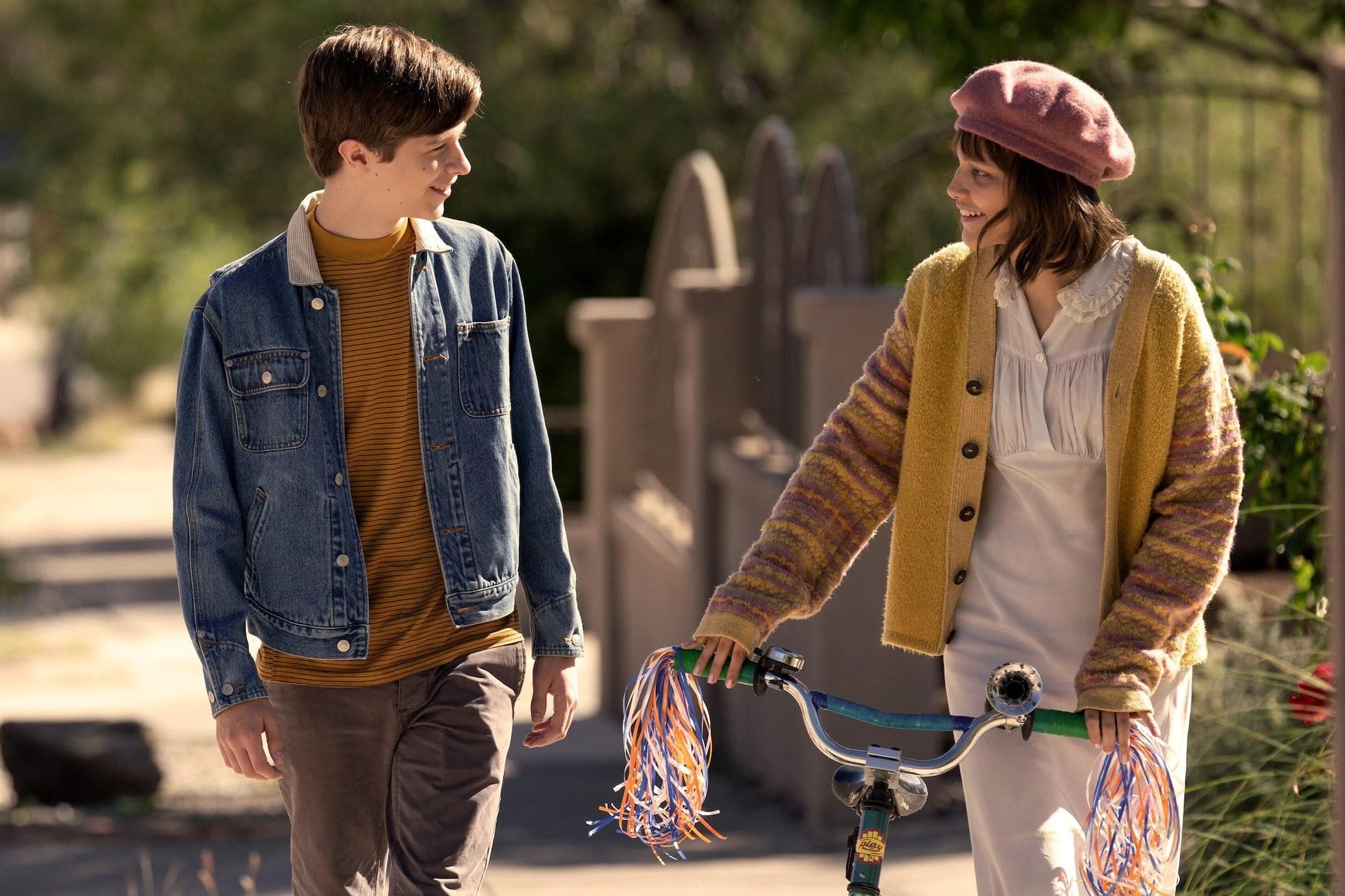
Stargirl (Grace VanderWaal), the new kid at Mica High School, isn’t afraid to stand out. She wears quirky outfits, walks backwards, and sings while playing her ukulele. Naturally, she has a lot to teach one of the school’s resident mopes, Leo (Graham Verchere), about life and being himself, and in one scene from this Disney+ adaptation of Jerry Spinelli’s classic young-adult novel Stargirl, they walk out into the desert together and she encourages him to shout into the distance and let it all out.
Like many films of its ilk, Stargirl is less about its central figure than it is about her inexplicable love interest. In this case, Leo has decided to keep a low profile in life ever since he was bullied as a child. His habits are challenged by the arrival of Stargirl, and in a nice bit of visual symmetry, her first appearance puts him out of step with the rest of his classmates during band practice. The others crash into him while he gawks at Stargirl, who prompts him to briefly (and accidentally) go his own way and stand out, even before they properly meet.
Director and co-writer Julia Hart’s work on the rest of the film is similarly meticulous. Stargirl is briskly paced, with each subplot and side character falling into place as gracefully as the early scene where Leo’s friends glide into frame while he walks down the hallway. As in Fast Color, Hart presents her characters against beautiful desert vistas and observes the ups and downs of parenthood, here in the moments between Leo and his mother (Darby Stanchfield). She reserves close-ups for the things that really capture Leo’s imagination, like the ties embroidered with porcupines that he mysteriously receives every birthday or the moments where Stargirl luminously sings and the world for him seems to stop.
But Stargirl’s source material was written 20 years ago, and despite a few notable updates to the story’s trajectory and character dynamics, the age shows. The film never injects Stargirl with some semblance of interior life, coming across like yet another casualty in the long line of stories about men having their eyes opened by their angelic girlfriends. Too much of the love story feels like some kind of Garden State Jr., and the otherwise admirable themes about nonconformity play more like a lesson for just how much the crowd will accommodate people who look like Leo and Stargirl. The film boils self-expression down to the main characters’ ability to perform in public, in the process conflating displays of individuality near-exclusively with being pretty, white theater kids who are willing to spontaneously take the stage and sing on key. Near the end of the film, Leo sings the Cars’s “Just What I Needed,” and the self-centered phrasing of that song’s title perhaps says far more than the film intends.
Since 2001, we've brought you uncompromising, candid takes on the world of film, music, television, video games, theater, and more. Independently owned and operated publications like Slant have been hit hard in recent years, but we’re committed to keeping our content free and accessible—meaning no paywalls or fees.
If you like what we do, please consider subscribing to our Patreon or making a donation.