The title of writer-director Vincenzo Natali’s In the Tall Grass is fatally accurate, as much of the film’s running time consists of people wandering an expansive field of bright green grass, walking in circles. Characters keep entering the field to look for others, who are in turn looking for the people who’re looking for them. This increasingly nonsensical wandering is supposed to be existentially, supernaturally frightening, but Natali exhibits little of the formal ingenuity that he displayed in his 1997 breakout film, Cube.
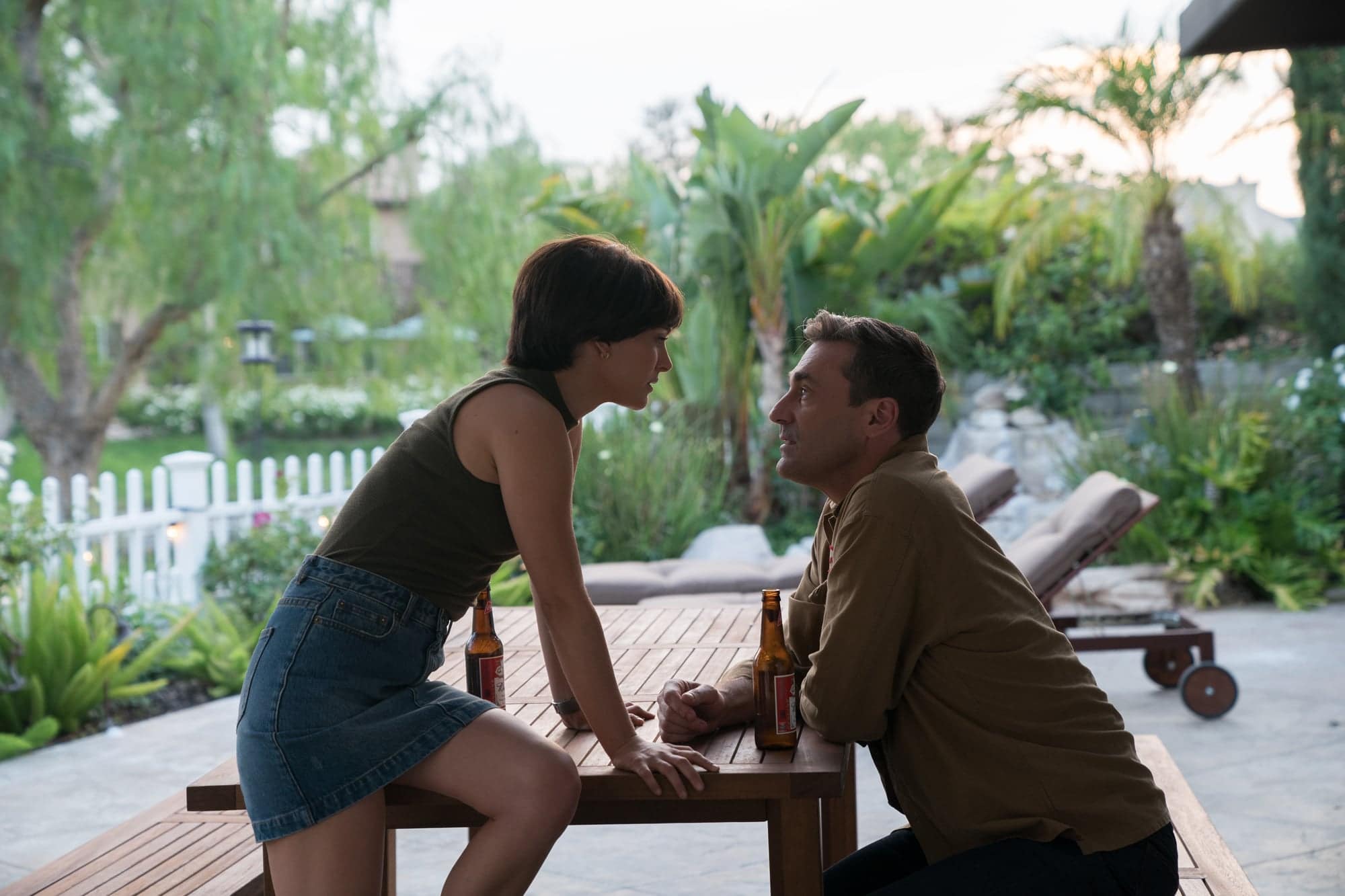
Based on a novella by Stephen King and Joe Hill, Natali’s screenplay features a mixtape of King tropes. The eerie field in the American West, next to an abandoned church that will of course play into the proceedings, suggests the setting of Children of the Corn—an association that becomes explicit as the field is revealed to be controlled by a religious cult. Later in the film, a fortysomething father, Ross (Patrick Wilson), becomes possessed and tries to kill his son, Tobin (Will Bule Jr.), and wife, Natalie (Rachel Wilson), in the tradition of too many mad King patriarchs to count. Tobin soon learns the rules of the demonic game and advises others in the tradition of numerously precious King children. At the center of this collection of stereotypes are a sibling Jack-and-Jill team, Becky (Laysla De Oliveira) and Cal (Avery Whitted). Becky’s one trait is that she’s pregnant, rendering her susceptible to learning a life lesson, while Cal is defined—with perverse yet unfulfilled promise—by his attraction to Becky.
For the film’s first 20 minutes, Natali terrifyingly implies that he’s going to subject his audience to nothing but endless variations of Becky and Cal calling one another’s names, in a kind of “who’s on first” routine set in Beckett’s idea of hell. As other characters pour into the film, more backstory is added, though only for the sake of essentially having more people call one another’s names. Such a dull idea might have benefit from a sense of humor or an ability to render the titular grass visually uncanny, neither of which Natali displays.
There are fine shots of the grass blowing in the wind, reminiscent of underwater seaweed, but Natali offers no variations on this motif, and his blunt staging never allows the evil of the field to be insidious, particularly when a sacred rock, which resembles an egg carved out of hardened feces, is revealed to be at the center of the ghostly shenanigans. (The nighttime sequences are also drab and texture-less, rendered in the impersonally glossy cinematography that’s been the bane of several Netflix films.) A high concept gradually renders this game of tag even more interminable than before. The evil magic field appears to be on a dimensional axis in which multiple timelines simultaneously exist. If someone dies, then, they might come back soon to lure other characters into this grassy web. With no one able to die, in accordance with rules that aren’t given to the audience, the film divests itself of stakes in the name of total meaninglessness. Natali gets lost himself in a thicket of gimmicks.
Since 2001, we've brought you uncompromising, candid takes on the world of film, music, television, video games, theater, and more. Independently owned and operated publications like Slant have been hit hard in recent years, but we’re committed to keeping our content free and accessible—meaning no paywalls or fees.
If you like what we do, please consider subscribing to our Patreon or making a donation.