

James Wan’s Aquaman and the Lost Kingdom is a minimum viable product, plopped into the theater with an apathy as pervasive and all-encompassing as the ocean itself. Despite being the successor to a film that got over with fans on the strengths of some big creative swings, Aquaman 2’s job is to simply exist—the last cynical hope of squeezing a few nickels out of the unsalvageable mess that is Warner Bros.’s last decade of superhero movies.
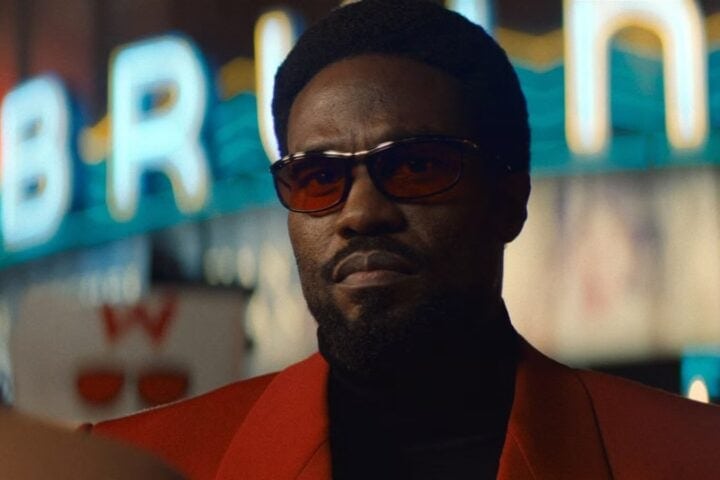
There’s some logic to the approach. Disconnected from having to exist as part of a larger universe, the film keeps things nice and tidy, demanding nothing of viewers. Despite some wild gesticulating toward the idea of Arthur Curry (Jason Momoa) as a bro-ey husband and father to an adorable newborn, Aquaman and the Lost Kingdom’s central concern is that Black Manta (Yahya Abdul-Mateen II) still wants revenge for Aquaman killing his father in the first film.
In searching for some Atlantean technology to give him an edge, Black Manta comes across a black trident and a deposed sea king named Kordax, who grants Black Manta his power and technology in order to take his own revenge on Atlantis. After a botched theft leaves the underwater kingdom in ruins, Aquaman decides to take the fight to Black Manta, but he’ll need help from his imprisoned brother, Orm (Patrick Wilson), because…well, it’s not really clear why beyond giving Momoa someone to play his bro shtick off of who isn’t Amber Heard.
Just like the first film, Wilson acquits himself with a regal stoicism that feels like an act of defiance, and he has good straight-man chemistry with Momoa that carries the stretch of Aquaman and the Lost Kingdom where it turns into a buddy comedy adventure. Also of note is Randall Park, who, as a scientist who just wanted to find Atlantis, plays his character’s complicity in Black Manta’s crimes like he’s auditioning for Oppenheimer.
For his part, Wan finds momentary pockets to crank the unhinged ocean weirdness of the first film up a notch, particularly with a smart cephalopod sidekick and the gothic design of Kordax’s city, which suggests a water-logged recreation of Return of the King’s Minas Morgul.
But the game efforts of the cast, including Martin Short’s brief stint as what can only be described as pansexual Jabba the Hutt, are ultimately futile. The hurried, horse-blinder construction of the film—hitting plot milestone after plot milestone as fast as humanly possible, cohesion or depth be damned—makes it come across like even Wan can’t wait for the whole thing to be over. Anything resembling substance or depth feels utterly vestigial as a result.
While Aquaman and the Lost Kingdom’s underwater sections channel some of the first Aquaman’s sense of weirdo spectacle, the moments set on land that focus on Arthur as a family man feel utterly disconnected from the feel, look, and plot of the rest of the film. It’s a separation made more egregious by the fact that the visibility of Heard’s Mera—Arthur’s wife and the mother of his child, lest we forget—is virtually nonexistent until the plot absolutely can’t function without her. Given that exploring Arthur’s relationship to his family above and below sea level is one of the things that made the first film unique, if not engaging, the meager lip service paid to everyone else in Arthur’s family unit aside from Orm feels like willful neglect.
Since 2001, we've brought you uncompromising, candid takes on the world of film, music, television, video games, theater, and more. Independently owned and operated publications like Slant have been hit hard in recent years, but we’re committed to keeping our content free and accessible—meaning no paywalls or fees.
If you like what we do, please consider subscribing to our Patreon or making a donation.



DCEU, Rest in…. peace?