When discussing comprehension, we often use words associated with the act of looking. It’s in someone “seeing the light,” or making “clear” what was previously not understood. Our language for sight hides a rich trove of metaphors for knowledge—and, indeed, having everything in view certainly isn’t the worst metaphor for the philosopher’s ceaseless attempt to capture the world in thought. And the supreme literary expression of this drive is perhaps Faust, Johann Wolfgang von Goethe’s reworking of medieval legend of a man who sold his soul to the devil in exchange for unlimited experience.
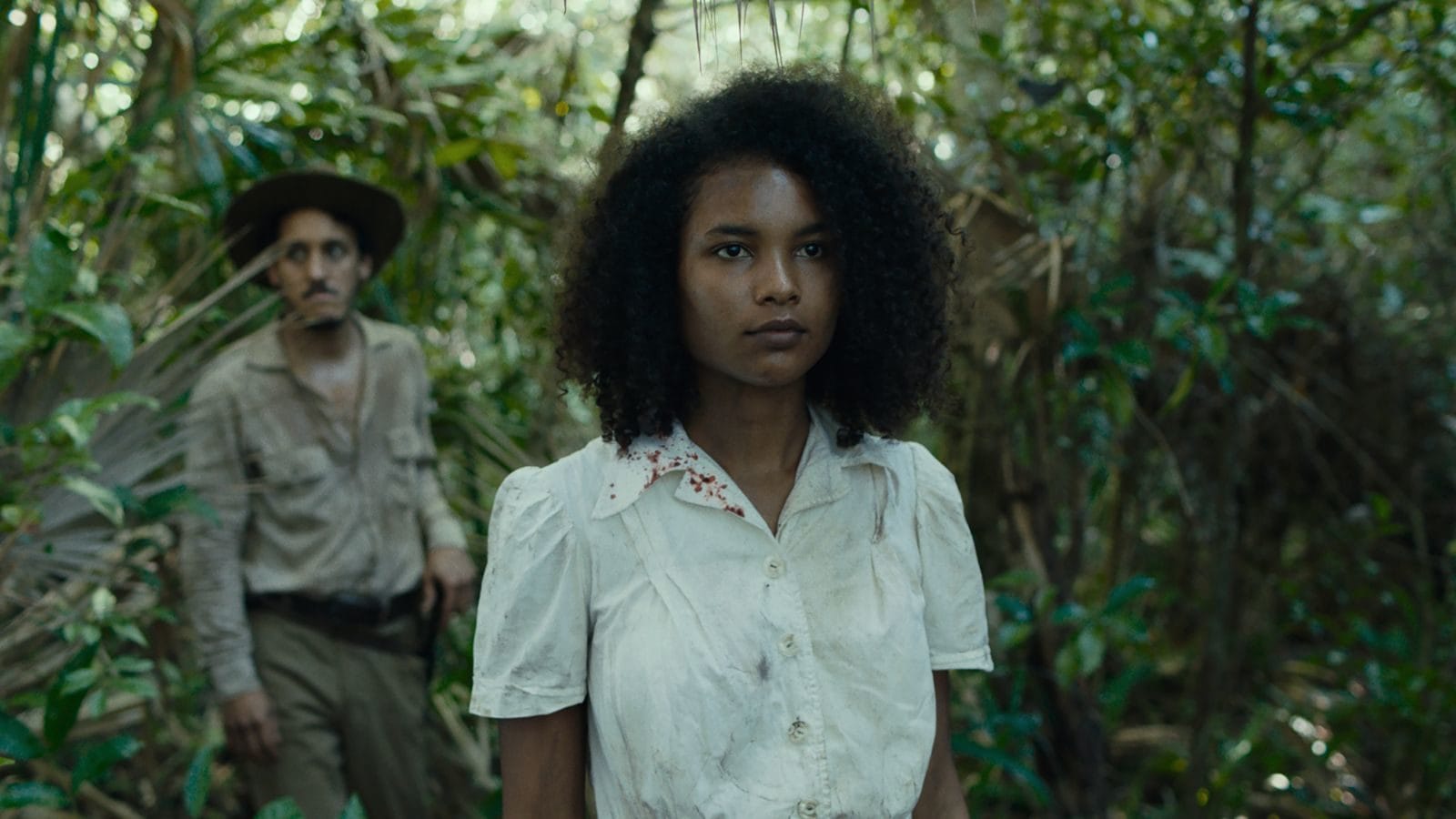
Andrea Bussmann’s Fausto isn’t a narrative adaptation of Faust. Told largely through an omniscient voiceover recounting various myths, fables, and folk tales, it draws on Goethe’s themes to prod and challenge the Western link between vision and knowledge. Set on a secluded beach in Oaxaca, Mexico, the film largely resembles a documentary or ethnography in form, though a recurrent narrative thread occasionally surfaces, which focuses on the exploits of two friends, Fernando (Fernando Renjifo) and Alberto (Alberto Núñez), who work to expand their small beachside restaurant. But it’s a task they’re distracted from after a mysterious, Faust-like Frenchman briefly appears in their midst.
The shadowed border between human and non-human perception is one of Fausto’s sustained topics of interrogation. The film frequently details animals’ visual capacities, focusing on domestication and its relation to perception. We see a cat being petted as the voiceover discusses telepathy in animals, a capacity which it assures the viewer persists even when an animal has been stuffed. The music during this scene recurs later when the film jumps to a display of animal dioramas at a museum, with the camera positioned so close to the glass that the taxidermied animals almost appear to be in their “natural” habitat. For a moment it feels as if the creatures are actually watching us, and that we’re also trapped within their dioramic worlds. During a more scientific description of horses’ blind spots, we see a horse tied to a tree. The voiceover mentions that nocturnal animals are resistant to domestication while a list of nocturnal creatures appears on screen. Many of them are striking because they would be useless in captivity anyway. Who would want to keep an ogre-faced spider or a colossal squid?
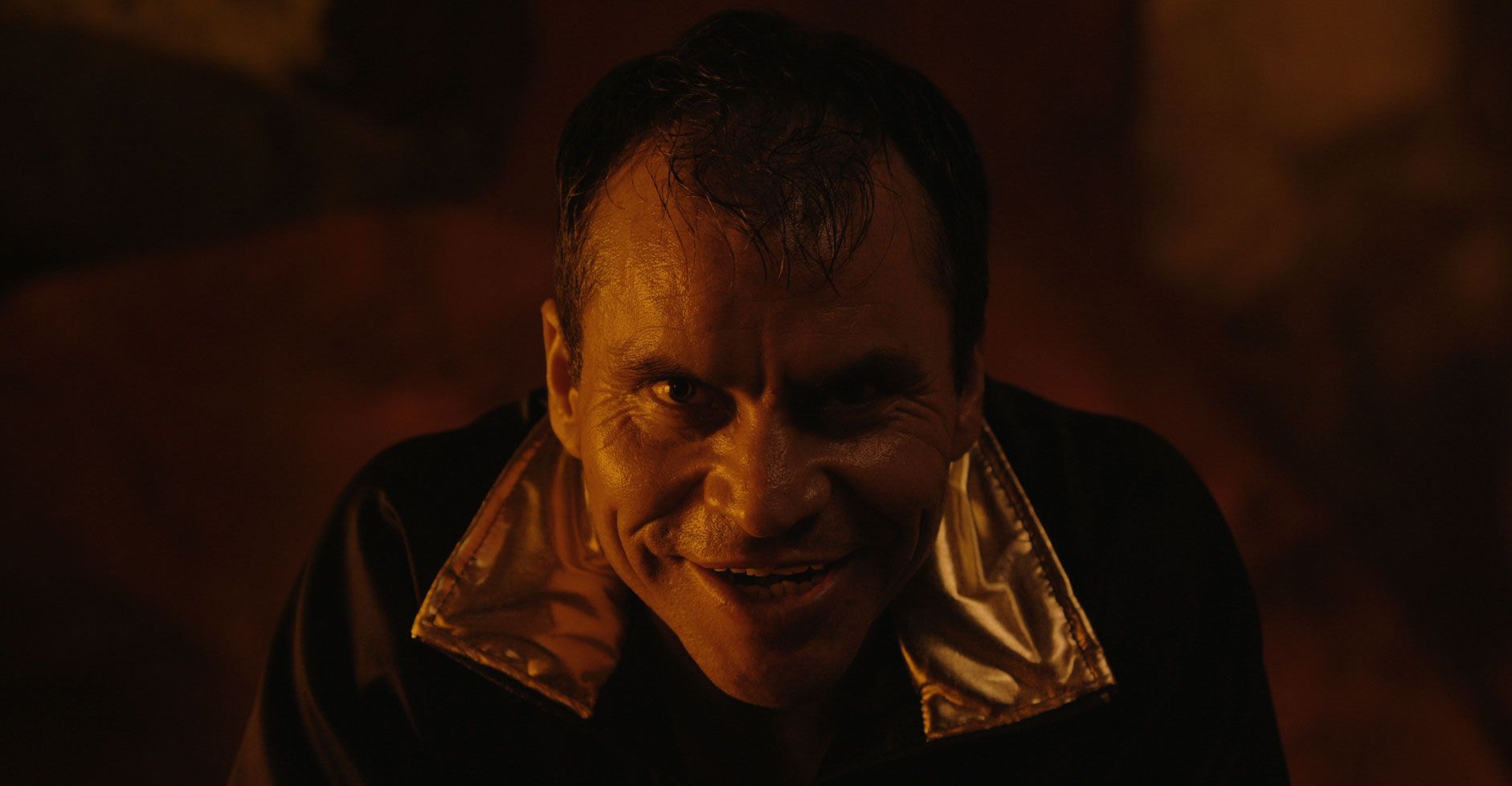
If being nocturnal relates to being resistant to domestication, it invokes the animal kingdom’s more general indifference to humanity. This emphasis on nocturnal animals is just one strategy in the film’s attempt to break down—or at least move the viewer to question—the air of proud certainty surrounding human, specifically diurnal, vision. If daytime is domestic and knowable, the night is wild, uncertain, and resistant. Fausto is extremely dark, with around half of it taking place at night, and some of what appears on screen is borderline invisible. Some shots feature Alberto, Fernando, and their friend (Ziad Chakaroun) talking, illuminated only by a small candle or incandescent light. Many are of the beach, where just a single point of light—the sun, the moon, or maybe a boat—is visible. In this manner, which privileges the narrator’s voice, the film strips away the power of vision, leaving the viewer unmoored, uncertain, and sensing the presence of the invisible in the surrounding darkness.
Even the film’s production is connected to this endeavor to undermine clarity in vision. Bussmann shot Fausto on a digital camera often touted for its low-light functionality and then transferred the footage to 16mm, thus degrading the pristine HD and leaving the viewer with an image that, especially in the film’s nighttime shots, is liable to be variegated, underexposed, and generally more foreboding. The vertigo-like feeling that the weighty darkness induces is only heightened by the film’s penchant for stories about shadows that multiply or become free from their owners. Call it the autonomy of the shade.
Goethe’s Faust is in some respects about what sociologist Max Weber called the “disenchantment of the world,” the way in which capitalism in the West drives out the mystical and domesticates the mysterious; its hero experienced everything he desired but always remained unsatisfied. In the wandering Frenchman’s mouth, “As everything lights up, I remain in the shadows.” In turn, Fausto suggests that capital is a proliferating dark magic in its own right. One woman recounts a story about a haunted house with an alluring blue light, not unlike the floating lights that populate so many of the film’s shots. Those who enter are greeted with a gigantic supermarket where they can find whatever they like. Once they’ve shopped to their heart’s content, they die. This spirit of capital finds itself in Alberto and Fernando’s restaurant, whose ceaseless expansions continually displace former witches’ dens.
It’s from this perspective that Fausto’s penchant for fables and tales starts to become clear. As the film scores it, the economic and intellectual drive to continuously expand is the devil’s work, a correlate of flawlessness in the image that the film counteracts. Fausto abounds with piecemeal stories from locals and fantastic characters that evoke the writings of Borges and Bruno Schulz. These fragments of narration resist the devilish drive to see everything, to encompass everything with understanding. The partial and the limited are championed over the continuous and completed—a short circuit in the desire to continue the story to infinity. Valorizing these tales is tantamount to respecting what we cannot know and to recognize that, as the narrator puts it, “wild animals are everywhere.”
Since 2001, we've brought you uncompromising, candid takes on the world of film, music, television, video games, theater, and more. Independently owned and operated publications like Slant have been hit hard in recent years, but we’re committed to keeping our content free and accessible—meaning no paywalls or fees.
If you like what we do, please consider subscribing to our Patreon or making a donation.