In his alternately illuminating and infuriating précis The Velvet Rage, psychologist Alan Downs outlines the psychological hurdles that prevent gay boys from becoming healthy, self-actualized men, putting them behind schedule compared to their straight counterparts. Watching Frank Simon’s The Queen, a verité documentary about a 1967 New York City “camp pageant,” especially in our current era of peak Drag Race, one may wonder if the drag scene didn’t similarly arrive into full-fledged postmodernism behind schedule.
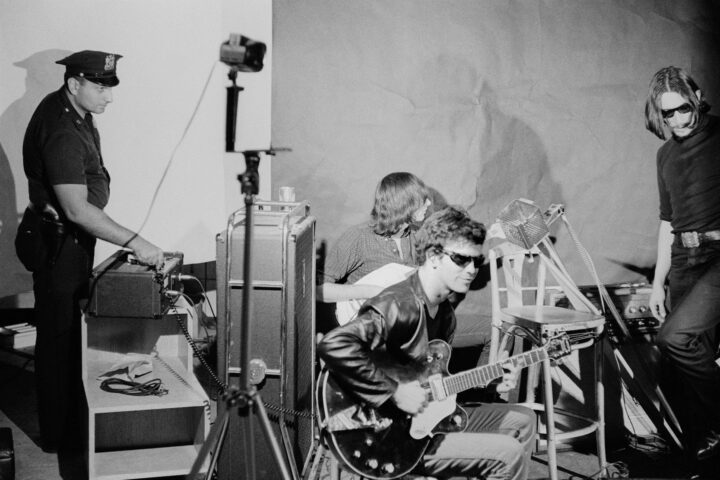
Whereas RuPaul’s pop-culture juggernaut presents drag as the ultimate vehicle for turning a self-referential mirror onto reality TV and, indeed, the entertainment industry itself, the contestants in Simon’s temperate portrait are openly, if not quite unapologetically, what-you-see-is-what-you-get. (Except for on-stage theatrical productions, dressing in the clothing of the opposite gender was still a felony in New York at the time of the film’s production.) Any notion that The Queen’s milieu is any less vanguard than Vanjie is today goes out the window, of course, the moment postmodern avatar Andy Warhol is spotted by the cameras serving as one of the trendsetters chosen to judge the Miss All-American Camp Beauty Pageant. And if any of the finalists feel intimidated by that, it doesn’t show on any of their faces.
A quaint portrait it’s not, and aside from the conditions of the rat-trap midtown hotel where the competing queens are put up in, it’s hardly fly-on-the-wall either. While it presents its subjects at arm’s length, The Queen consistently recognizes the constraints they face. An early shot introduces 18-year-old pageant hopeful Harlow (Miss Philadelphia) walking through a crowd of people, angular features instantly setting her apart from the rest and establishing her star potential. Virtually, the very next shot of Harlow shows her window-shopping for dresses, leaning in with her torso as a theater marquee looms behind her, contrasting Harlow’s existence against the taunting title of Claude Lelouch’s date-night smash A Man and a Woman. A juxtaposition of a different kind emerges as the queens are shown donning their eveningwear; one of the larger competitors struggles to pull a bra down over her natural plumage, while another rail-thin girl next to her tapes her pecs together to force cleavage.
During a stretch of downtime between rehearsal and the big show, one queen lounging on a sunken mattress tells anyone within earshot that, while she has enough money to go through with a sex change operation and lives within 30 miles of John Hopkins University (which at the time was offering such services), it’s “the last thing I want” to become a woman. Meanwhile, another muses that gay men are attracted to other men, which tends to make dating difficult for drag queens, an argument that has resurfaced season in and season out on Drag Race.
The urge to approach The Queen in 2019 as a measure by which our culture has come since before Stonewall is probably unavoidable, given the considerable gains the LGBTQ community has made in just a generation and a half, and has already emerged in the number of new reviews quoting contemporaneous criticism the film received back in the day, most of them either detachedly impressed or reflexively condescending. (Pauline Kael saying it “has considerable humor and drama, as well as that mixture of perversity and sadness distinctive to the drag scene” represents one of the doc’s least qualified endorsements.)
It’s still clearly more a function of the predominate documentary filmmaking style of the day that these queens come off so comparatively passive than it is a reflection of the era’s lack of wokeness. Especially once fourth runner-up Crystal LaBeija (mother of the House of LaBeija and Paris Is Burning’s Pepper LaBeija) chooses to get “temperamental” about how even the drag circuit is tainted by racist double standards. “You’re beautiful and you are young, you deserve to have the best in life, but you did not deserve this. Miss Thing, I don’t say she’s not beautiful, but she wasn’t looking beautiful tonight. She doesn’t equal me, look at her make-up! It’s terrible,” she fiercely rants. “I have a right to show my color, darling!” In fact, Crystal’s night-capping read may as well be subtitled, “In the beginning there was shade.”
Since 2001, we've brought you uncompromising, candid takes on the world of film, music, television, video games, theater, and more. Independently owned and operated publications like Slant have been hit hard in recent years, but we’re committed to keeping our content free and accessible—meaning no paywalls or fees.
If you like what we do, please consider subscribing to our Patreon or making a donation.