Ostensibly an attempt to atone for the flaws of Brett Ratner’s much-reviled X-Men: The Last Stand, which was loosely based on “The Dark Phoenix Saga,” writer-director Simon Kinberg returns to the well with Dark Phoenix, a more direct adaptation that essentially repeats the 2006 film’s offenses, only this time with a different cast. Kinberg’s film, set a decade after the events depicted in X-Men: Apocalypse, is a stultifying affair that strips Chris Claremont’s classic story down to its basic narrative beats at the expense of the deep character relationships that give the extended X-Men storyline its emotional resonance.
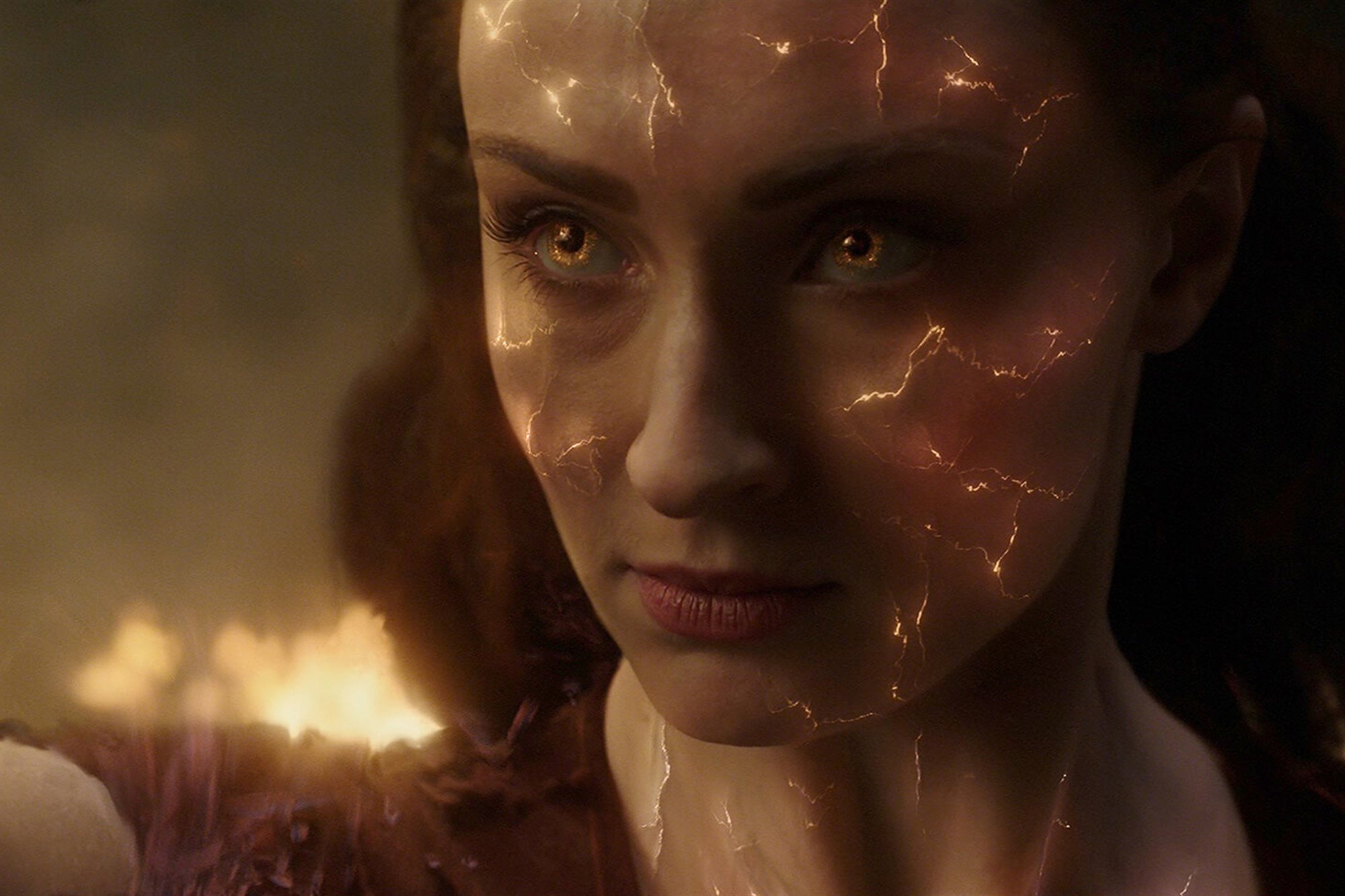
As with the previous entries in the sub-series within the X-Men film franchise, Dark Phoenix assumes a level of kinship between characters that’s never illustrated, with heroes stating their closeness to others despite a lack of previous on-screen interaction and a lack of easygoing chemistry between its cast members. This timeline’s Jean Grey (Sophie Turner) has only appeared in one previous film in the multiple-timeline film franchise, Apocalypse, yet she’s presented here as an old friend with a rich history with the X-Men.
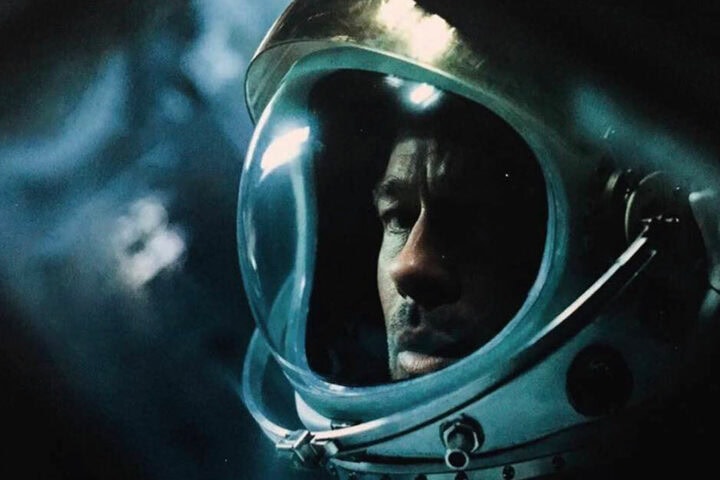
She travels with the other X-Men into space at the start of Dark Phoenix in order to rescue stranded NASA astronauts, at which point she’s exposed to a strange radioactive energy. Jean, already one of the most powerful mutants on Earth, is supercharged by the blast, imbuing her telekinetic and telepathic abilities with such unfathomable strength that even Charles Xavier (James McAvoy) begins to fear her. Jean’s struggle to contain her newfound power forces her to confront buried childhood trauma, which the film has to hastily establish in the opening scene in order to give Turner’s character something resembling a backstory.
Everything else in Dark Phoenix is similarly, almost impossibly rushed, with characters given to rapid bursts of flat dialogue in which they explain their motivations, actions, and feelings. Throughout, thematic arcs aren’t developed so much as suddenly introduced. Indeed, almost as soon as the X-Men return from space, the open pleasure Xavier displays at the politicians and media types who celebrate his team’s accomplishments is pegged by Mystique (Jennifer Lawrence) as narcissism. And her criticism is swiftly upheld by the revelation that Charles used his telepathic powers to suppress Jean’s more brutal memories.
Placing Charles outside of his normally unimpeachable moral standard and suggesting that his desire to help others could be perverted by his own quest for glory opens an intriguing critique of the role that Charles and other comic characters like him play in molding teams of young heroes to their own ends. But the film seems to treat the spoken acknowledgment of Charles’s egotism as a meaningful examination and criticism of it, and the film absolves him of his subconscious manipulation of his friends and pupils as quickly as it denounces him for it.
The mounting stress of Jean’s powers and suppressed trauma explodes in bursts of violence that have global, if not cosmic, implications of chaos, yet Dark Phoenix remains inanely fixated on the immediacy of Jean’s impact on her friends. In the comics, an unfathomably powered Jean literally consumes the energy of a star, killing billions in an entire solar system. Here, her uncontrolled powers result in the death of a comrade—an emotional loss, sure, but not one with the genocidal stakes that prompted retaliatory action in the original story.
“The Dark Phoenix Saga” saga boldly asked if a group of unambiguous heroes to weigh the desire to save a beloved a friend not in her right mind against the moral imperative to protect the countless lives she could, and did, terminate. Here, those who hunt Jean want nothing more than revenge, which divorces the film further from its source than even The Last Stand.
A handful of other plots are whipped up with total abandon. Jessica Chastain plays the leader of a race of alien shapeshifters who want to steal the energy possessing Jean and harness it to terraform a new home world. But since a film such as this necessitates a bona fide villain, instead of opting to use that power to, say, colonize an uninhabited world in a win-win for everyone, the aliens insist on eradicating and reshaping life on Earth.
The climax, which takes place on a prisoner train bound for a detention camp, is the film’s strongest stretch, as its action choreography makes thoughtful use of the confined dimensions of the setting, from the clever teleporting tricks of Nightcrawler (Kodi Smit-McPhee) to Magneto’s (Michael Fassbender) brutal twisting and flinging of metal in order crush and skewer alien attackers. Nonetheless, even this sequence ultimately falls apart, with various continuity gaps serving to obscure any notion of just how many enemies are actually present.
Such discrepancies epitomize a film that regularly has its characters say and do what is required for each scene regardless of how badly it contradicts a previous moment. At its heart, Claremont’s original story is about the lengths people are willing to go to save Jean from herself. And without the core sense of these characters’ camaraderie and devotion to her, Dark Phoenix is a soulless retelling of one of the great arcs in comic book lore, and an all-too-fitting whimper of a conclusion to a franchise that never remotely fulfilled its potential.
Since 2001, we've brought you uncompromising, candid takes on the world of film, music, television, video games, theater, and more. Independently owned and operated publications like Slant have been hit hard in recent years, but we’re committed to keeping our content free and accessible—meaning no paywalls or fees.
If you like what we do, please consider subscribing to our Patreon or making a donation.