Nestled in the verdant Swiss Alps, on the shore of Lake Maggiore near the Italian border, Locarno is a beautiful setting for one of Europe’s preeminent summer film festivals. While most screenings take place in the sleek, modernist cinemas that are dotted around the small town, each evening also has at least one open-air projection in the central square, bolstering the impact of the festival’s more high-profile titles by presenting them amid rustic cobbles, gorgeous mountain scenery, and several centuries of history.
Holding an international showcase like this in such a breathtaking place also serves to underline some of the interesting contradictions and alternately jarring and fruitful clashes that a legacy film festival can create, which were never more apparent than at this year’s edition. Case in point, the Monday-night screening of Luc Jacquet’s Antarctica Calling, which was prefaced by a pre-screening award presentation that was interrupted by environmental activists.
Warding off security personnel as the protesters rushed the stage, Jacquet chose to hand over his microphone to the teen representatives of Renovate Switzerland and let them speak about their fears of climate change, which they did with relative restraint and civility, to a smattering of boos and a more notable volume of cheers and applause. And whatever the political leanings of this festival might be, it’s hard to think of a more effective way to defang a radical youth movement than to offer it institutional approval and the support of an aging leisure class, in a natural idyll that also happens to be located in one of the pulsating centers of global capital.
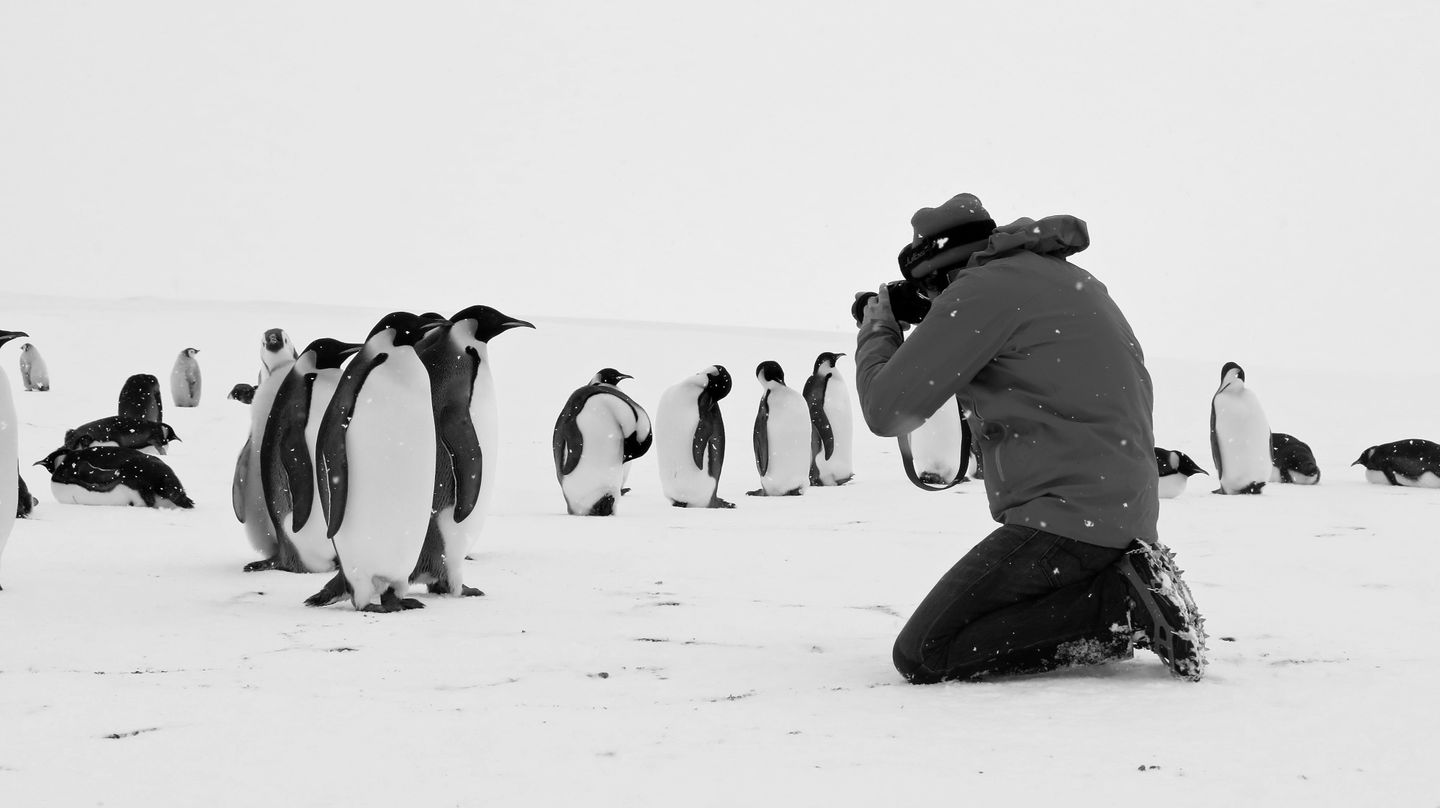
When things got up and running again, Antarctica Calling, a meditative visual record of Jacquet’s latest sojourn to the planet’s southernmost continent, proved to be a striking, majestic travelogue, boasting mesmeric monochrome images of a uniquely barren landscape. However, despite being starker and more formally daring than the Frenchman’s crowd-pleasing box office smash March of the Penguins, it never quite overcame its status as a kind of prestige wallpaper. And the closing words of the narration, in which Jacquet reflected on his feelings of regret about future generations being unable to experience the same wonders that he did, couldn’t help but feel a little self-centered given the new context provided by the disruption that preceded the screening, though his film did serve as a vivid document of what is being lost to time and apathy.
Unlike in Jacquet’s film, Patagonia’s titular locale is a mere metaphor, suggesting a desire for escape, which was something that was hard for me not to share as I watched this bleak, vacuous road movie. The debut feature of Italian filmmaker Simone Bozzelli sees Yuri (Andrea Fuorto), an extremely immature, emotionally stunted 20-year-old, flee the shelter of his aunt’s house in a dull rural town to become the assistant to Agostino (Augusto Mario Russi), a roguish, enigmatic children’s party clown and magician. Traveling the local region in Agostino’s camper van and mixing with a loose community of hippies, bikers, drug addicts and other itinerant figures living on the margins of society, Yuri soon finds that his newfound liberation might just be another form of captivity, one without any of the safety that he knew back home.
Patagonia, whose premise suggests a parody of arthouse festival circuit fare, dutifully moves from one cliché to the next, and gestures weakly at authenticity through a combination of shaky camera work, sun-scorched photography, and rough-around-the-edges characters and settings. Almost half of the film’s shots are claustrophobic close-ups, which capture every nuance of the two leads’ undeniably potent but ultimately squandered performances, while also nurturing a would-be transgressive eroticism that feels half-hearted and entirely joyless.
Some tension is generated from the central characters’ see-sawing power dynamic and a general sense of uncertainty that the ambiguous closing scene doesn’t fully dispel. But that doesn’t justify the tediousness with which Bozzelli observes people as if they’re ants under a microscope, without a single believable moment of spontaneous humanity to alleviate the depressing mood.
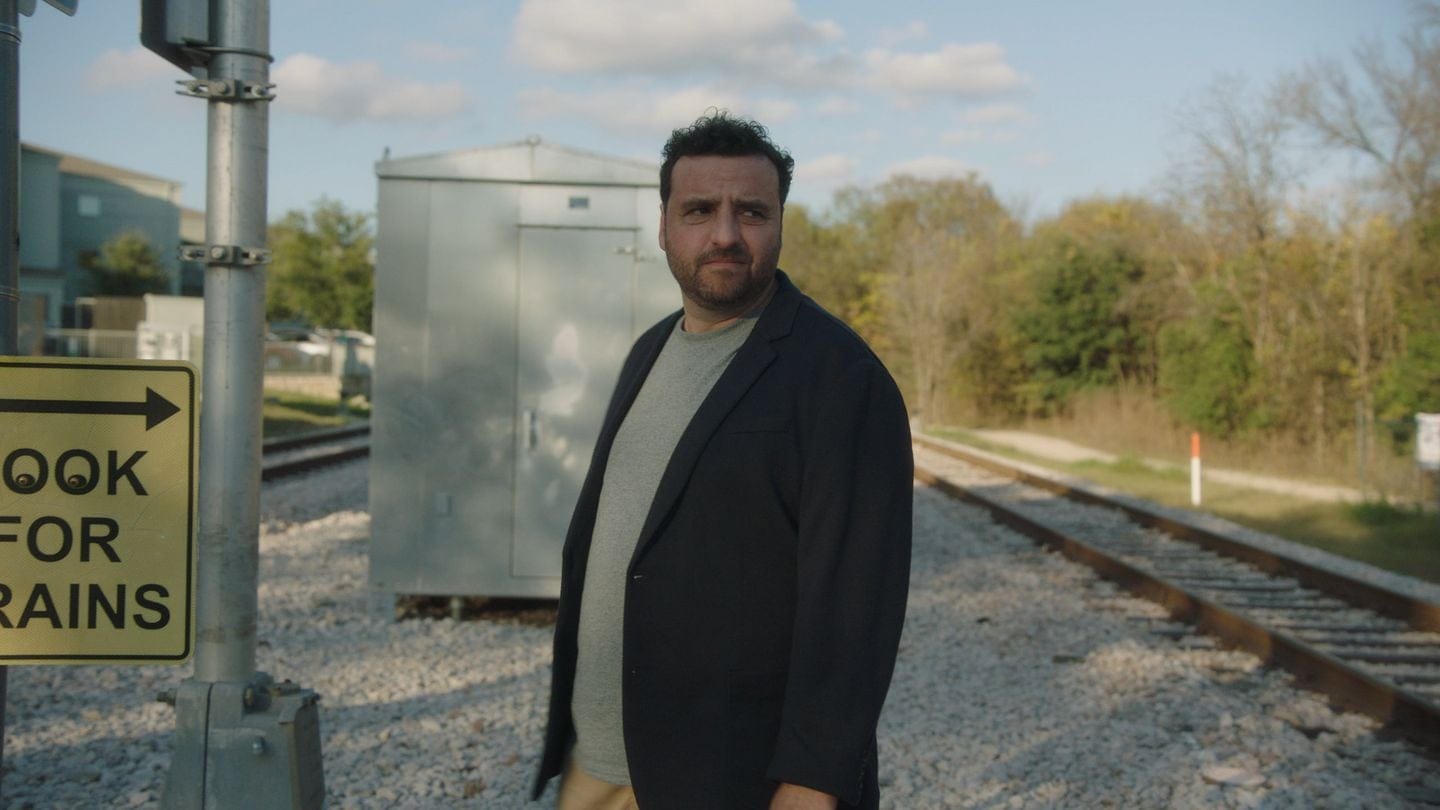
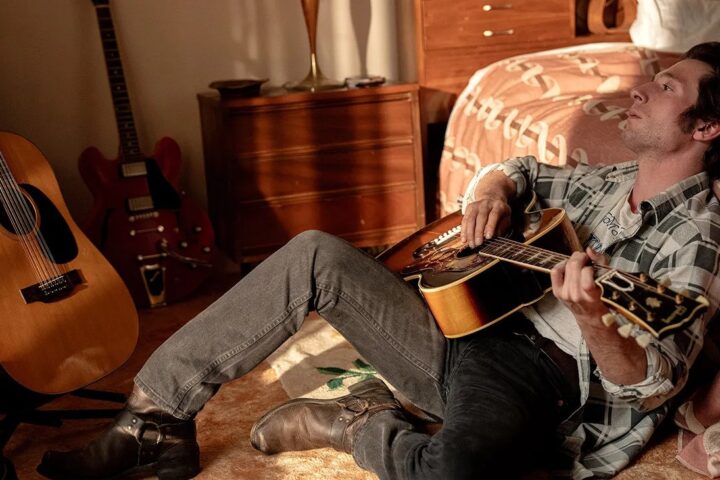
An offbeat comedy about a schlubby intellectual, Lousy Carter retreads an even more well-worn patch of indie-film terrain than Patagonia but does so with a satisfying lightness of touch and a very healthy dose of self-awareness. Carter (David Krumholtz) is a middle-aged English literature professor who, upon receiving the news that he will die of a previously undetected terminal illness in six months’ time, is inspired to renew the long-dormant filmmaking project that’s haunted his mediocre life of unfulfilled creative potential. He enlists the help of one of the students, Gail (Luxy Banner), from his undergrad class on The Great Gatsby, a bright, sardonic foil who, very early on in their arrangement, recoils from a mere mention of the possibility of embarking on a morally dubious May-December relationship with Carter.
Not that Carter is necessarily lacking in sexual magnetism. After all, he’s conducting an affair with the wife, Candela (Olivia Thirlby), of his friend and university colleague, Kaminsky (Martin Starr), and the confrontation with his mortality serves as an opportunity to reckon with that and a number of other messy relationships with people that he knows, including his overly critical alcoholic mother (Mona Lee Fultz) and estranged sister (Trieste Kelly Dunn).
For a film so deliberately artificial, plainly lacking in originality, and notably at odds with prevailing social-cultural trends, Lousy Carter remains consistently engaging throughout, a testament both to its likeable cast and the measured tonal harmony that the dialogue manages to strike for them. The arch, wryly amusing script from mumblecore-adjacent writer-director Bob Byington (Somebody Up There Likes Me) finds a deadpan sweet spot in its middle-aged self-excoriation, broader and warmer than early Noah Baumbach and less affected than Woody Allen without ever becoming cloying or veering into outright farce. Taking pains to undercut not only the pretensions of its narcissistic protagonist, but also the entire scenario that it’s presenting, this low-stakes effort nevertheless proves capable of offering some smart insights into love and death, and a couple of genuinely affecting moments towards the end.
Though it centered around a similarly disheveled, aimless protagonist to that of Lousy Carter, this year’s Golden Leopard winner, writer-director Ali Ahmadzadeh’s Critical Zone, was otherwise about as far away from that kind of neurotic campus novel as it’s possible to get, particularly when considering the conditions of its production. Ahmadzadeh was sadly unable to accept the film’s award due to the intervention of Iran’s censorious state authorities who refused to allow him to leave his home country and attend the festival in the first place, after initially pressuring him to withdraw his third feature from the festival’s competition.
Shot on the fly in and around Tehran, often with carefully concealed cameras, Critical Zone succeeds in using these limitations to its advantage, never feeling anything other than deliberate and controlled. It follows small-time drug dealer Amir (Amir Pousti) as he drives around city streets dispensing his wares to the bored, the lost, and the needy, portraying him as a kind of travelling healer or surrogate priest. The film makes the most of inventive sound design and framing to suggest a convergence of Amir’s vehicle/workplace, the oppressive environment, and his disoriented mental state. One scene sees the camera rotate within his steering wheel as he corners, and the constant foregrounding of GPS voice directions suggests the edicts of a tightly controlled regime in which all possible alternatives seem foreclosed.
Among other spots, Critical Zone’s urban night-time odyssey takes in a care facility for elderly people with hearing impairments and the house of a troubled widow and her addict son. Ahmadzadeh’s film also stops off at the airport, where an abrupt, violent interruption of Amir’s cocaine-fueled hangout with a stewardess sees the film take a brief, unexpected detour into the terrain of an action-thriller, while also finding a liberatory catharsis that hints forcefully at the dark socio-political reality that lingers beneath its mood of melancholy ennui.
It was perhaps fitting that the main prize at LIFF 2023 was handed to someone unable to claim it in person, underlining the status of this and similar festivals as safe havens for bold filmmaking visions that also have limited material impact on the reality from which they emanate. Indeed, the lavish, rarefied environment of this particular Alpine retreat can’t help but make dissident art and political demonstration alike feel like distant transmissions from an entirely separate world. But it continues to be heartening and inspirational that those signals can be picked up anywhere at all, and Ahmadzadeh’s impressive feat of creative rebellion is also a timely reminder that such a miracle should never be taken for granted.
The Locarno Film Festival ran from August 2—12.
Since 2001, we've brought you uncompromising, candid takes on the world of film, music, television, video games, theater, and more. Independently owned and operated publications like Slant have been hit hard in recent years, but we’re committed to keeping our content free and accessible—meaning no paywalls or fees.
If you like what we do, please consider subscribing to our Patreon or making a donation.