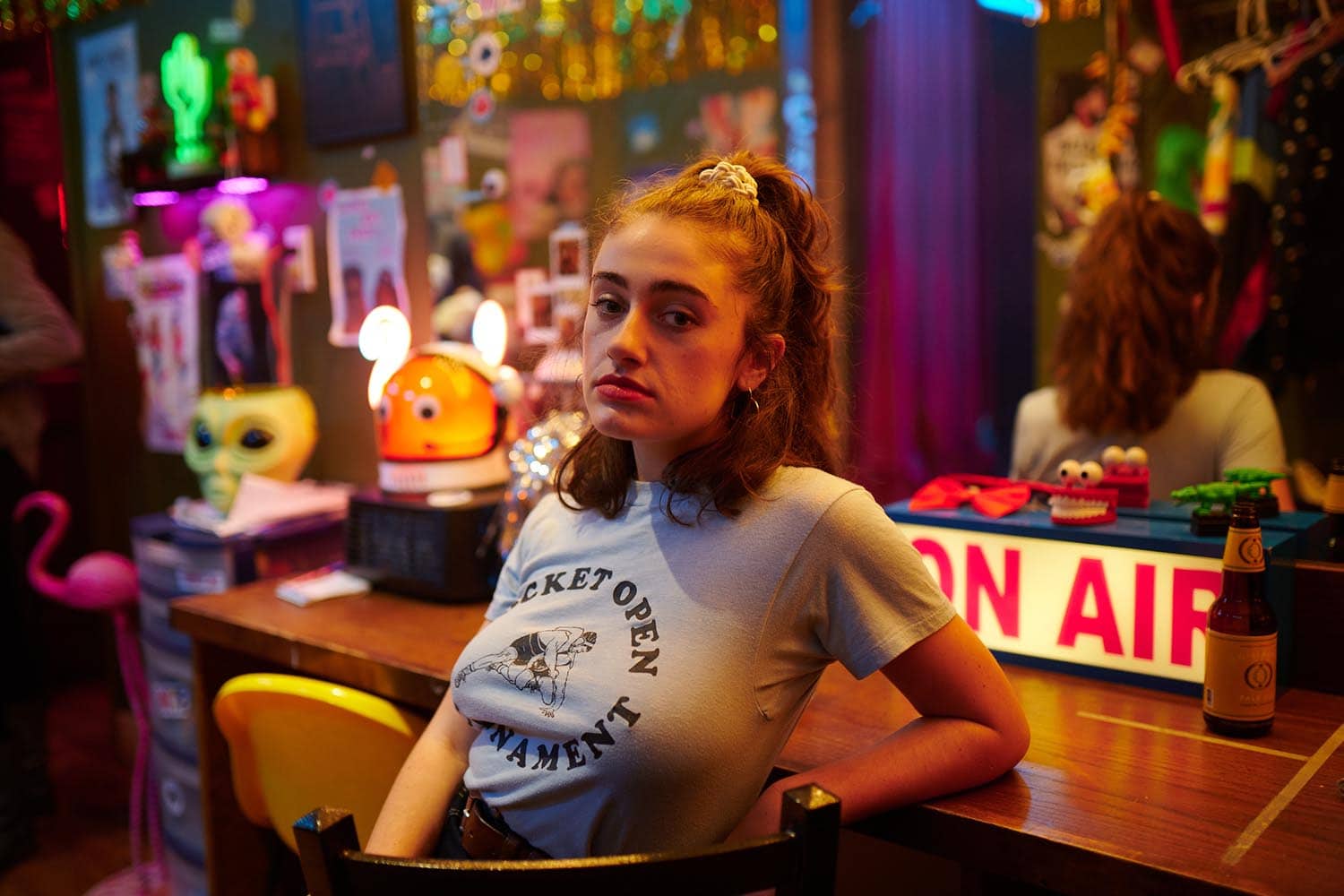
Rachel Sennott is funny, and her character in I Used to be Funny, a stand-up comedian named Sam, is too—or at least she used to be. Writer-director Ally Pankiw’s debut feature weaves two eras of Sam’s life together, with Sennott fully embodying both the bubbly, brassy person Sam once was and the shut-in she became in the wake of a traumatizing event. The nimble way that she hops between these two versions of the character easily makes up for the odd narrative misstep that I Used to Be Funny makes along the way.
The film begins with Sam cooped up in a house she shares with her two besties, fellow comedians Paige (Sabrina Jalees) and Philip (Caleb Hearon). They’re both worried about how reclusive Sam has become, as well as her refusal to get back on stage, though it’s some kind of progress when they jokingly admit that they’re proud of her for finally showering.
The scenes between the trio have such an authentic feel to them that you wonder how much of their banter was actually scripted. And as hilarious as the actors are, Pankiw never makes the mistake of letting them riff on endlessly—a temptation that other, more seasoned filmmakers have fallen into when they know they’ve got a group of funny people in front of them.
When Sam learns that Brooke (Olga Petsa), a teenage girl she used to nanny for, has gone missing, we’re launched back in time to see how the two of them met and formed a kind of sisterly bond, until something awful happened and tore them apart. The way I Used to be Funny obfuscates the exact nature of this traumatic event, crosscutting between the periods on either side of it while carefully tiptoeing around the specifics, is one of the least effective elements of the film. The determination to maintain the mystery begins to hinder I Used to be Funny’s pacing in the final third, ultimately robbing the finale of much of its cathartic power, because the story has only just caught up with itself when it’s time for the credits to roll.
I Used to Be Funny is much more effective when it just lays its cards on the table without all that narrative sleight of hand. The burgeoning relationship between Sam and Brooke is incredibly sweet, namely as Sam uses the comedic skills that she honed on stage to find a way past the moody Brooke’s stubborn defenses. The warm, lively scenes of them debating Twilight and discussing romantic mishaps make how quiet and lonely Sam has become all the more saddening. There’s a sense of fragility to her that feels a million miles away from Sennott’s bombastic turns in films like Emma Seligman’s Bottoms, and yet her future self still feels completely of a piece with the hyper-confident person we know she used to be.
Sam still makes jokes in the later timeline, but they’re mostly aimed at herself or used to swat away her friends’ concerns. Where comedy used to be a way for her to deal with the things life threw at her—sexism, dashed hopes, disappointing boyfriends—it’s now become a way for her to not deal with them. The ironic distance that used to just protect her from the painful parts of life now keeps the whole world shut out. I Used to Be Funny makes a similar attempt to keep us at arm’s length, and that’s a shame because, when it lets us in, it’s a very thoughtful, funny film.
Since 2001, we've brought you uncompromising, candid takes on the world of film, music, television, video games, theater, and more. Independently owned and operated publications like Slant have been hit hard in recent years, but we’re committed to keeping our content free and accessible—meaning no paywalls or fees.
If you like what we do, please consider subscribing to our Patreon or making a donation.