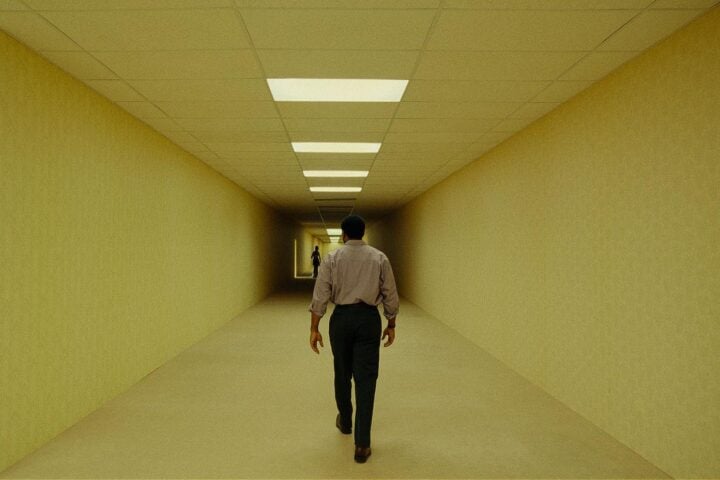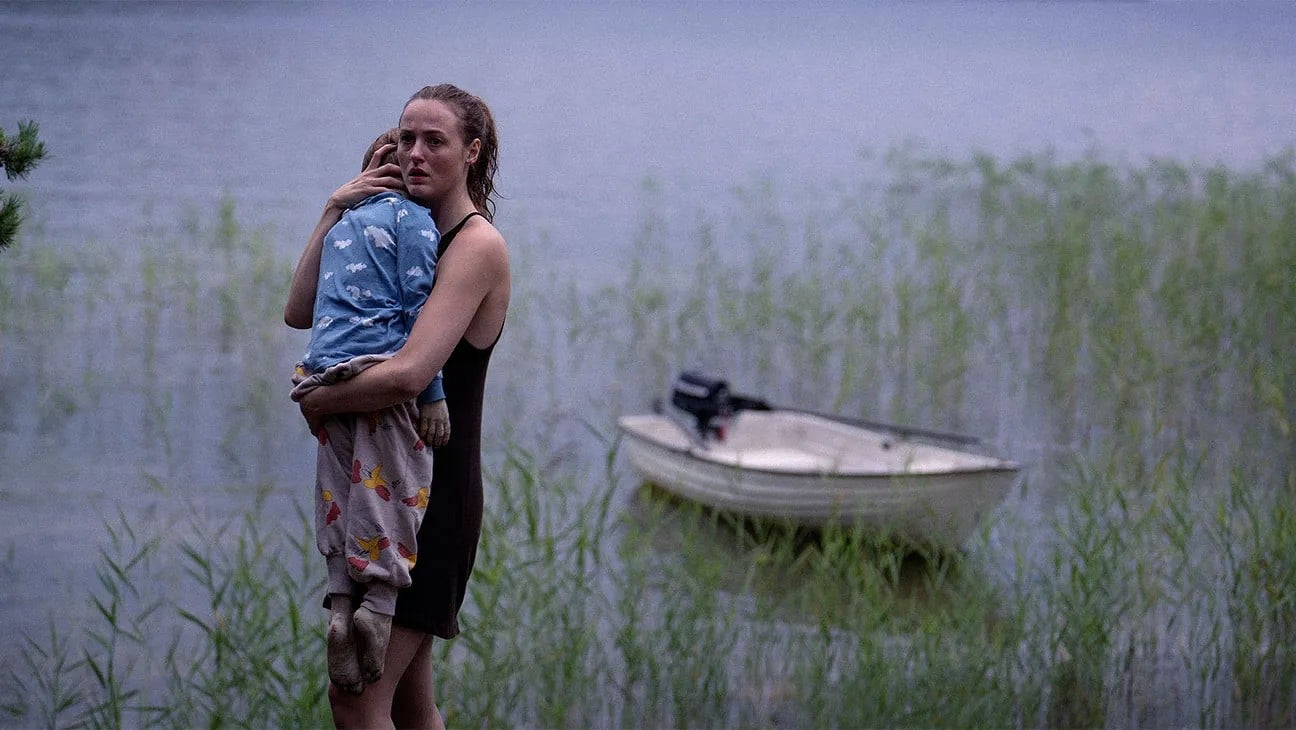
Early in Handling the Undead, an adolescent girl, Flora (Inesa Dauksta), plays a video game where shooting zombies is your ticket to staying alive. Rendered in crude 3D, these shambling, emaciated, flesh-hungry zombies are the familiar sort that have haunted the pop-cultural imagination, and this depiction stands in seeming contrast to the people who came back from the dead after a mysterious event in Thea Hvistendahl’s film. They don’t do much of anything except breathe and stare from behind glassy eyes at a world we’re never really sure if they can comprehend. But while they’re shells of who they once were, silent and often immobile, they recall enough of where they came from to reach out to the people who grieve them.
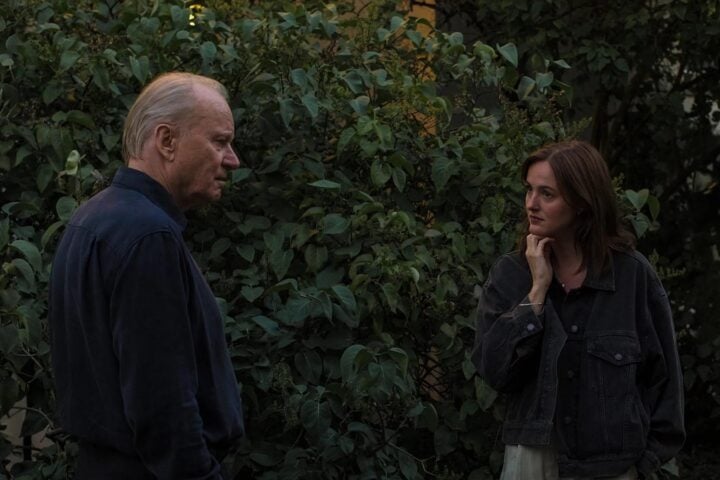
Based on the novel by John Ajvide Lindqvist, who co-wrote the screenplay with Hvistendahl, the film moves between three non-intersecting subplots. In one, we initially observe the torpor of Anna (Renate Reinsve) and her father, Mahler (Bjørn Sundquist), whose relationship is clearly strained by the death of Anna’s young son, Elias. The second follows aspiring stand-up comedian, David, and his girlfriend, Eva (Bahar Pars), whose domestic life is shattered after a car accident leaves Eva on life support. And in the third, we sit with the loneliness of an elderly woman, Tora (Bente Børsum), who’s just buried her life partner, Elisabet (Olga Damani).
The return of Elias, Eva, and Elisabet provides some measure of relief to their respective loved ones, but it also engenders apprehension and confusion. Elisabet, for one, has discolored skin down her backside that resembles burn marks, and soon Tora’s days are taken up by washing and dressing the woman and applying her makeup. Meanwhile, as Elias’s death was less recent, his body is more decomposed—a grotesquerie that Hvistendahl’s camera captures in languorous shots that work to sync the audience to the cold comfort provided by the boy’s return.
Following the lead of Lindqvist’s novel, the film uses the zombie as a metaphor for grief. Here, the living hang on to the prospect of not needing to make peace with loss—that, maybe, the signs that the dead show of their former selves may mean that their once departed loved ones will fully regain their faculties. Unfortunately, that metaphor is as readable as it is unambiguous, meaning that Handling the Undead quickly settles into a redundant rhythm.
The initially long, slow takes that capture the drab world of the film come to feel less purposeful and more like an act of kinship to certain tradition of international arthouse horror that includes Severin Fialo and Veronika Franz’s Goodnight Mommy and Eskil Vogt’s The Innocents. In positioning the living as caretakers for the supernatural, the story is very much of a piece with Lindqvist’s most famous work, Let the Right One In, though the tenor of Hvistendahl’s film is far from Tomas Alfredson’s voluptuous and chilling adaptation of that earlier book.
For how committed it is to convincing the audience of the profundity of a rather rudimentary point, Handling the Undead’s measured pacing comes to feel like a kind of torture. A generous reading would be that Hvistendahl’s approach is geared toward having us endure the very punishment that the characters confuse for relief. At worst, it’s one that highlights how having three separate perspectives doesn’t necessarily translate to varied meaning.
Ironically, the spiritless momentum of Handling the Undead is such that the moments of conventional, grisly indulgence truly come as shocks to the system. An instance of animal torture that recalls Goodnight Mommy and The Innocents is as harrowing as the scene that forces us to watch in dreadful anticipation as Anna returns home, unaware that her father has dug up the reanimated corpse of her son. In the former scene, a family realizes that whatever comfort they find in a loved one’s return from the dead is an illusion of convenience, underscoring the sense of inevitability in a film that, for all the intelligence of its performances, is fatally convinced that it has a subversive rather than submissive relationship to genre.
Since 2001, we've brought you uncompromising, candid takes on the world of film, music, television, video games, theater, and more. Independently owned and operated publications like Slant have been hit hard in recent years, but we’re committed to keeping our content free and accessible—meaning no paywalls or fees.
If you like what we do, please consider subscribing to our Patreon or making a donation.