Gen Z, the first audience whose primary gateway horrors were found in the dark expanses of the internet rather than the confines of the big screen, has been catered to in the last decade by such films as Slender Man and Five Nights at Freddy’s. Now things are about to get interesting as that generation comes of age and starts to tell its own stories. Curry Barker’s Obsession is presently setting box office records, single-handedly ushering in this changing of the guard. And stalking at its heels comes Backrooms, A24’s gilt-edged investment in horror’s next big thing: 20-year-old YouTube filmmaker and VFX wiz Kane Parsons.
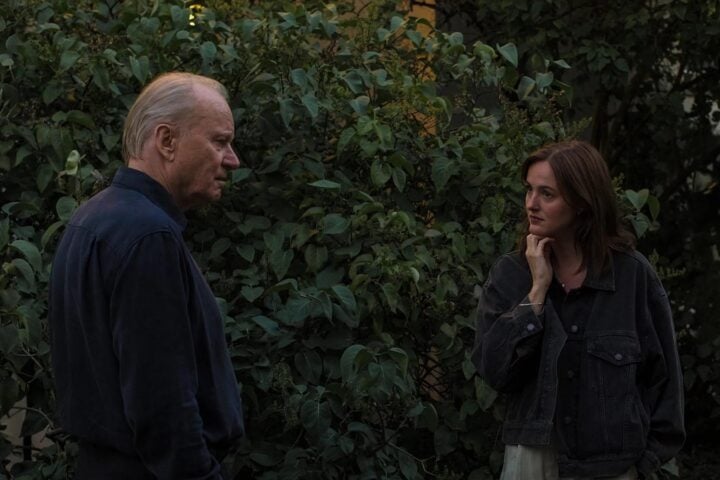
Clark (Chiwetel Ejiofor), the proprietor of a furniture store, is carrying some heavy emotional baggage thanks to a recent split from his wife. When not spending his time in unsatisfying counseling sessions with his therapist, Dr. Mary Kline (Renate Reinsve), he’s starring in mortifying local TV commercials in a futile effort to save his ailing business.
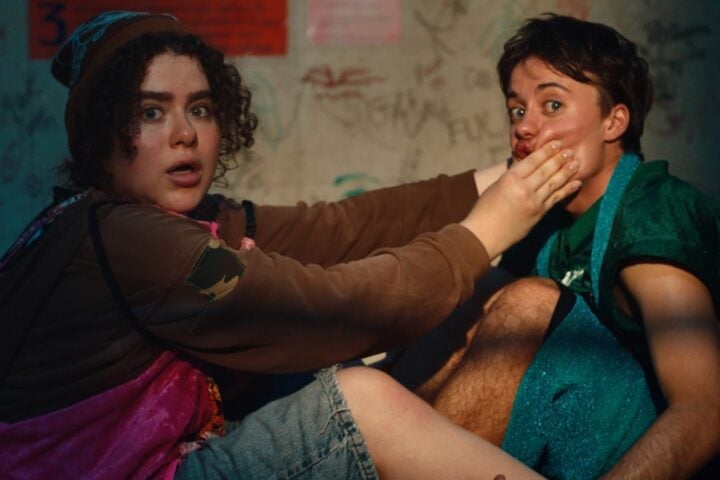
Clark’s humdrum existence is disturbed when an electrical problem leads to the discovery of an anomaly in the basement of his store, a wall he can pass through to access the titular backrooms—a labyrinthine, seemingly endless dimension that defies all laws of spacetime and physics. When Clark confides in Dr. Kline about his discovery, she disbelieves the existence of any such space, so he taps two amateur filmmakers, Bobby (Finn Bennett) and Kat (Lukita Maxwell), to document what he’s experiencing. But an ambush by one of the backrooms’ resident entities traps Clark inside, leading Dr. Kline to retrace his steps to locate her patient.
“The Backrooms” first emerged in 2019 as a 4chan post, with an image of an empty hobby store under renovation and a description by an anonymous user of an extradimensional liminal space that can only be accessed by “noclipping” (a term borrowed from video games that describes passing through solid objects) out of reality. Images of liminal spaces—those familiar yet empty or abandoned places that disquiet the observer—had become popular on paranormal message boards, but the anonymous post coalesced the aesthetic into an intriguing narrative that inspired the then-teenage Parsons to build it into a web series. Posted on his YouTube channel, Kane Pixels, starting in 2022, the Backrooms series became a viral sensation that grabbed the attention of James Wan, Atomic Monster, and, eventually, A24.
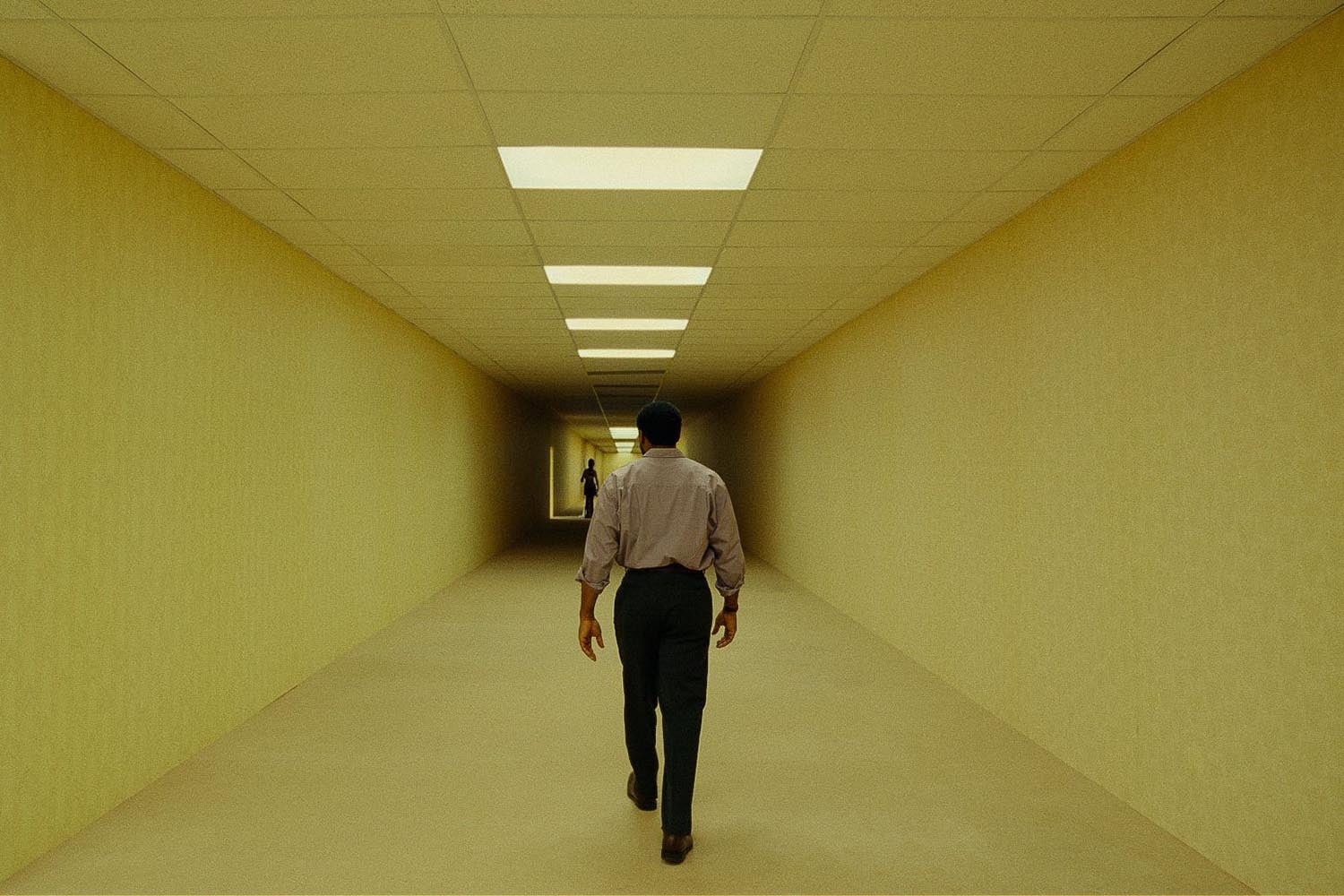
The big-screen version of Backrooms is an impressive handmade rendering of what Parsons was once only able to create by himself with such tools as Blender and Adobe After Effects. The film is a triumph of atmosphere and imagination, especially for production designer Danny Lee Vermette, who brings Parsons’s original visions to life as physical sets. Indeed, Backrooms utterly transfixes as Ejiofor and Reinsve’s characters wander through 30,000 square feet of pale-egg-yolk-colored halls and heave themselves through impossibly small doors, diving through ever-deepening layers of a surreally banal alternate reality.
These art installation-like formal elements are thematically weighted in and of themselves because they play with the sociological underpinnings that gave rise to liminal horror in the first place. Parson and Vermette draw from images of forsaken and dying temples of consumerism (i.e., malls, department stores, and furniture emporiums) that dot the United States, reminders of a supposed golden era of middle-class abundance that might as well be the ruins of an ancient alien society to those born between 1997 and 2012.
Will Soodik’s screenplay is lean and efficient but doesn’t skimp on character interiority. One of the film’s most compelling strains is how it traces a line between Clark’s psychological state and the backrooms themselves, casting them simultaneously as an anonymous, unsympathetic no-place and a mindscape. At the same time, it stumbles over exposition that feels like an unexpected pile of illogically stacked furniture.
One of the defining characteristics of Zoomer horror, with its roots in online fiction and creepypastas, is its complicated and expansive lore. Longtime fans of Parsons’s web series find pleasure in learning these byzantine timelines and complexities and committing their every contour to memory. A clunky third-act lore dump may dispel the film’s hypnotic ambiguity, but the breadcrumbs are there to satiate those familiar with Parson’s previous work and stimulate newcomers, provided they can stomach how silly it all gets.
Backrooms is undeniable, both as a future load-bearing pillar of the internet-born horror movement that’s now breaking ground and for being built on a concept that feels truly new. Horror reinvents itself every decade or so, and what it does better than any other genre is reflect back at us the collective nightmares of the world we live in. But what’s especially unnerving about this film’s particular journey through the looking glass is that it doesn’t take us very far at all. It points us back to our distorted selves and the hollow world we’ve built, replicated and twisted ad infinitum into a fluorescent-lit purgatory whose very familiarity is its horror.
Since 2001, we've brought you uncompromising, candid takes on the world of film, music, television, video games, theater, and more. Independently owned and operated publications like Slant have been hit hard in recent years, but we’re committed to keeping our content free and accessible—meaning no paywalls or fees.
If you like what we do, please consider subscribing to our Patreon or making a donation.