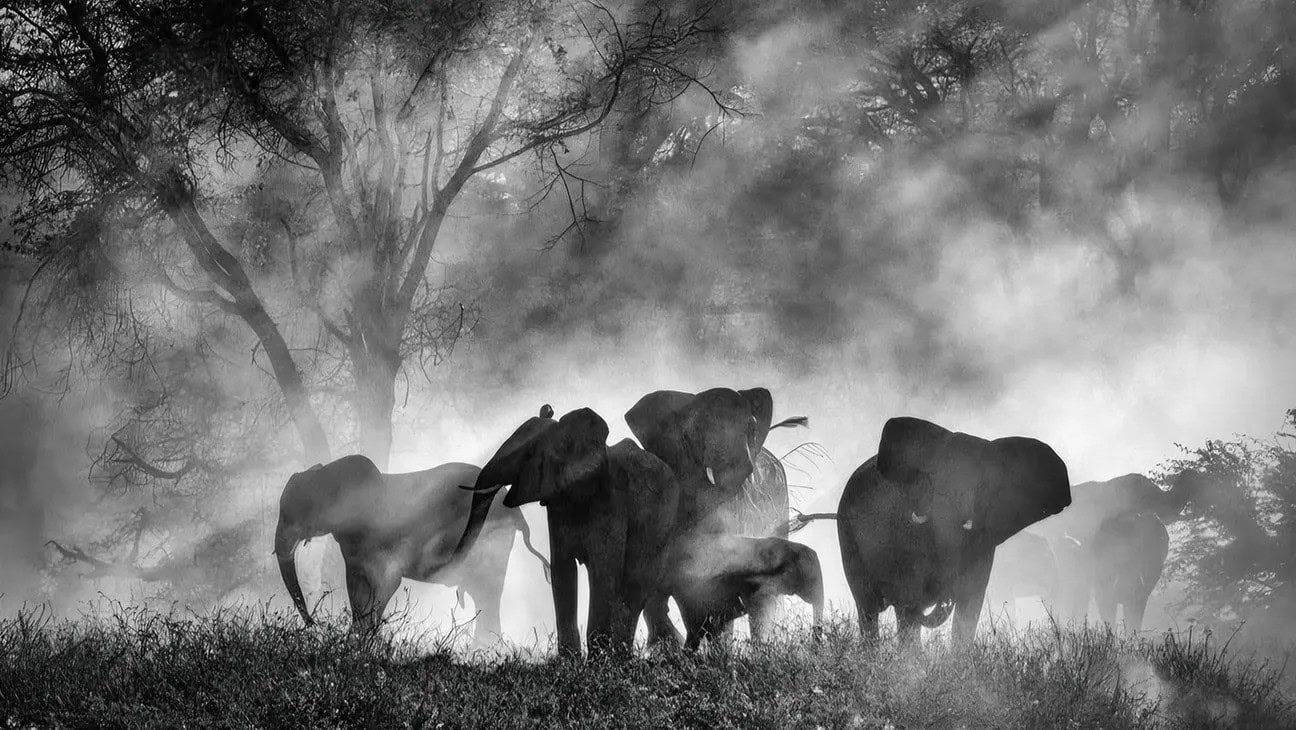
Upon arriving in Africa, iconoclastic German filmmaker Werner Herzog asks Steve Boyes, a South African conservation biologist working with the Smithsonian, whether it matters if the undiscovered species of giant, or “ghost,” elephants that he’s been searching for actually exist. It’s a typical Herzogian question, and when Boyes calmly responds, “It doesn’t matter to me,” it’s clear why the filmmaker is drawn to this eternal searcher, as both men share a profound passion for unearthing the overlooked and unknown.
Boyes believes that it’s almost better if the ghost elephants are a dream because “then they will always exist,” hinting at an all-consuming obsession. Yet, unlike the madmen at the center of many a Herzog film, Boyes clearly has his wits about him, allowing him to be a fellow wanderer on this journey rather than this documentary’s central focus. And while Herzog, with his typical blend of existential inquisitiveness and deadpan delivery, certainly prods Boyes about the impulses that drive him, the filmmaker’s interests ultimately lie elsewhere.
Early in Ghost Elephants, Herzog and Boyes travel to Namibia to connect with Kalahari bush trackers, whom Boyes is working with to track down the ghost elephants in the highland plateau of Angola. Soon after this, Herzog’s focus begins to shift away from the white, South African scientist and toward the methodologies of the three expert Kalahari bush trackers and the traditions of various tribesmen that Herzog and company meet on their long journey to Angola.
Along the way, we see the trackers work a deadly poison into a dart, a musician meticulously fix and play an ancient instrument, and villagers tell tales of elephants who shed their skin to reveal a human woman within. If this makes it sound like the film is loose and discursive, it more or less is, yet these segments help to paint a more complex, far-reaching portrait of life in the area, including the customs, rituals, and survival techniques of the local populace.
Ghost Elephants even includes heartbreaking archival footage of Angolan elephants being gunned down from a helicopter and of dozens of their (and other hunted animals’) skeletons strewn about on the side of a road. For all the beauty it captures in its almost otherworldly landscape photography and underwater shots of elephants swimming, Ghost Elephants doesn’t shy away from the horrors that played out in these remote locales.
“Man is on a mission to destroy what he’s part of,” notes an anthropologist at one point in the film. That’s certainly a sentiment Herzog agrees with. Laced with Herzog’s singular sense of wonder and off-kilter sense of humor, Ghost Elephants shows that the German master is fiercely determined to explore new frontiers while they still exist and capture the poetic phenomena of nature and the unshakeable dreams it continues to instill in mankind.
Since 2001, we've brought you uncompromising, candid takes on the world of film, music, television, video games, theater, and more. Independently owned and operated publications like Slant have been hit hard in recent years, but we’re committed to keeping our content free and accessible—meaning no paywalls or fees.
If you like what we do, please consider subscribing to our Patreon or making a donation.