It probably doesn’t say anything great about where we’re at culturally that a 1970s pseudo-snuff film, more infamous than famous even in its heyday, now seems ripe for a remake. Yet there’s no denying that the pointed questions asked by John Alan Schwartz’s 1978 mondo horror film Faces of Death—about the nature of on-screen violence, our appetite for it, and the tricky business of telling real from fake—are even more timely in the era of social media and A.I. While Daniel Goldhaber’s metatextual spin on the original initially grabs at these questions with real ferocity and purpose, it loses its grasp on them as things wear on.
Goldhaber’s film stars Barbie Ferreira as Margot, a content moderator for Kino, a YouTube-esque video platform. Margot spends each day staring numbly at a computer screen, wading through a seemingly endless stream of violence, sleaze, and humiliation. Her horror-loving roommate, Ryan (Aaron Holiday), later explains the appeal of the original Faces of Death to her by pointing out that, back in the ’70s, anyone who wanted to see such hyper-realistic depravity had to bribe their local video store clerk for it. Now it appears automatically on their phone.
There’s no definitive answer about what should and shouldn’t be allowed on the internet, and this remake doesn’t try to offer one, but it does home in on the fact that the people currently making that call aren’t doing so with the public interest in mind. We watch Margot dutifully following her employer’s instructions to flag anything with overt sexual content or drug use while letting almost everything else slide—so an informative video about how to correctly use Narcan to save someone’s life is out but a half-naked woman in a bar fight is completely kosher.
Even when Margot comes across a series of unsettlingly realistic execution videos modeled after scenes from Schwartz’s film, her concerns still aren’t taken seriously. Her morose co-worker (Charli XCX) takes a morbid delight in them while her likeable but line-toing boss (Jermaine Fowler) warns her not to call the cops because he doesn’t want to risk damaging Kino’s reputation—and, consequently, its stock price. Besides, he says, the algorithm loves this stuff.
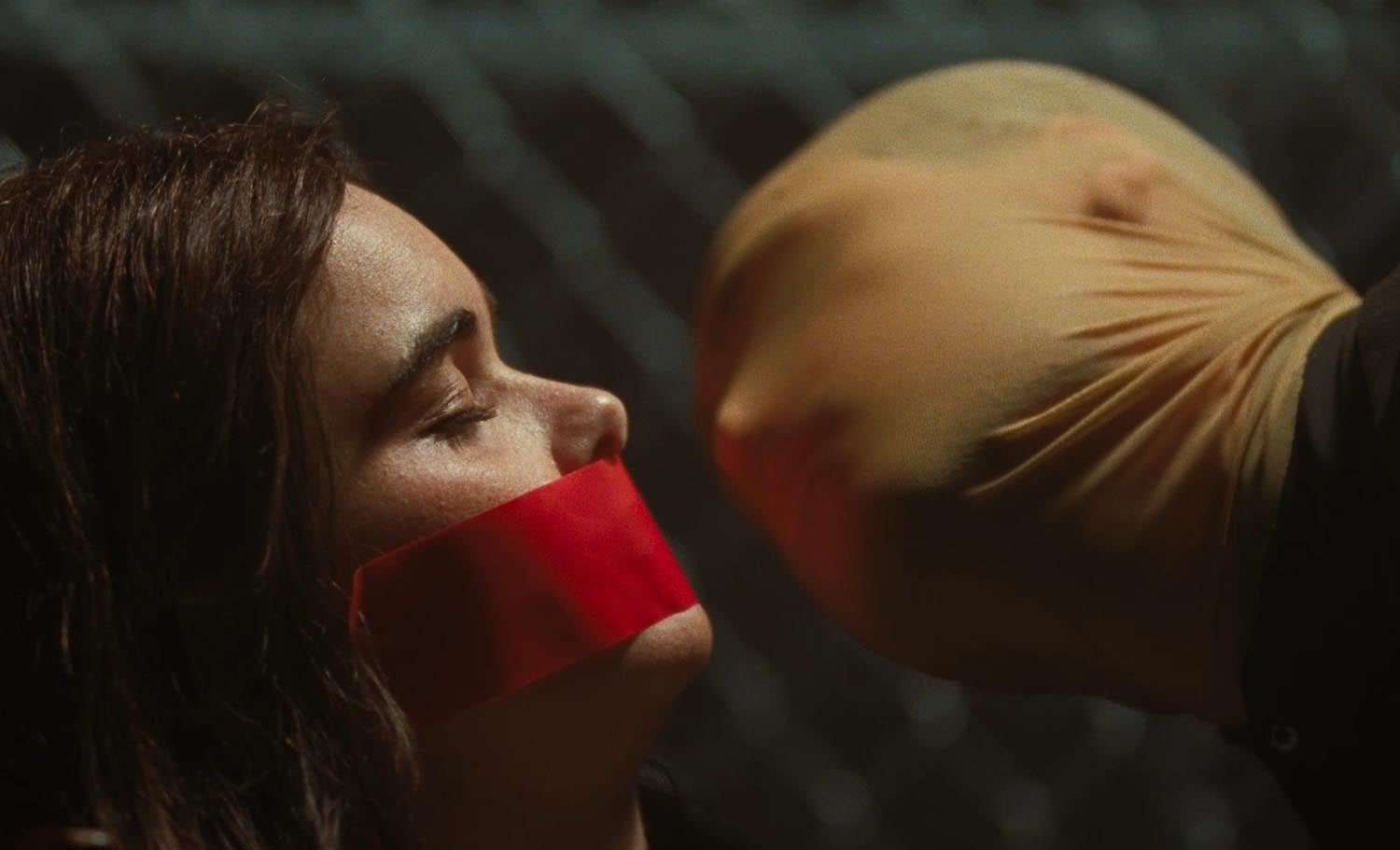
Realizing that no one else is going to do it, Margot takes it upon herself to track down the killer, who’s revealed to us early on as a tech-savvy ghoul named Arthur (Dacre Montgomery). Some of Arthur’s methods are neat—he subdues his victims using an EpiPen full of fentanyl—and he has clearly been designed to echo previous slashers, silently stalking his victims in an outfit pieced together from the wardrobes of Michael Myers and Jason Voorhees, and later explaining his motives in a monologue reminiscent of the one from the end of the original Scream.
But while the influences are clear, the film doesn’t really do anything with them. Arthur is bland and unfrightening, imitating tropes without subverting or building on them. He lacks the sinister aura of his iconic predecessors, and the more we learn about him, the less interesting he becomes. The same is true, to a slightly lesser degree, of Margot. Ferreira gives a sympathetic performance as a soft-hearted person lost in the knife-edged world of the internet. We find out early on that a traumatic experience in Margot’s past led her to seek out this work, but the details later revealed do little to enrich the character and are generally too emotionally thorny to be worked through by a film that, at this point, is operating as a straightforward slasher.
Thus we’re left with a long-winded conclusion as Ferreira and Montgomery’s insufficiently compelling characters engage in a protracted game of cat-and-mouse that culminates in a blood-soaked showdown that might have been ripped from a million other horror movies. For a film that’s so well versed not only in the genre but in its tendencies to recreate and recycle itself, it’s disappointing to see Faces of Death do so in such slavish fashion.
Since 2001, we've brought you uncompromising, candid takes on the world of film, music, television, video games, theater, and more. Independently owned and operated publications like Slant have been hit hard in recent years, but we’re committed to keeping our content free and accessible—meaning no paywalls or fees.
If you like what we do, please consider subscribing to our Patreon or making a donation.