“There is a word in Korean, in-yun. It means providence or fate,” explains Greta Lee’s Nora by a campfire in Past Lives before demurring that it’s “just something Koreans say to seduce someone.” It’s partially in jest to defuse some of the burgeoning sexual tension in the scene, but she captures a real sense that something about the concept got diluted as it moved from proverb to pick-up line. And playwright turned filmmaker Celine Song reclaims that lost magic throughout her tender and painstaking feature-length debut.
Song hails from New York’s off-Broadway scene, and her theatrical eye for detail in everything from character blocking to sound design translates effortlessly to the language of cinema. As it gently reveals the emotional tug of war between Nora’s long-lost childhood love from Korea (Teo Yeo’s Hae Sung) and her husband in New York (John Magaro’s Arthur), Past Lives recalls both the pregnant silences of classical melodramas like David Lean’s Brief Encounter as well as the romantic conversational ease of Richard Linklater’s Before trilogy.
The film also pulls in many specifics from Song’s own life as a Korean-American (by way of Canada) married to a Jewish American writer. Yet the decade-spanning tale that culminates in Nora, Arthur, and Hae Sung sharing a fateful week together also opens outward to express larger pressures of identity lost and found in people and countries alike.
I spoke with Song over Zoom prior to the theatrical release of Past Lives, which was apropos given how Nora and Hae Sung reconnect over Skype. In our conversation, we discussed her theatrical roots and Brechtian affinities, her artistic curiosity and philosophy around technology, as well as the hard and soft skills she found indispensable running a set for the first time.
The opening scene is the moment in which the germ of this story began growing in your head. But the perspective is sneakily from the people watching the main characters. How did you come to place the audience as outside observers?
The breaking of the fourth wall, when Nora turns and looks straight at the camera and looks at the audience, has to do a couple of things. One is that it has to implicate the audience. It’s a little bit confrontational, because it’s a little bit of like, “Hey, I know you’re trying to figure out who we are to each other. But what if I told you who we were to each other?” Or some kind of, like, “Wouldn’t you like to know?” There’s a bit of a Mona Lisa mystery to that.
And I feel like the other part of it is it has to be a welcoming thing. You’re welcoming the audience into the story, and really kind of welcoming them into playing detective on this mystery, which is who these three people are to each other. It’s something that’s too ineffable, too complex, and too difficult to just put into simple description.
I think that’s what I really wanted to do for the audience. I wanted them to both feel implicated and welcomed in, first and foremost, as outside observers before we go through the movie. Then, when we come back to that scene, the audience will also have a sense of the answer to the mystery. They will have put together kind of the solution to the mystery, and they’re also going to feel deeply implicated and deeply a part of the story of their lives.
On the note of confrontation, I was a bit startled to learn of the heavy influence of Brecht on your theatrical work. Apart from that fourth-wall break, how does that inspiration show up in the film?
A really interesting thing happened in the scholarship around Brecht by calling it an “alienation effect.” I think that there was a feeling that it’s meant to alienate the person, but I think Brecht was talking about the clarity of seeing human relationships. And, also, the way that time, space, and history really have an impact on human beings. So, in that way, I think that a Brechtian play is one of the most immersive plays because you can really feel the clarity of a dilemma. I think Past Lives is Brechtian, in that it’s about the clarity of what time and space is doing to people.
The thing that I’m fighting every moment is to muddy the clarity by leaning into the sentimental or into the parts of the movie that are messy. At the end of the movie, that conversation at the bar to me is a Brechtian one because it’s about openly discussing what’s happening to them. And I think, similarly, that the scene in the bedroom is a pretty Brechtian conversation.
Definitely! Any scene in the film where a character is looking at themselves not only as themselves but also recognizing the role that they play as a proxy for some larger societal force is very Brechtian.
Yeah, what I want is for people to be immersed and let the movie get under their skin. I think that that’s what Brecht wanted, and I really want that as well. But it doesn’t mean that it’s not ideologically aligned with what I love about Brecht.
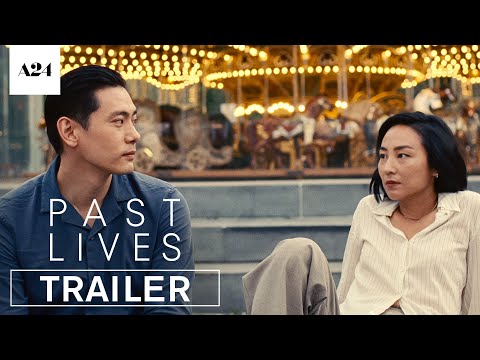
On the note of time and space, the film, to my understanding, was almost ready to shoot before the pandemic delayed production to 2021. Do you think that unexpected time to sit with the script changed anything essential about it? The virtual connection that blossoms between Nora and Hae Sung reconnecting over Skype certainly feels like it takes on a new level of poignancy.
As an artist, you don’t want to feel like you’re out of step with the world. You always want to be a little bit ahead. The Skype section was always there, but I think people connected to it maybe a little bit less before Covid. And then during Covid, when I was working on it, suddenly people were excited to talk to me about the Skype section! I always believed in that part of the movie because I’m really interested in the way that technology can both inspire intimacy and closeness across oceans but also can make your intimacy feel fraught and let resentment build.
I thought that was such an important part of the movie because it’s about two young people who are attempting to have a long-distance relationship. I wrote that because that was important to me at the time, but then during the pandemic, I really loved how everybody started to really warm up to that section. It really felt like people had a new perspective on it and said, “Wow, now I really connected this section, which I don’t think that I would have expected before.”
Skype makes for a fascinating visual challenge figuring out how to portray human drama in a virtual arena. Was that also something your production of The Seagull within Sims 4 on Twitch was also getting at?
[puts hands under chin, smiles] Ahh! That was so fun!
What do you think that liminal space does to people?
What mattered about that section is the people, and then the emotions, frustrations, and joys of being a person who’s dealing with technology. I wanted to depict technology as it really feels like to us in life. So that’s why I made a decision to do everything practically during those hugely emotional and very difficult scenes. We built two sets and controlled how bad the connection was. So I was there, kind of like a DJ, with the video person changing the level of connection. I could freeze the frame of my own will, and the actors didn’t know how that connection was going to be when they were acting. What I kept saying was the technology has to be bad. It can’t be too shiny and too good. It has to be intentionally bad because that’s part of the story.
I feel like you might be interested in this: Something that I realized in the edit is that if you point the camera at the monitor, and see the other person on the monitor, you actually feel more intimate. You would think it’d be the other way around. It feels a lot closer, in a weird way, than when you shoot the actors in the room looking at a monitor. Almost the entirety of the breakup scene is happening by shooting the actors in the room because they suddenly look so lonely because they’re alone in the room. But then, when they first see each other for the first time, so much of the storytelling we learned happens when you’re pointing the camera at the laptops themselves, seeing through the thing, and feeling connected to the character on the other side. That was something that we invented in the edit. It’s a great language.
Do you think that’s from aligning the audience with the character’s point of view? Or maybe just getting them both in the shot or not?
I think that it’s the feeling of connection. I think you and I are feeling really connected because we’re actually looking at each other through this. But if you were to just take this part away [motions at the other Zoom tiles] and just shoot me, I would look like a weird person who’s talking with headphones and gesturing at a laptop by myself. It might just be as simple as that. We feel connected because I know that there’s somebody on the other side across the ocean.
A lot of key moments in the film were not rehearsed and performed for the first time on set, like first meetings or first touches. What led you to this approach of capturing big scenes as they happened?
How extraordinary some of those emotions have to be was really at the heart of it. It’s easy for people to [act when] meeting each other for the first time, but I think it’s a very different thing when they’ve known each other for a long time, have wanted to talk for 24 years, haven’t been able to, and now they will. That’s a lot harder to replicate than meeting somebody for the first time. It was an extraordinary circumstance that I’m trying to create with the actors. I thought it could be helpful, and I think the actors did find it helpful, if we could do a little bit of a trick where it’s like, “You two are not allowed to touch each other before you guys are shooting the scene.” And, in doing so, you can really learn something from the physical presence of each other that doesn’t exist in other parts of the film or other parts of the relationship so far.
By doing the physical touch of hugging, [the actors] are then able to learn something which [they] can then take to heart from the scene the whole time. When Teo and Greta weren’t able to touch each other—and, of course, they wanted to because they’re colleagues who’d want to shake hands or pet each other on the shoulders—there was a friendliness [created] by not allowing them to do that. So when they do touch each other, the physical presence felt special. Then when I’m rolling the camera, that specialness, which is important for that scene, would come through because the actors themselves were able to access that feeling.
It’s my understanding that you hadn’t been on a set before directing Past Lives, but you do have some experience with filmed entertainment. I haven’t heard you talk much about your experience in the writers’ room for The Wheel of Time, which is part of what seems like a pretty well-established pipeline of rising theatrical talent. What did you learn from participating?
More than anything, the showrunner Rafe Judkins really taught me so much about leadership that I use on set every day. You realize that leadership isn’t just saying that you’re a leader and walking around like one. Leadership is actually about taking responsibility for every person on set and how good the project is going to be. You have to own up to the fact that [collaborators] should pitch every bad idea that they can think of because it’s my responsibility for this movie to be great. If something goes wrong, I know that all my crew and cast would be upset. All I needed to do, which was something that I learned from Rafe, was just go up and say, “Don’t worry about it. It’s my responsibility. It all went wrong because of these things. Some of it was maybe a mistake that was made here or there. But, at the end of the day, I’m the person who was responsible for all of it. Don’t fret, we’ll live another day.” It’s just a movie! [laughs]
Since 2001, we've brought you uncompromising, candid takes on the world of film, music, television, video games, theater, and more. Independently owned and operated publications like Slant have been hit hard in recent years, but we’re committed to keeping our content free and accessible—meaning no paywalls or fees.
If you like what we do, please consider subscribing to our Patreon or making a donation.