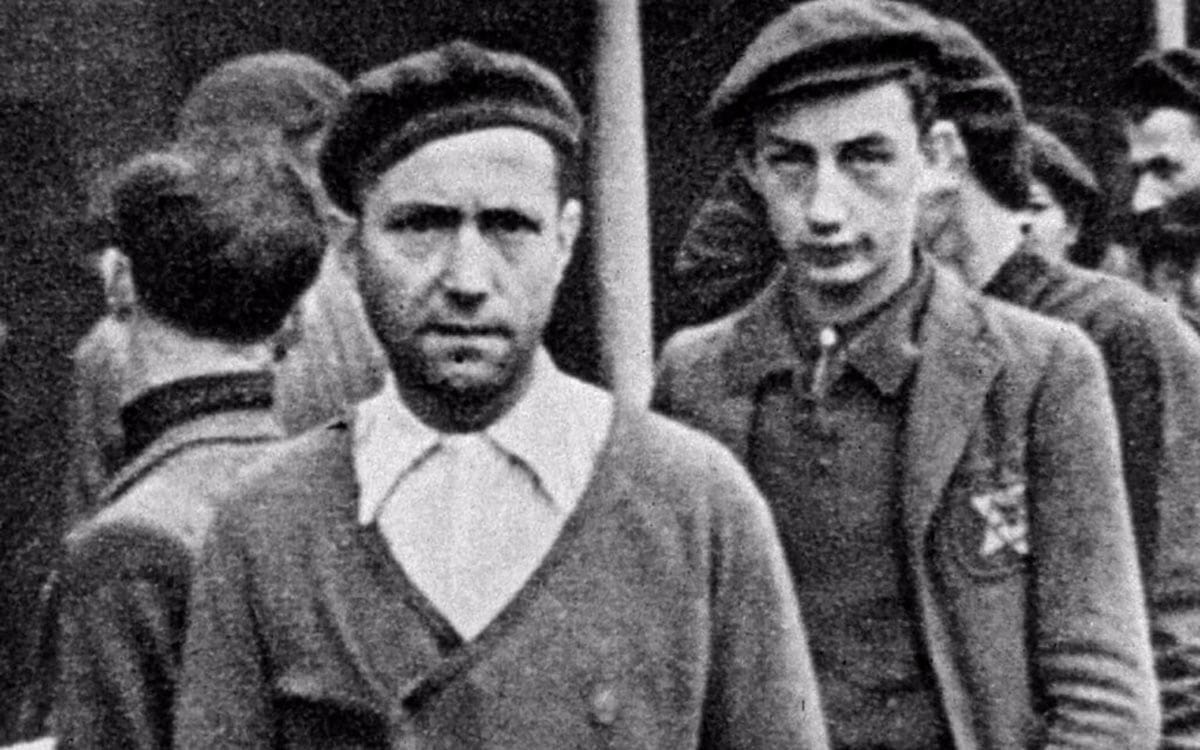
Marcel Ophüls’s The Sorrow and the Pity is a veritable chorus of disparate voices and striking faces, exquisitely juxtaposed in a way that challenges the once widely accepted notion of a strong, resistant France in the face of evil. This prismatic examination of the citizens of the small central French city of Clermont-Ferrand and their German occupiers features testimonies of integrity and betrayal, courage and indifference, capturing the full spectrum of the human condition within a fascinating microcosm of opposing forces.
Interviews with everyone from British secret agents and French resistance fighters to neutral citizens and Nazi officers provide an exhaustive, often contradictory, and always enlightening account of the years of the Nazi occupation of France and its aftermath that speaks to the factions and perspectives at play both during and after the war. Ophüls, though, is less interested in providing an overview of this historical period than he is in examining the subtly nefarious and often forgotten ways that not only the French Vichy government but ordinary French citizens helped the Nazis to gain and maintain control of France during these years.
As the old adage goes, history is written by the winners, and while France decidedly lost its initial six-week battle against Germany in 1940, their allegiance with the Allied powers ultimately allowed them to whitewash their complicity in the Holocaust. As The Sorrow and the Pity makes clear, in the 25 years following the end of World War II, France and its leaders cobbled together a comprehensive yet mostly false narrative of a country united against antisemitism and Nazi Germany’s attempt to overtake Europe, and ultimately the world.
In challenging that accepted narrative, Ophüls and co-writer André Harris avoid a completely polemical approach to their subject mater. Instead, The Sorrow and the Pity’s interviews, as conducted by Ophüls and co-producer Alain de Sedouy, are presented in as an objective and dispassionate a manner as possible, with the interviewees given much time to expand on their memories and beliefs. And, particularly in the case of men like Helmut Tausend, a former Wehrmacht captain and unrepentant Nazi, and Christian de la Mazière, a veteran of the French division of the Waffen SS, the film steers clear of antagonizing confrontations, merely opting to give the men more than ample rope with which to hang themselves with their own words.
Of course, the filmmakers’ leftist perspectives, perhaps inevitably, announce themselves across the film’s four-plus-hour runtime. But rather than doing so via pompous voiceovers hard-wired with platitudes or easy condemnations, The Sorrow and the Pity introduces little known facts about, say, the French bourgeoisie frequently attending elaborate parties during the occupation years and France co-producing the notorious German antisemitic film Jew Suss, which frequently played in French cinemas to Nazi and French audiences alike.

Ophüls returns to the surge of antisemitism in France throughout The Sorrow and the Pity, with testimonies of how the disdain of French citizens for the Jews led many people to, if not exactly welcome the Nazis with open arms, at least hold the proverbial door for them as they marched in. And in a particularly intense interview with a former member of the Vichy government, the audience learns that while many naturalized Jews were saved in France, nearly 95% of non-naturalized Jewish people were handed directly over to the Germans.
Alongside these stories of cowardice and antisemitism are tales of the French resistance that highlight the heroism of that movement and, more importantly, provide insight into the many people who sat by and did nothing. Several interviewees use the cop out that they didn’t know how they could help, to which former resistance fighter M. Leiris expresses his disdain, snidely remarking that “somehow an old fool like me knew how, and they didn’t.”
Amid such groundbreaking revelations, which inevitably led to The Sorrow and the Pity’s suppression in the years after its release in 1969, are smaller yet equally compelling digressions that shed light on the documentary’s subject matter in different ways. Certainly the tales of direct French collaboration with the Nazis are the biggest bombshells here, yet the tale of a gay British secret agent, who ended up in a five-month relationship with a Nazi officer, is as gripping as anything else in the film. And it’s indicative of the subtle complexities of the times, where the clear black-and-white morality of fighting the Nazis give way to myriad shades of gray, when emotions and survivalist instincts are also endlessly heightened.
Equally fascinating are the strains of anti-communist thought that worked their way into even the British and French resistance efforts. The film meticulously weaves all these various threads together to not merely scold the French laypeople and government officials who betrayed their country, but to show how the mass confusion and fear of war years led to countless configurations of strange bedfellows who may otherwise be enemies. This tendency to expound on virtually every different perspective at play during the war is a large part of what makes The Sorrow and the Pity such a tremendous documentary, whose themes of institutional corruption, mass indoctrination, greed, and cowardice speak as much to the years of Nazi occupation as it does to the period in which it was made, as well as to the present day.
The Sorrow and the Pity is now available on Blu-ray from Milestone Films.
Since 2001, we've brought you uncompromising, candid takes on the world of film, music, television, video games, theater, and more. Independently owned and operated publications like Slant have been hit hard in recent years, but we’re committed to keeping our content free and accessible—meaning no paywalls or fees.
If you like what we do, please consider subscribing to our Patreon or making a donation.