The early shorts of Canadian-Hungarian filmmaker Sophy Romvari displayed an emotional sensitivity refined by, and frequently inseparable from, a foregrounding of the storytelling process itself. Both aspects are even more evident across the expanded canvas of her feature-length debut, Blue Heron. What’s perhaps more moving than the grief and nostalgia that pervade this intelligent, auto-fictional coming-of-age story is the way that it self-reflexively interrogates its own limitations, exposing the painful absence at the film’s core.
Blue Heron draws from aspects of Romvari’s life that featured in her 2020 documentary short “Still Processing,” which saw her reckoning with the early deaths of her two older brothers. This fictional effort is told from the point of view of eight-year-old Sasha (Eylul Guven), who’s recently relocated to Vancouver Island with her Hungarian immigrant parents (Iringó Réti and Ádám Tompa) and her siblings, including wayward older stepbrother Jeremy (Edik Beddoes).
As Sasha settles into her new home, her mother and father’s struggle to cope with the former’s mostly non-verbal son become increasingly clear. A concerned suggestion that Sasha shouldn’t invite one of her new friends over for dinner is the first major indicator of the problems Jeremy is causing, which lead the parents to consider arrangements to protect him and themselves.
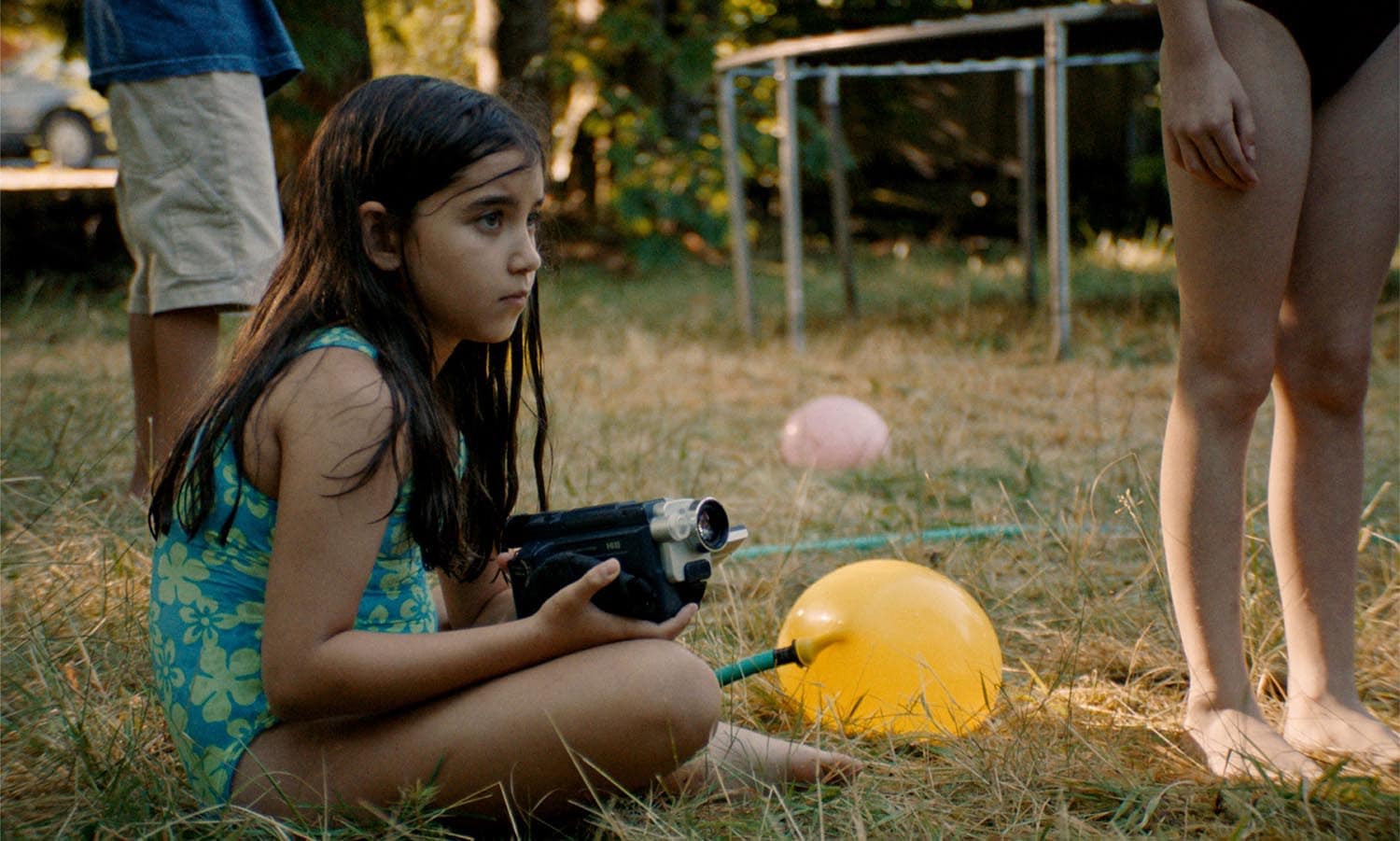
Despite these troubling undercurrents, there’s a low-key warmth to Romvari’s painstaking portrait of quotidian family life, as her documentarian attention to detail creates an intoxicatingly vivid rendering of 1990s suburbia. Blue Heron effectively conveys the ambience of a household from the perspective of a small child, for whom the shock of Jeremy’s more extreme behaviors might not register fully. Broken windows, a shoplifting arrest, and one particularly tense incident where he climbs onto the roof of the family home are all novel occurrences with a similar emotional intensity for Sasha as learning to cook with her mother or, in one wryly amusing scene, experimenting with Microsoft Paint for the first time.
Indeed, the idea that Sasha has restricted insight into the turmoil going on around her, which becomes particularly crucial in the latter part of the film, is something that’s hinted at regularly throughout. Beginning with the very first, pitch-dark shot from inside a moving van gradually illuminated as the tailgate lifts to reveal the family’s new home, director of cinematography Maya Bankovic emphasizes what cannot be seen just as much as what can. This approach is clearest in a long-lens slow zoom from outside the house, which gradually centers Sasha’s mother in the lounge taking a pivotal phone call about Jeremy’s future, shifting the viewer’s attention from her young daughter and friends happily bouncing on a trampoline in the garden.
Just as Blue Heron’s precise restaging of childhood memories feels as if it’s losing some of its potency, an unexpected time jump of several decades reveals this opening gambit to be merely one part of an intriguingly complex, multi-faceted structure. Now a filmmaker researching her family and Jeremy’s case history for a new project, a grown-up Sasha (Amy Zimmer) is shown carrying out interviews in somewhat sterile meeting rooms or over Zoom with various relatives and social workers, as Jeremy’s move into foster care and eventual fate are revealed.
Measured and occasionally harsh in their honesty, in contrast to the fuzzy tenderness of the film’s early portion, these glimpses of Sasha’s present alternate with touching scenes in which she goes back in time to her childhood home. In these moments, she pictures herself as both the social worker advising her parents and a curious observer of herself and her siblings.
This mid-film rug pull is devastating in its subtlety, as Romvari orchestrates a deft balance between sober objectivity and raw emotion. Even Sasha’s endearing rehearsal of her greeting to interviewees seems to have deeper significance, implying that she’s no more of an authority as a professional storyteller than she was as a youthful bystander. And the meticulousness with which her childhood is initially depicted comes to lend a disorienting quality to the fantasy sequences. Retroactively questioning any comfort that the earlier scenes might have provided, these uncanny reveries can only emphasize the gap between two disparate eras and selves.
Finally permitting itself a tentative kind of closure, Blue Heron culminates in a bittersweet reunion for Sasha and her brother. This rapturously lit, Brian Eno-soundtracked sequence makes the most of its idyllic lakeside setting’s natural beauty, briefly recalling The Tree of Life’s climactic family gathering in the afterlife. Which isn’t to suggest that Romvari’s methodical excavation of her own past allows any room for Terrence Malick’s idiosyncratic spirituality, only that her film has genuine ambition and an unashamedly universal scope.
Blue Heron dramatizes Sasha’s realization that her questions about Jeremy will become more unanswerable with the passage of time, while they stubbornly continue to shape her creative practice and emotional development. It’s fitting, then, that the film’s most evocative image is simultaneously its most enigmatic: the adult Sasha back in a childhood bedroom, whispering something inaudible into the ear of her smiling younger self.
Since 2001, we've brought you uncompromising, candid takes on the world of film, music, television, video games, theater, and more. Independently owned and operated publications like Slant have been hit hard in recent years, but we’re committed to keeping our content free and accessible—meaning no paywalls or fees.
If you like what we do, please consider subscribing to our Patreon or making a donation.