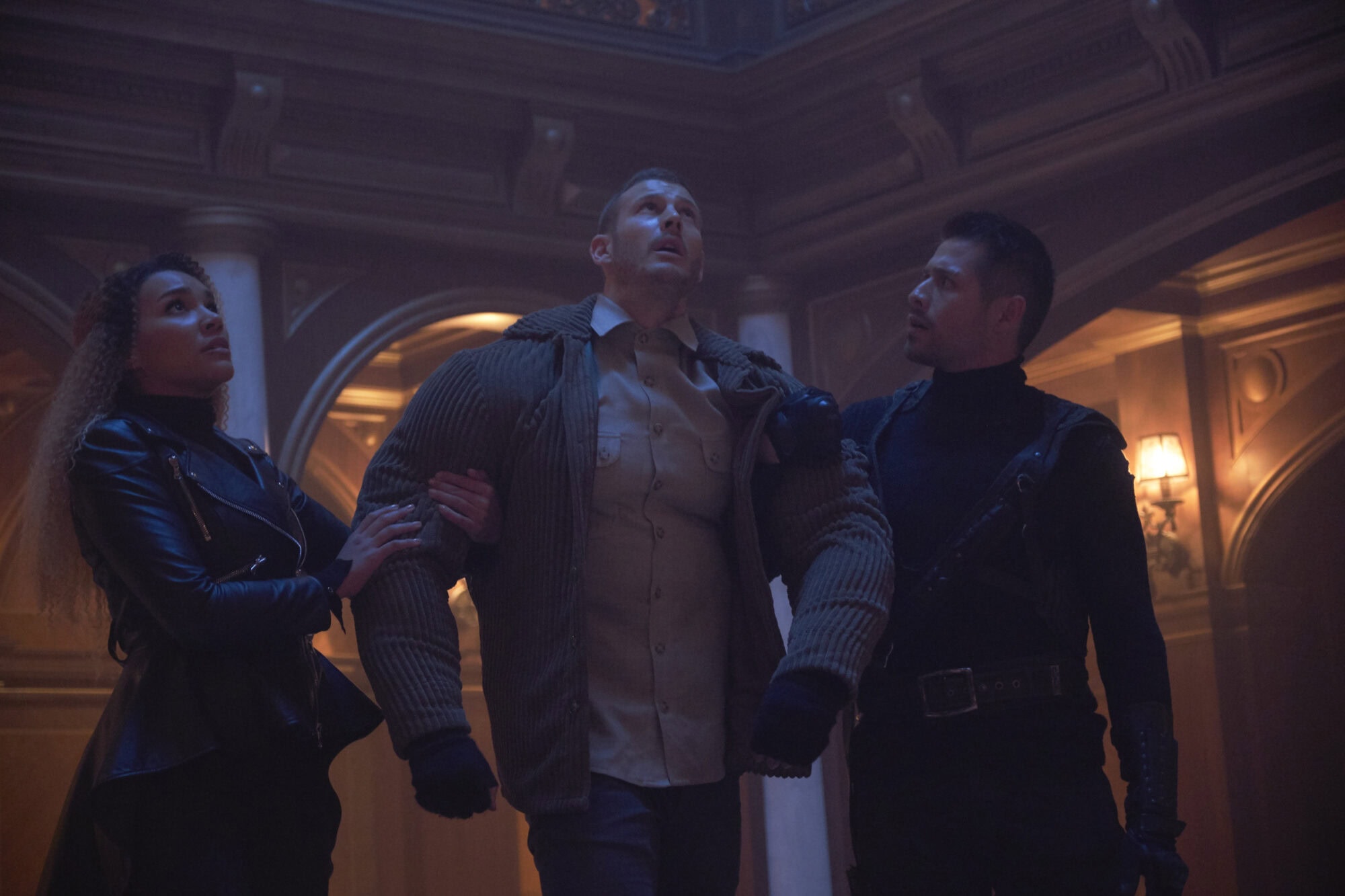
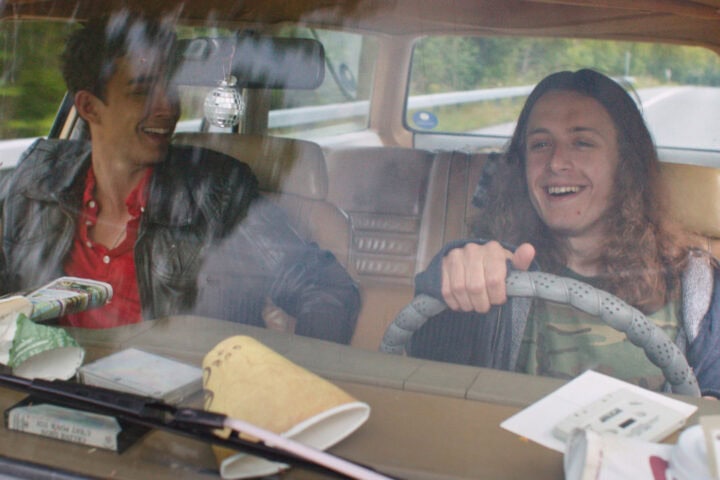
Among Umbrella Academy’s stellar ensemble of quirky characters, Klaus Hargreeves is a standout among standouts. Robert Sheehan portrays the gleefully morbid orphan with a calculated recklessness, infusing both humor and heartbreak into a character whose relationship with death grows deeper with each new season of the show.
The Irish actor’s air of blithe abandon as Klaus makes the character the perfect partner (or foil) for many of the other characters, regardless of their temperament. However, it’s his pairing with the Sparrow Academy’s Sir Reginald Hargreeves (played by Colm Feore) this season that transforms Klaus’s propinquity with his adopted father—and by extension his relationship to death—into a kind of happy, mutually beneficial marriage.
Ahead of the premiere of Umbrella Academy’s third season, I chatted with Sheehan about the new storyline that includes the rivaling Sparrow Academy children, Klaus’s partnership with Sir Reginald, conquering death, and more.
What was it like working alongside an entirely new cast with the inclusion of the Sparrow Academy this season?
It meant more days off, which was nice. They took up more of the flack. It was interesting to have a whole new breadth of parallel characters come in with a new set of powers. And it felt exciting because we’re going, “What do they all do?” I watched the series back in aid of this couple of days of [press]. And in fairness, the show quickly establishes the hierarchy between the Sparrows. You know who’s the head honcho. Beyond that, there’s just a sense between them all that they know what the pecking order is. You just get a sense of who they are and you think, “Yeah, I’d probably still watch the show if it was them,” you know what I mean?
And they’re not just formidable fighters with their powers, but they can also cut a rug on the dance floor.
They were great, and they were all very distinctive. I had a bit with them in a big ol’ bombastic dance-off at the start of the series. And then after that, we all scattered to the wind. And really, the Sparrow that I’m most involved with after that is Sir Reginald D. Hargreeves: philanthropist, industrialist, and space alien.
I like how you’ve used the character’s full name there. Can’t forget he’s a space alien. Very crucial to the arc of the series. I love the Klaus and Sir Reginald duo. It’s very endearing.
Ah, thanks, man.
And we see more of Justin H. Min’s character, Ben, who was a ghost only you could see last season. But in this new timeline, he’s alive and a member of the Sparrow Academy.
A new Ben, altogether. New-model Ben. Yeah.
He’s not the soft-spoken, wise Ben we saw in the past. He’s kind of an asshole.
Yeah. He’s a bit stunted, isn’t he? He’s a bit trapped in childhood, I think.
Right. Your character’s physicality is so unique. Did you have an inspiration for this, or did you just kind of work from the ground up?
Well, I read a lot of the Mr. Men books with a particular focus on Mr. Tickle. And I thought, “Klaus needs lots of limb dexterity.” But there were times in the series where I thought, “Ah, he’s being too limby.” In the fourth episode [of the first season], I get kidnapped by Hazel and Cha-Cha. And it was only after that I started to enjoy my performance because I got tied to a chair. And so it just took me down, and mostly I’ve stayed down there. Occasionally, I’ve felt I’ve gone back up slightly too much, but otherwise, mostly I’d agree with you.
I wouldn’t say it’s too much at all. I dig it.
Ah, thanks, man.
And most of the time, you have your shirt open or your shirt off. Do you have a workout regimen for the series?
My workout regimen would be very fair-weather. It’s more like a “work-in” regiment with very occasional “out”? Tom [Hopper] and David [Castañeda] are very astute warriors, very adept with their fists and with knives and stuff like that. So they did a lot of training with our fight choreographer, Tommy Chang, and just for themselves because they thought that was right for their characters. But I made an even bolder character choice for Klaus, since he doesn’t have a sculpted body or a six-pack or anything like that. That would be wrong. So [showrunner] Steve Blackman and the rest of them encouraged me to do as little as possible when I wasn’t at work.
That’s nice. You got to take it easy when you weren’t practicing your lines.
Yeah, it’s great.
Klaus is a queer character, which is important to a lot of viewers. What did Klaus’s coming out mean to you?
It was secondary to the importance of telling a true-love thing and, in Klaus’s case, really painful because the first person in his entire life that he could actually see himself loving—and by “loving,” I mean placing above himself in importance—might not be the healthiest love in the world. But it’s that sort of first obsessive love where you just want to grab the person and hold on to them and never, ever, ever let them go. The fact that they were a man in the first season, I suppose, was important to a lot of people in the modern zeitgeist times, the era that we’re in and everything else. But in all honesty, I just wanted to play it as though it was one soul loving another soul. And it just happened that the other soul happened to have a penis.
And you have such unique pairings this season. You talked about Sir Reginald, you’re paired with Aidan Gallagher’s Five on a fun road-trip to find your birth mother.
Yeah. I loved that.
You’ve got some more time with new-model Ben and Stanley, played by new cast member Javon Walton, as well. Which was your favorite duo this season?
I’d have to say Colm Feore and I got to explore things to a greater depth. From episode one, we start stirring the pot together. It was a great opportunity to suddenly see Reginald Hargreeves—a very sharply spoken and hard man—in a very tender and vulnerable light. Klaus sees him maybe as sometimes a father, sometimes a little brother. There’s all these dynamic shifts. And because we got to play with that a lot—student and master—and then master and student if we come to drugs. But if we come to, “Here’s how you expedite your self-growth,” Reggie’s all over that. And then it’s like, “Here’s how you have a normal conversation with another human being, Reggie.” And then that’s now Klaus’s specialty. And so the relationship felt very symbiotic and felt very like discovery for both characters, you know what I mean?
Yeah. It’s one of the heartbeats of this season.
And so that was why, for all those reasons and more, it had to be Reggie this season, definitely. And Colm Feore, I can’t speak highly enough of him. He’s an incredibly inspiring actor just to be around, not even necessarily if you’re in a scene with him. His magnetism definitely brought up my game, I think.
Oh, man. That sounds amazing.
Yeah, he’s lovely. He’s a really energetic person, a really positive person.
And then, all of a sudden, you’re in the scene, and he just turns into the stiff Reginald. It must be amazing to see that transition too.
Yeah, yeah. He does. He sort of dissolves into Reggie.
Elliot Page has a beautiful storyline this season. Steve Blackman consulted Thomas Page McBee to craft his character’s transition. It was very authentic. What was it like witnessing that collaborative process unfold?
Yeah. I mean, for me, I worked with Elliot on that story. I mean, in terms of Thomas and Steve and Elliot, I think they’re just sort of a triumvirate. And also on guard point on that story was GLAAD. So I spoke to them a lot about a trans person’s journey and took it as an opportunity to learn a lot about what might be going on inside the soul of a person who wants to make a transition. And then, in terms of working together on set with Elliot, it felt like [it always was]. And then just the subject matter of it was, “Oh, it’s how I’ve always felt. I hope it’s not going to be a problem for any of you.” And we were like, “No, of course not.”
Because I suppose Tom Hopper, very wisely, earlier was saying that the one thing that defines these Umbrella Academy siblings is that they’ve always lived their lives on the fringe. They’ve always been somewhat outside the norm, and they’ve felt like outsiders, and for good reason. And I suppose there’s comparisons to be drawn between that and somebody who’s making the transition, certainly in this era. So it’s never a problem in terms of personal acceptance for any of the siblings. It felt like working with the same person. [Just] different pronouns.
Yeah. That’s wonderful. And so you conquered death this season.
Woo-hoo!
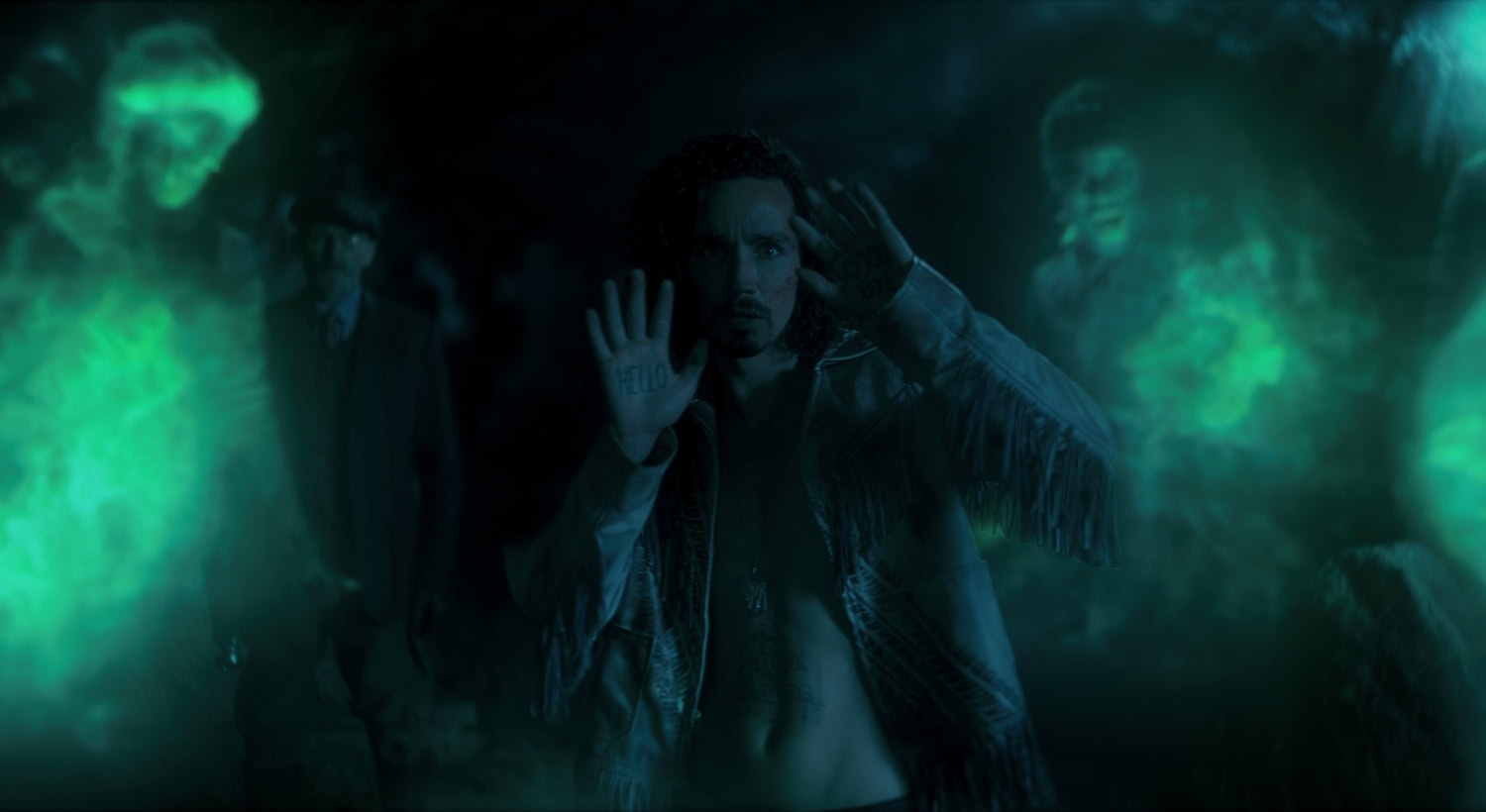
Klaus does this in the comics, so did you know this would eventually befall your character in the Netflix version? I love the ethereal afterlife scenes.
Oh, I loved those ethereal afterlife scenes. There was lots of wandering around in a sense of wonder. There was lots of Terrence Malick [in the scenes].
Absolutely.
And field trips. Whenever we were in the Void, it meant we were going on a field trip. It was always a joy going out to some very picturesque part of Ontario to shoot.
The Malick parallel is wonderful. I was trying to put my finger on the aesthetic.
Yeah. Yeah, yeah. I saw The New World quite recently.
Oh, yeah. That was overlooked, at the time, in 2005. I loved it.
Malick asks you to step into his state of, I wouldn’t even say, “mind,” perhaps the absence of mind or the minimization of mind. And so you’re just asked to just “be,” which is a hard thing to be, especially just walking into a cinema from a city. I also recently saw Apichatpong Weerasethakul’s Memoria. It’s a beautiful film that sort of sits very deeply into itself and asks you—in fact, makes you—confront what’s happening on screen [as much as it does] what’s happening on the screen behind your eyes, you know what I mean? Because things move slowly and so our minds, especially when we’re in our day-to-day mode, fill in the blank of activity when, in fact, there’s loads going on. And so it asks you to absorb as opposed to project. That’s what Malick does really beautifully.
That sounds right up my alley. What’s next for you, and do you and the Umbrella Academy team already have plans for a season four?
At the moment, I’m not sure, man. I’m doing this writing project, but I’m sworn to secrecy on that. I have to let our publishers make that announcement. This business is all cloak and dagger. But other than that, happily gainfully unemployed, man.
Since 2001, we've brought you uncompromising, candid takes on the world of film, music, television, video games, theater, and more. Independently owned and operated publications like Slant have been hit hard in recent years, but we’re committed to keeping our content free and accessible—meaning no paywalls or fees.
If you like what we do, please consider subscribing to our Patreon or making a donation.