I was more curious to see Radu Jude’s Zoom setup than that of any artist I’ve virtually interviewed given how prominently virtual backgrounds feature in the Romanian filmmaker’s Do Not Expect Too Much from the End of the World. He explained his plain setup at the start of our call as the result of a Zoom update, which wiped his library of over a thousand images that he used to program as a live montage behind him. Jude did indulge me in a few glimpses of what he still had on hand, spanning from a photograph of soldiers standing atop a train car to a meme that positioned a Pepsi billboard next to the crucifixion of Jesus.
Seeing Jude’s collision of the historical and the contemporary, along with the somber and the silly, isn’t a privilege reserved for those fortunate enough to be in direct dialogue with him. It’s there in his films. In an era where the omnipresence of images has destabilized their meaning, Jude’s cinema hasn’t shied away from the challenge of depicting—and participating in—contemporary life. Do Not Expect Too Much from the End of the World continues the explorations of 2021’s Bad Luck Banging or Loony Porn, as Jude playfully explores how societal mistrust in images plays into a mistrust of each other.
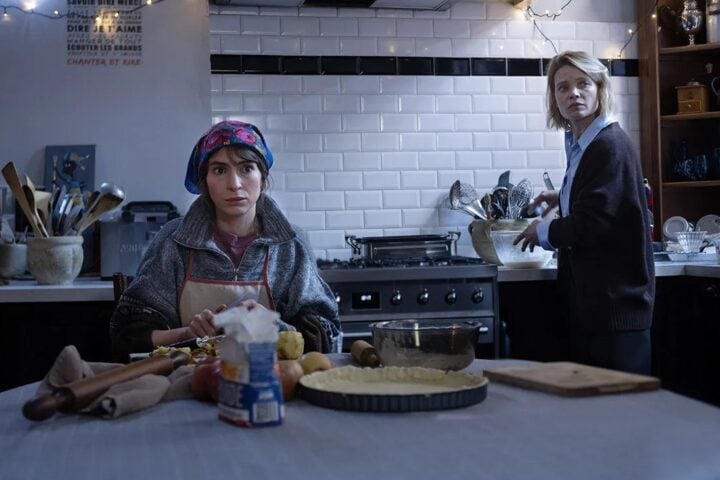
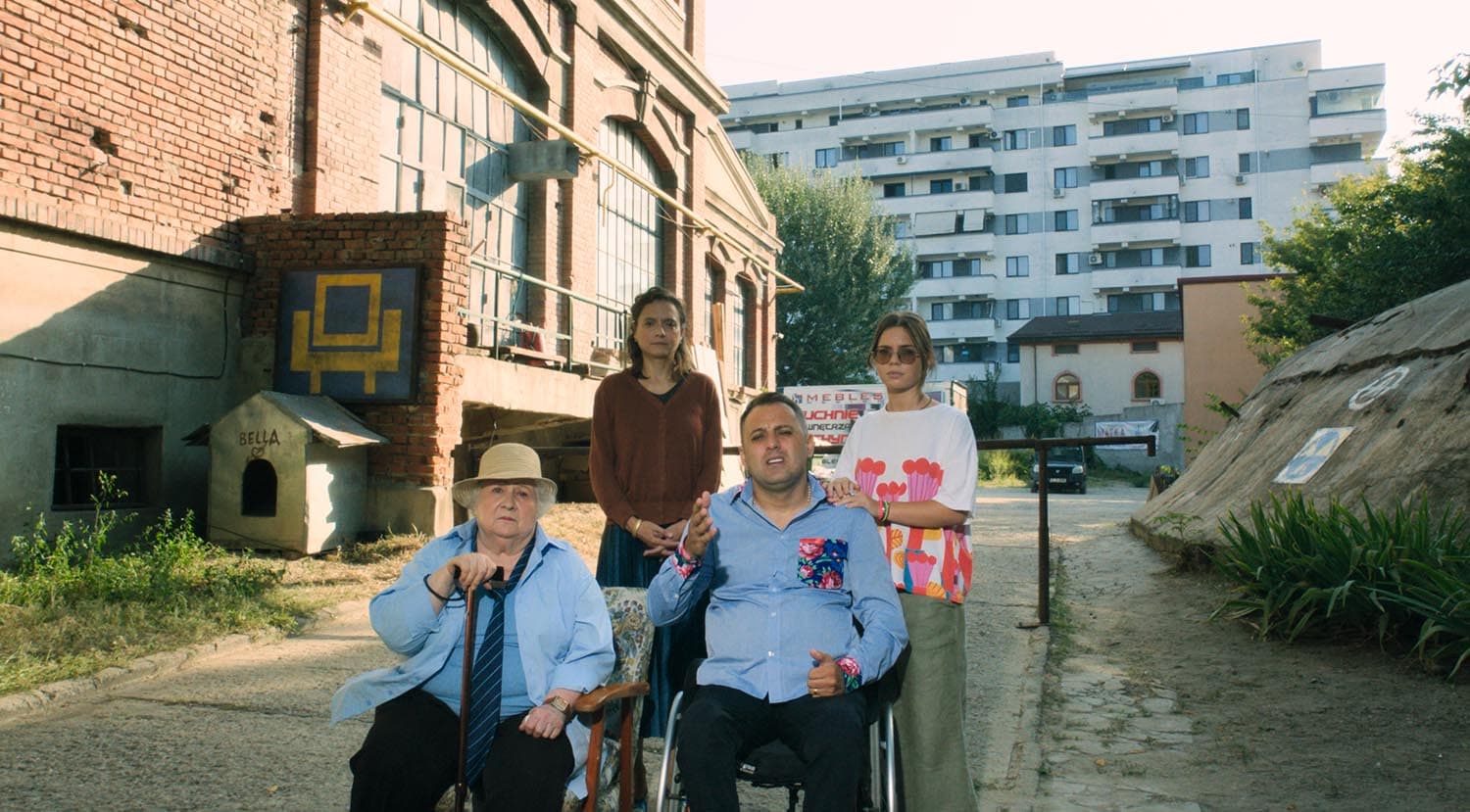
Jude follows the travails of production assistant Angela Raducani (Ilinca Manolache)—with frequent interruptions from her Snapchat alter ego Bobita, an Andrew Tate acolyte—as she scouts testimonials for a corporate workplace safety video. He intercuts her driving around Bucharest with footage from Angela Goes On, a communist-era Romanian film that provides an intriguing point of comparison, as well as a fascinating counterweight thanks to Jude’s attentiveness to semiotics. This tussle between past and present in Do Not Expect Too Much from the End of the World comes to a halt in the extended take depicting the production of the safety PSA. The film’s conclusion wrangles all the complexities and contradictions inherent in cinema into a provocative thesis statement on the irreducibility of the image.
I spoke with Jude in advance of Do Not Expect Too Much from the End of the World’s stateside theatrical release. Our conversation covered his approach to depicting the present day as a historical moment, his approach to the non-serious within art, and how innovations like social media and AI are changing the way audiences understand visual language.
What led to the Zoom background where the head of Nina Hoss’s corporate executive is floating over the Chicago River with the Trump property to the right?
You know, it’s very simple, but sometimes I think an accident or reality organizes these things in an easier way than you can do it. I hadn’t thought of that. I spoke with Nina, and she said, “Where should I be? Should I go to an office?” I said, “Well, no, just stay home and it’s going to be fine. We will find a corner.” She said she was at her computer, and her back was to a wall. So, in that moment, I said, “Well, you know, that wall doesn’t look right. Maybe you can move.” And she said, “Well, no, this is where I’m working. So this is my place.” And then I said to the production, “Okay, let’s buy quick whatever image we can get very fast on Getty. Maybe this background of a big American city behind [her], something like that.” And they showed me one, and I said, “Okay, let’s take this,” and they bought it immediately. We sent it to Nina Hoss, she put it on her background, and I didn’t realize there’s the Trump Tower until I edited the film. But then I think it’s absolutely fit[ting] in a certain way! If I saw it at the beginning, I wouldn’t have put it in. It felt too obvious. But now, I think reality organized it better.
I loved the blocking of that scene in the room and how people spoke to the TV image of Nina’s character rather than talking to her through the webcam on the screen. How did you negotiate the complex dynamic of who people look at in a meeting like that with people who aren’t always there?
First of all, I think that the staging is quite accurate! I think it’s quite difficult in reality. And I realize that sometimes, because of the interactions of this mix when you’re having a more complex let’s say online or video meetings, you get lost a little bit. You don’t know if you have to look at the camera or at the image of that person in this virtual space. I was inspired by that because I think it happened to me at some point being in Q&As on stage in a cinema, but there were some other people who weren’t on stage but projected on the screen. I didn’t know where to look, because I really looked at them. Of course, that was very stupid because they didn’t see me looking at them. I was looking at their image. From this, and because I think the film is about images in a way, I wanted the images to replace, in a certain way, the human beings.
Bad Luck Banging or Loony Porn was, in part, your reaction to doing historical films, but bringing that level of archival attention to the present. Is Do Not Expect Too Much from the End of the World a merging of these two sensibilities?
I think so. They have the same sensibility or intuition, but organized differently, of course. I think that after all these years I spent making films dealing with history, I started being much more interested in details. Everything around us is already a historical relic in one day, one year, 10 years, or 100 years. It’s history around us. In a certain way [Jude gestures at the frames on my wall], like your diplomas there or your Venice Film Festival poster. I have a kind of attention, if you want, or a feeling when I look around. When I make a film, this feeling enhances [the way we look] at and [record] scenes [that are about things that are] already gone or going away. [I’m] trying to capture them a little bit longer or working with these traces, in a way. I think this will be true for everything I will be doing from now on. Whenever you start seeing things in a new way, you cannot go back to the old way of seeing them.
In terms of the current events depicted in Do Not Expect Too Much from the End of the World, were you determined to use whatever the world threw at you—and it just so happened that things like the ascendancy of King Charles and his owning property in Romania were thematically relevant?
It’s true, but here, I think it’s something else. Maybe it’s because the time from when one is shooting a fiction film and when the film is released is always a long time. Sometimes a year, sometimes more, sometimes a little bit less. I have the feeling that many filmmakers refrain from infusing the matter of a film [with] daily events. Because then when the film is out, it will already look old. And I had this very powerful feeling during the pandemic when there were many Romanian—but also foreign and even American—films shot during the pandemic. They weren’t period or science-fiction films. They were contemporary films, and there was no trace of the pandemic. It didn’t exist. And I think this is why [some] people thought, “Well, maybe it’s over.” But I’m interested in capturing a certain moment and its trivial and unimportant details. The details that you mentioned just happened while we were shooting the film. I let the film absorb some of those things [that were becoming] historical already, in a way.
It seems like your films are going to be among the few that actually captured the pandemic, not only in the small details but also in the way that it imprinted itself on people. I find any movie that tries to set itself in contemporary times and acts like that traumatic collective incident didn’t happen is just crazy.
I had this desire that films during the pandemic, like this film, will capture something of the moment we are dealing with. Yes, it’s true. There’s an ambition to that, but it’s not for me to say if I succeeded or not!
In the title card for the film’s first section, you cross out “dialogue” and write “conversation” over it. What do you see as the difference between the two?
In the Romanian language, when you say “dialogue,” it’s much more serious. And a “conversation” can be just like a coffee conversation. It’s more casual, let’s say. I felt that “dialogue” is already too serious in a certain way. The titles, we shot them somewhere in the middle of the shooting process. I felt that, well, it’s lighter, in a way. [pauses] I hope!
Maybe it’s like, in English, you would say “chat.” In Romania, we don’t have chats. We have “conversation” for that. I felt it’s much more like a chat and a little bit more non-serious. Of course, I have to be careful what I say because that can be taken against [the film]. Like, “Oh, the film is non-serious” or something. But I believe there’s something that lacks in cinema, [but] not necessarily in experimental cinema. Classical experimental cinema is much more playful, in a certain way. Maybe it’s because of the money involved, maybe it’s because of other things.
If you go in a gallery, and I think that’s true in the last 150 years since impressionism, there’s a sense of non-serious mixed with serious. Especially the avant-garde. If you listen to John Cage’s music, I think he’s really humorous and non-serious while being extremely serious about what he’s doing. The same is [true about] Warhol, who’s also a very big inspiration for me. Warhol had these scenes, at least in his sound movies, where he would just turn on the camera with a big roll of film. He didn’t stop recording, whatever happened, and that was the film. Of course, it seems like a joke or something non-serious. But, actually, I think he took it very seriously. Sometimes, the results are absolutely marvelous because of this non-serious approach. I don’t have the courage of Warhol, so I tried to combine the things a little bit.
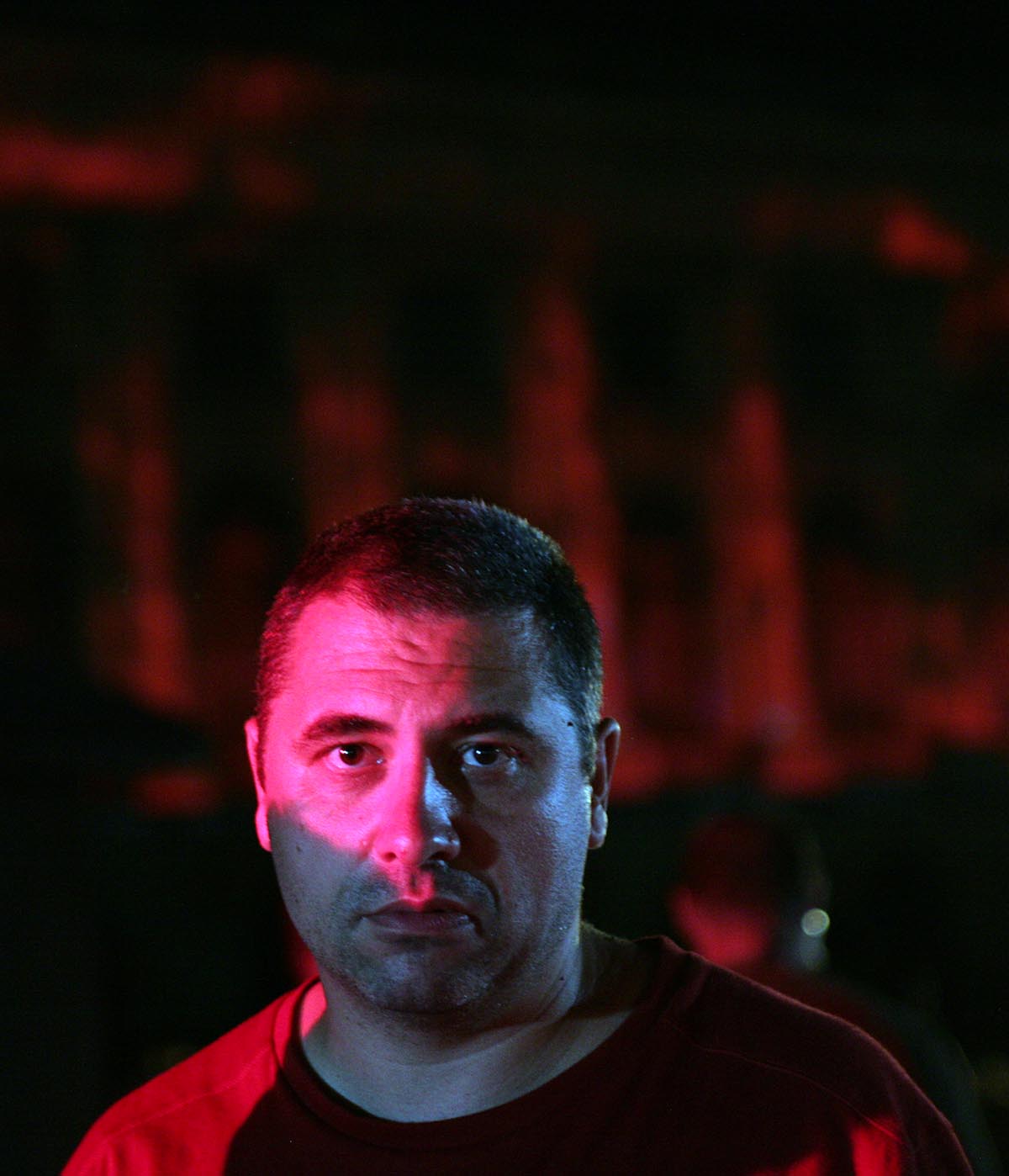
You’ve talked fondly about TikTok and other online video creators today. Do you see some element of that Warholian creative spirit that living on through their unfiltered, sometimes unserious, work?
Yes, I think so. But this also comes from another thing, which is exactly what you said before about seeing the historical dimension of everything. This applies to whatever is around. It doesn’t matter if it’s a Martin Scorsese film or a TikTok video from this point of view. They can be equally interesting, in different ways, of course. They’re all part of the culture. They both speak [to] something. They both show something. They both can be interpreted, or analyzed, or loved, or despised.
You’ve said visionaries and amateurs are the two people who break the rules in cinema. Is there some element of your filmmaking that tries to straddle both?
This I cannot answer! I don’t consider myself a visionary, but I’m an amateur more and more, in a paradoxical way because I struggled so much to become a professional, so to speak. Then, you discover that maybe I cannot be a very good professional, so you then need more and more amateurism in order to balance this professionalism. It’s true that in amateur work, sometimes, like in what is called “outsider art,” or “art brut” in French, you can find marvelous things. Visionary, I don’t know, I have much more modest [aims]. If I’m able to describe something quite accurately, but describe it in as complex a way as possible, and artistic[ally]…if this description exists, for me, it’s more than enough.
What guides you in knowing when you can take a film in a more iconoclastic direction? It sounds like you sometimes have to push back against your editor taking things in a more experimental direction because you have a coherent vision of the project.
I think that, from all the arts, cinema has the most rules from a technical point of view. And maybe that’s because of the money involved, so people invented a lot of rules. And I think film schools are mostly like that. People who go to film school want to know how to make a good film. I see that because I’m also teaching, and sometimes this is the first thing that students [want to know]. I ask them, “What do you want?” And they say, “I want the film to be good.” Well, what does that mean? I don’t know, but they want the film to be good. I think cinema is organized very much like that, and this anecdote with the students represents the essence.
Of course, you cannot break all the rules, because then the project crumbles. I’m trying not necessarily [to] break the rules, but more and more, I’m interested in different structures, trying to push some things a little bit, because I think there’s a necessity to do that. I don’t think, “Oh, is this iconoclastic enough, or is this just regular?” This doesn’t cross my mind. What crosses my mind is how do I express, in cinematic terms, some of the ideas that I might discover. From this desire to express, then you can maybe create something.
[This] is a small example which maybe doesn’t mean anything but for me means a lot. When I was doing I Do Not Care If We Go Down in History As Barbarians, which deals with the massacre of Jews in 1941 by the Romanian Army, I didn’t know how this story or topic could be approached. But I found the answer after many, many years of struggling with this topic when I saw a military reenactment. In that moment, I saw that might be a possibility: making the film about the military reenactment and obliquely. [My] desire [wasn’t] to be iconoclastic or something, but to find a way to express the topic, the subjects, the ideas.
Ilinca Manolache’s social media alter ego Bobita predates the film, and you don’t explain really why Angela slips into this guise. How do you see the role of these personas, either for Ilinca or people at large, when they act so differently online from the way they outwardly present?
I think whenever someone is in public, they already have a mask. On social media or on Zoom discussions, there’s another kind of way to do that. Now, I think we’re at the beginning of a new existential situation where you can have this persona, this avatar, this digital persona that you create, to be as different [from who] you are in real life. I’m always amazed that when I meet some people who are really aggressive on social media, they can be an extremely kind person, or very shy, or very rational. I think there’s something [in that], but I don’t know. I think a psychologist would be more useful than me to tell you.
Why did you choose not to explain why she does the Bobita character?
I have the feeling there’s something much deeper there than the regular explanations we might have. If I’m asking the actress, she’s saying, “Oh, it’s a feminist critique, etcetera.” Because she started that, as you said, before the film in the pandemic time. But, of course, it’s so on the edge that it can be looked at as something much deeper. Maybe it’s a desire to show off, a desire to release some tensions, I don’t know, a desire to play, why not? I think it’s very playful. There’s all things together, and I don’t think there’s a very simple reason. Actually, it’s interesting, because, in my previous film Bad Luck Banging or Loony Porn, the starting point was this couple shooting their amateur porn sex video. There were many people who asked me: “Why do they do this? Why do they feel the need? She’s a teacher, why do this?” And the answer is, I don’t know, really! There are many people who are doing it. It’s difficult to say why, exactly.
Bringing it back to TikTok, are you also inspired by the nature of watching? There’s something about the filmmaking style that seems very compatible with an algorithmic scroll that exists according to the logic of our preferences, not just the chronological march forward of time.
When we speak about a phenomenon like this, like social media, Instagram, TikTok, and so many others, we’re simplifying these images to speak about them and the people who see them like they are only one way. I think there are many ways to do and see these kinds of images. There are many, many ways to analyze them and to like or dislike them.
Despite the toxicity that these networks also can bring and all these conspiracy theories that go around on TikTok and sometimes can get out of hand, or hate speech, or whatever, there are a lot of these…but at the same time, I think we are living in a world where images were always considered easy to understand. If you showed someone a photograph, or film, or a video recording, it was very easy. I think this is the beauty, but also the danger, of that.
I really believe, and I might sound very conservative, that the more education you have about images, the more you can understand and see them in better ways. I’m always amazed that if you [make] someone listen to classical music, they won’t say immediately, “Okay, I got it, I understand, okay,” but if I show someone our Zoom talk, in one second, people will say, “Oh, I really understood everything. It’s all there in the image. The image is offering itself to us 100%.”
But I believe this is just an illusion. I think that images—the world of images, the creation of images, the consumption of images—are very complicated. It’s difficult to really understand them properly, even if you’re interested in and educated in [them]. It’s even less [likely] if you’re not, of course. You can create and make great things, but I really think that we’re in the era of images in which you need to [really know how to think about them] and how to deal with them.
When I think, for instance, of AI images, movies, and scenes, there was just a scandal like a few days ago about an advertisement, which was a combination of AI and film with some old footage. And, well, I find this fascinating. At the same time, I think it’s really complicated. I don’t have a solution to anything of that. But I really think it’s fascinating because it’s very complex. And, at the same time, I think it’s fascinating because it puts cinema in a real crisis.
Do you agree with the off-camera voice that TikTok, social media, advertising, and AI aren’t a perversion or deviation of cinema but rather the fulfillment and natural evolution of what it’s been since the first Lumiere short?
The new images, I think they can be part of cinema if they will not wipe out cinema altogether. And if that’s going to happen, well…bad luck. What can we say?
Since 2001, we've brought you uncompromising, candid takes on the world of film, music, television, video games, theater, and more. Independently owned and operated publications like Slant have been hit hard in recent years, but we’re committed to keeping our content free and accessible—meaning no paywalls or fees.
If you like what we do, please consider subscribing to our Patreon or making a donation.