While the Mabuse spy thrillers would later be molded (and shrunk) into Bondian escapades, the mountain film—Weimar Germany’s other staple genre—would scarcely survive the end of the regime and the arrival of sound. The White Hell of Pitz Palu sums up the romantic motifs of the genre invented by geologist-filmmaker Arnold Fanck, though the film’s superiority to most of the movement’s other entries might be due to the presence of G.W. Pabst, who shares directing duties with Fanck. Still, as the credits pronounce, it is a film “by” Fanck, whose fascination with vast, alpine beauty is evident from the opening shots. Cocky Dr. Johannes (Gustav Diessl) climbs the eponymous glacial peak and laughs at Nature, only for Nature to laugh back—an avalanche claims his wife and Johannes is reduced to a pensive shadow of his former self, grimly roaming the mountains for her body. Years later, he bumps into Maria (Leni Riefenstahl) and Hans (Ernst Petersen), a newly engaged couple who promptly join him in his journey toward Pitz Palu. The setup suggests a rehash of Von Stroheim’s merciless triangulation in Blind Husbands, but survival takes precedence over romance once the trio gets pinned down in the icy face without supplies. It’s easy to see here the mysticism of purity that will fuel Riefenstahl’s later work as a director, particular her collaborations with the Nazi Party, yet the film is more earthbound, less dreamlike than Riefenstahl’s own mountain epic, The Blue Light—where her camera seeks out perfection of line, Fanck and Pabst prefer rugged verticals and sudden shadow patterns. Nature here can shift from ethereal to ominous in a heartbeat, so it’s no surprise that the film vacillates from a sense of wonder toward the voluptuous expanses to a need to conquer them. Striking pictorial moments abound (a torch-bearing expedition into the glaciers is staged as a chilly infernal descent), yet, like much of its ilk, The White Hell of Pitz Palu suffers from monotony and laboriousness. Fritz Lang achieved truer awe in Woman in the Moon that same year, though Pabst, who had already aided Greta Garbo and Louise Brooks into screen sublimity, understood that snow-covered behemoths have nothing on the human face—accordingly, and movingly, the most spectacular shot remains a close-up of a tear forming in Riefenstahl’s terrified visage.
Image/Sound
Considering the original negative was lost and the restoration came from a nitrate print, the transfer is especially impressive. A somewhat higher number of flickers and blemishes than in other silents released by Kino, but overall the image does justice to the photogenic landscapes. Though it often swells a little too excessively, the orchestral score is perfectly suited to the genre’s romanticism.
Extras
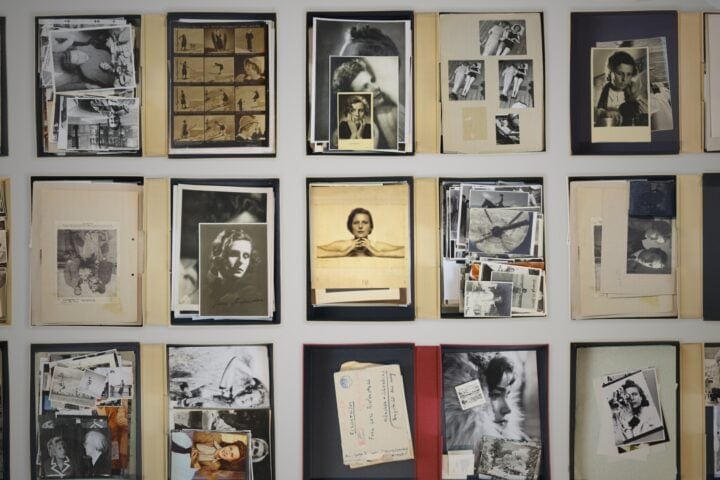
A set of production stills, plus a 10-minute clip from the 1935 talkie reissue of the film, with ruinously obvious dubbed-in lines. More substantial, if less specific, is “The Immoderation of Me,” a 59-minute interview with Riefenstahl shot in 2002, when the controversial filmmaker was nearing her 100th birthday. Interviewed by Sandra Maischberger, the still-spry director rummages through clippings and mementos, remembers Marlene Dietrich, discusses her aesthetics, and edits footage for her last movie, Impressions Underwater. Discussion on The White Hell of Pitz Palu is cursory, but damned if she doesn’t still insist on Triumph of the Will as an art film rather than a cinematic hummer to Der Fuhrer. Am I the only one who gets mad that she rounded out a century while Rainer Werner Fassbinder dropped dead at 37?
Overall
Decades before Stallone in nut-hugging shorts, check out the first cliffhangers.
Since 2001, we've brought you uncompromising, candid takes on the world of film, music, television, video games, theater, and more. Independently owned and operated publications like Slant have been hit hard in recent years, but we’re committed to keeping our content free and accessible—meaning no paywalls or fees.
If you like what we do, please consider subscribing to our Patreon or making a donation.