Dario Argento’s 1998 adaptation of The Phantom of the Opera is a divisive entry in a maestro’s body of work. For one, Argento would seem to have exhausted everything he had to say on matters of theater and opera with 1988’s Opera, arguably his last unambiguous triumph. The Phantom of the Opera is certainly worlds apart in tone from the film that came just before it, 1995’s The Stendhal Syndrome, one of Argento’s darkest and bleakest productions. But if you approach it with the right frame of mind, let alone set of expectations, The Phantom of the Opera isn’t without its deliriously bonkers pleasures.
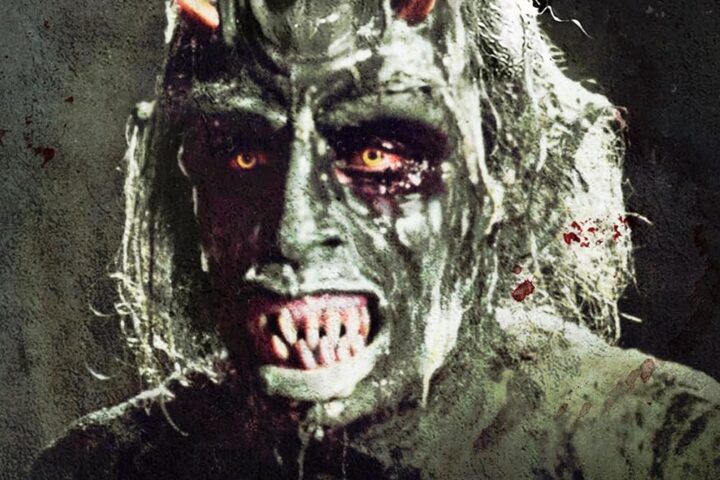
Argento and co-writer Gérard Brach make many changes to Gaston Leroux’s source material, starting with the Phantom’s origin story, which is left fairly nebulous in the original. Here, he’s set adrift in a basket on the Seine as an infant and ends up being raised by rats (in a nod of sorts to Tim Burton’s Batman Begins). Interestingly, in contradistinction to pretty much every other iteration of the story, this Phantom (Julian Sands) isn’t facially disfigured, though he often prefers to wreak havoc with little more than tooth and claw, evidence of what he calls his “dual nature.” (As the extras on this disc would have it, Sands was originally meant to wear a “rat-man” mask, but the actor quickly nixed that idea—for the better, one might add.)
Like its titular figure, the film is fitfully schizoid—part Grand Guignol gorefest, part goofy opera buffa. The murder set pieces designed by Sergio Stivaletti are suitably bloody and squishy, and while broadly sketched gags don’t always land, some of them are so determinedly weird that they verge on the surreal. One of the oddest occurs in the film’s most narratively unnecessary but directorially decorative scene: a visit to a bath house-cum-bordello. Fisticuffs ensue when a disagreement over the relative literary merits of the poets Rimbaud and Baudelaire heats up. Then there’s a whole sequence involving an jerry-rigged rat-catcher mobile recklessly careening through subterranean tunnels and hoovering up unwary rodents that could’ve been lifted straight from a Marc Caro and Jean-Pierre Jeunet extravaganza.
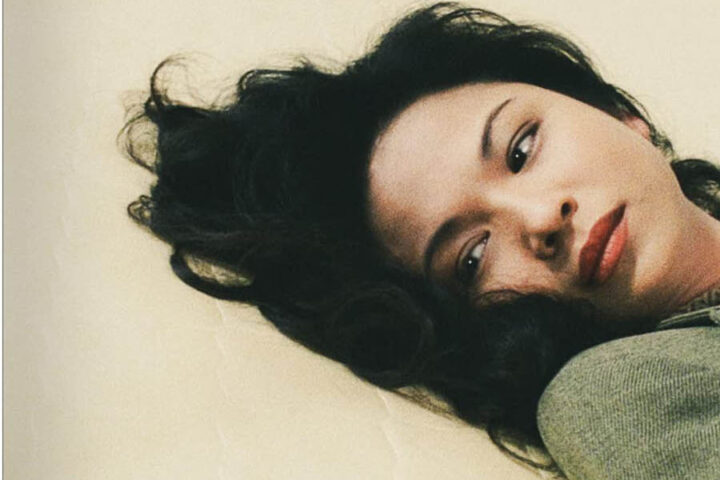
The film also invites comparison, perhaps inevitably, to Ken Russell’s Gothic, given its emphasis on poetry, phantasmagoria, and putrescence. Sands, who starred in Russell’s film as Percy Bysshe Shelley, often plays the Phantom like some demented, decadent poet, down to the ruffled sleeves on his blouse. Russell always displayed a keen fascination with the sex lives of unconventional artists, and as such, since at times we see the Phantom studiously banging away at his pipe organ, this definitely seems like at least the same ballpark. Sands’s dedication to appearing in the buff ups the ante on Gothic’s rooftop romp with some full-bore softcore sex where the Phantom and Christine (Asia Argento) get it on in his grotto retreat.
The film’s one major misstep takes place on the opera house’s rooftop, where the lovelorn Phantom sits contemplating his motivations. The blue-black sky and nighttime diorama of Paris look badly composited to begin with, but then we get some cheapjack early CG meant to illuminate the twin poles of the Phantom’s obsessions: a mousetrap closed on a handful of rat-human hybrid babies, then the vision of Christine in a gauzy ensemble beckoning to him sensually. The whole scene is so risible in the wrong way that it threatens to derail the entire film. Luckily, Argento soon course corrects, and continues to deliver on the giddy delights of his film. By the time of the expertly staged final confrontation with the forces of social order, Argento even manages to scare up some measure of sympathy for his devilish antihero.
Image/Sound
Scorpion Releasing’s HD transfer looks gorgeous overall, despite some fairly prevalent speckling and other minor blemishes throughout. Dario Argento and DP Ronnie Taylor go for many opulent, painterly compositions, and the densely saturated color palette is defined by lots of warm, burnished hues. Audio is available in both Italian and English 5.1 Master Audio surround mixes, both of which deliver lots of immersive activity, cleanly deliver the English dialogue, and pump up the volume on Ennio Morricone’s fantastically lush score.
Extras
On their excellent commentary track, critics Troy Howarth and Nathaniel Thompson provide a convincingly deep defense of the film, while still acknowledging some of its more obvious demerits. They situate the film as something of a turning point in Argento’s filmography, his last fling with a sizeable budget. Howarth and Thompson also point out how Argento’s version compares to the myriad other adaptations of Gaston Leroux’s classic novel.
Rounding out the extras are three on-camera interviews. Argento talks about his childhood love for 1943 Phantom of the Opera starring Claude Rains, the strange working conditions of his collaboration with screenwriter Gérard Brach, why they shot in Budapest, talking his daughter, Asia Argento, through the love scenes, and the classical paintings that provided inspiration for the film’s look. Production designer Antonello Geleng goes into the thinking behind his design for sets like the Phantom’s lair, finding the right theater to double for the Paris Opera, and working on the ratch-catcher mobile with makeup artist Sergio Stivaletti. And producer Giuseppe Colombo discusses his history with Argento on earlier films, their falling out over a TV deal with RAI, and how the film almost starred Anthony Hopkins and Julie Delpy.
Overall
Gorgeous and goofy in equal measure, Dario Argento puts his inimitable stamp on this adaptation of Gaston Leroux’s The Phantom of the Opera.
Since 2001, we've brought you uncompromising, candid takes on the world of film, music, television, video games, theater, and more. Independently owned and operated publications like Slant have been hit hard in recent years, but we’re committed to keeping our content free and accessible—meaning no paywalls or fees.
If you like what we do, please consider subscribing to our Patreon or making a donation.