“Now I’m through with land and the land’s through with me,” says world-weary mariner Donkeyman (Arthur Shields) in The Long Voyage Home, succinctly expressing the dichotomy that runs through John Ford’s 1940 drama. Adapted by Dudley Nichols from four of Eugene O’Neill’s one-act plays, the film is deeply concerned with the threshold between land and sea.
Even when in port, the men working on the SS Glencairn are largely confined to the British cargo ship, and for logical reasons, such as police and military restrictions during wartime. Yet, through the aura of despondence and alienation so strongly established by Gregg Toland’s almost spectral cinematography, the men’s entrapment takes on a metaphysical significance not unlike that of the bourgeois individuals unable to exit the dining room in Luis Buñuel’s The Exterminating Angel.
For all the isolation and deprivation endured by the sailors, The Long Voyage Home is, at least for its first third, as rousing and rollicking an adventure as Ford’s most action-oriented films. The Glencairn is traveling from the West Indies to Baltimore and the film’s memorable opening segment depicts the sailors’ drinking, fighting, and seduction of native women as a merry affair, a necessary means of blowing off steam after months on the water.
The Long Voyage Home’s focus on male camaraderie, one-upmanship, and the role of professionalism in dangerous circumstances makes it seem as if we’re firmly in Hawksian terrain. But the sensibility here is pure Ford, with brio and moxie frequently intermingling with sentimentality and sorrow, especially once it becomes clear that the boisterousness of the rituals depicted at the start is but a cover for profound feelings of remorse and regret. Melancholy envelops the Glencairn much like the thick fog that often hangs eerily in the background, causing the ship to appear even more disconnected from the world at large.
In the end, though, the excellent character work, so typical of Ford’s films, prevents the proceedings from ever growing too dire. The Long Voyage Home’s ever-hopeful “squarehead,” Axel (John Qualen), fixates on ensuring that a young Swedish ex-farmer, Ole (an oft-silent John Wayne, boasting a genuinely terrible accent), doesn’t sign up for another tour and takes his boat back to the motherland. Meanwhile, the more seasoned sailors, like the gruff but loveable duo of Driscoll (Thomas Mitchell) and Yank (Ward Bond), create enough raucous diversions to keep the men from lingering too long on their wounded emotional states.
The Long Voyage Home is at its best when it’s at its most visually expressive. Especially of note is the nearly silent six-minute opening, for its gothic lighting and meticulously composed deep focus shots and long takes, as well as for the way that it economically establishes the major players and the various aspects of seafaring life that the film examines. There’s nary a frame that couldn’t be a painting, with Toland and Ford’s masterful interplay of darkness and light elegantly expressing the inner turmoil of men who, without a place on land to call home, battle to find meaning and purpose as they set off, time and again, into the unknown.
Image/Sound
Imprint’s high-definition presentation UCLA Film & Television Archive’s 2016 restoration is impressive, especially in its strong contrast ratio, which highlights the stark beauty of Gregg Toland’s cinematography. There’s a softness to the image at times, but the details remain deep in the frame of the film’s multi-layered compositions. Of course, since this softness heightens the film’s almost haunted atmosphere of longing and despair, consider this more of a feature and less of a bug. On the audio side, the 2.0 mono track is solid, with clean dialogue and a nicely balanced mix that allows the subtle yet important sound design to shine.
Extras
In their new audio commentary, film historians Alain Silver and Jim Ursini spend a good deal of time breaking down The Long Voyage Home’s aesthetics and discussing the importance of the collaboration between John Ford and cinematographer Gregg Toland on this film and The Grapes of Wrath. It’s an erudite yet engaging conversation that also covers Ford’s stock company of actors and Eugene O’Neill’s very positive response to the adaptation.
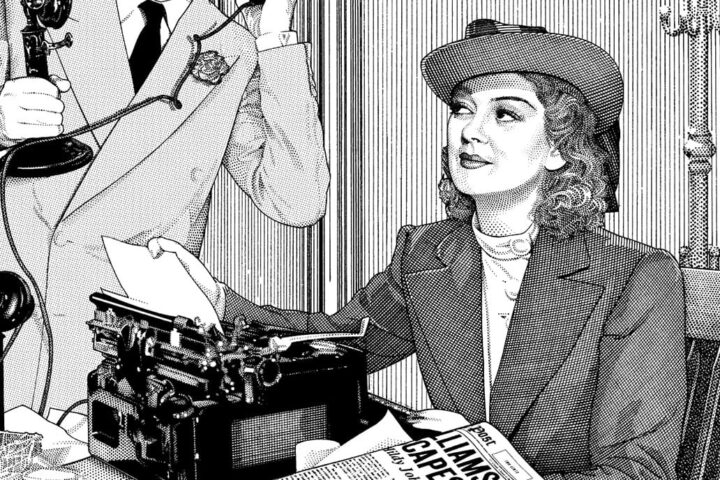
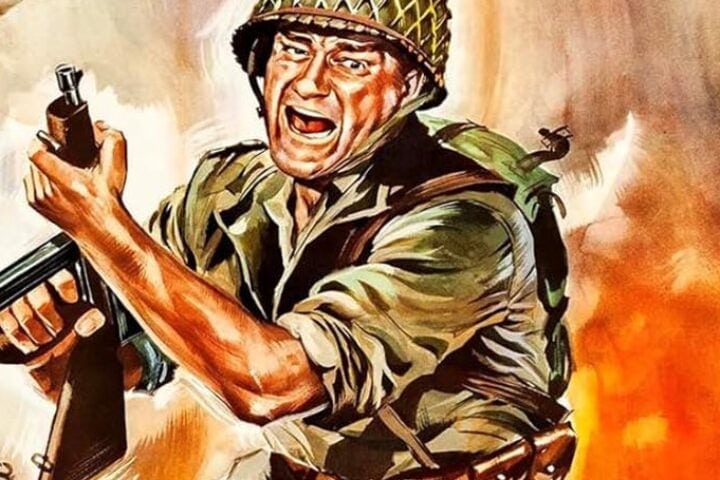
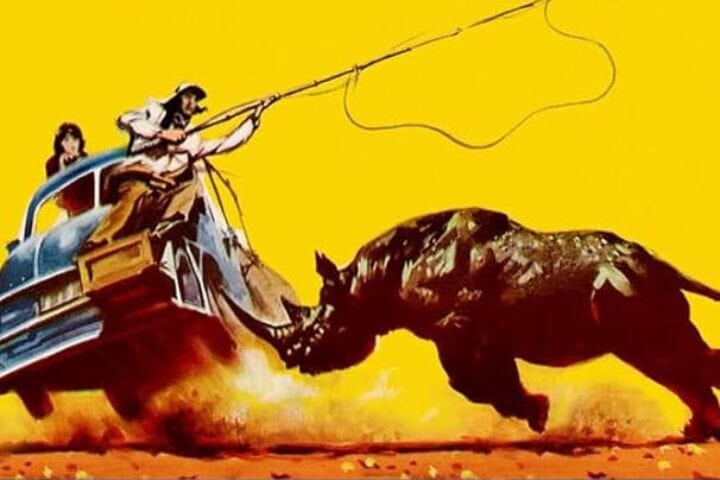
The disc also comes with two fascinating new interviews with professors José Arroyo and Jean Chothia. While Arroyo contextualizes Ford’s fruitful stretch of films from 1939 to 1941 and argues for the effectiveness of Dudley Nichols’s allegorical and poetic dialogue, Chothia focuses on O’Neill’s sea-based plays and how Ford and Nichols effectively weaved them into a single narrative. Lastly, a 15-minute visual essay by film critic and Ford aficionado Tag Gallagher covers the film’s theme of men escaping reality and how dozens of paintings commissioned by producers, inspired by stills from the film, were used for promotion.
Overall
One of John Ford’s most haunting and poetic films receives a beautiful transfer and a strong slate of indispensable extras courtesy of Imprint.
Since 2001, we've brought you uncompromising, candid takes on the world of film, music, television, video games, theater, and more. Independently owned and operated publications like Slant have been hit hard in recent years, but we’re committed to keeping our content free and accessible—meaning no paywalls or fees.
If you like what we do, please consider subscribing to our Patreon or making a donation.