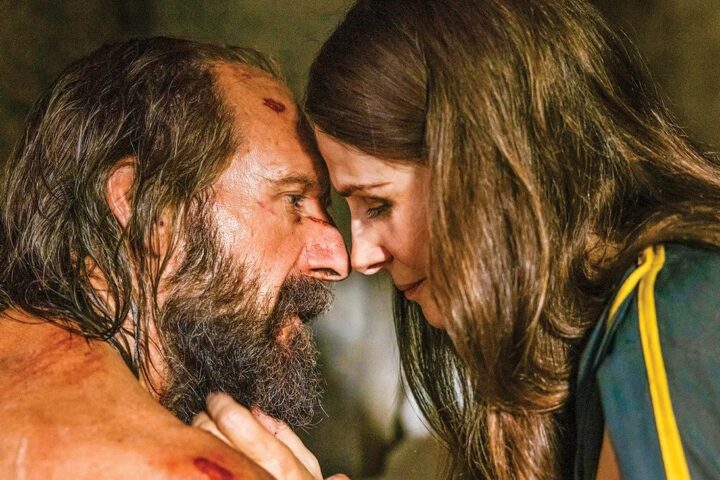
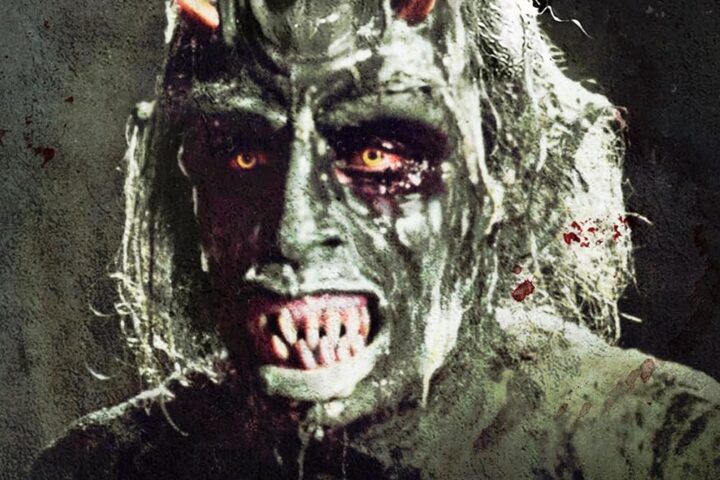
Dario Argento’s hang-ups with sight and sightlessness are moral barometers of our disconnect from the world—obsessions that similary challenge the way that we look at movies. It’s not suprising, then, that the killer from The Card Player cannot be seen, commiting murders from a heavily encrypted, nearly impenetrable location, presumably somewhere in Rome. Via an online poker game, the psychopath forces local police to play with them in exchange for the lives of a series of kidnapped women. As written by Argento and frequent collaborator Franco Ferrini, The Card Player may not resemble anything that the director has ever made, but it certainly doesn’t bring anything new to the table.
Lazily borrowing from The Silence of the Lambs, Argento and Ferrini cast Stefania Rocca as Anna Mari, a police inspector who gets very little respect from her male counterparts and whose relationship to her deceased father is meant to amplify whatever trauma she feels when she stares into the faces of all the people she cannot save. Instead of finding Death’s Head moths inside corpses, though, Anna and her parter-cum-love-interest, John (Liam Cunningham), find seeds and playing cards, and replacing Hannibal Lecter is a book on poker, which deals Anna the pop psychology that she’ll finally use to out-wit the film’s killer.
There are signature Argento flourishes scattered across The Card Player. A vision reflected in a round object in Anna’s apartment prefigures the most unnerving set piece in the film, while the elaborate death of a young poker player—from the streets of Rome to labyrinthine underground tunnels—is played out as a nightmarish game of chance. But whether romantic or professional, every relationship in this elegantly shot but frustratingly straightforward policier scarcely registers. And as a result, a series of last-act revelations (one served a la The Bird With the Crystal Plumage) mean nothing emotionally.
There’s a wonderful shot in the film when one of the killer’s victims walks brazenly in front of a passing train—a shot that both plays to the film’s fixation with risk-taking and anticipates the final showdown between Anna and the film’s killer. Anna’s father committed suicide by throwing himself in front of a train, but because his memory is scarely on the woman’s mind, his death doesn’t exactly intensify the final poker match. Kent Jones once said that John Carpenter is an “analog man in a digital world,” a description that used to apply to Argento. Watching the online cards turn slowly (sometimes painfully so) in The Card Player is to be reminded of how good Argento used to be when his aesthetic approach was less synthetic.
Image/Sound
The Card Player may be Dario Argento’s first thoroughly modern film, from Benoit Debie’s bloodless camerawork to Claudio Simonetti’s corny and aggressive electronica score, and it ain’t pretty. Still, the image is clean-colors and blacks, while a tad gooey, are solid throughout, with no compression artifacts or edge enhancement in sight-and that nutty English dubbing is aggressive and the surround sound and score resonates across all channels.
Extras
Alan Jones is a little more critical of The Card Player than he was of Trauma but his commentary is still best savored as a historical document and personal account of Dario Argento’s life: from the project’s tortured history and early involvement of Asia Argento to the “discreet veil drawn over Argento’s first marriage” and Fiore Argento’s bad experience on the set of Lamberto Bava’s corny Demons. (Thanks to Jones for confirming what I always suspected: that Fritz Lang has always been Argento’s favorite director.) Like he did for the Trauma DVD, Argento gets to talk at length about The Card Player project on “Playing With Death”-mostly his attraction to card games and giving the film a look and sound more modern than he was used to until now. More interesting is a featurette with Claudio Simonetti that allows the ex-keyboard player of Goblin to wax nostalgic about his work for Argento, the pioneering electronic work of his former group on Argento’s film and Zombi (known to non-Italians as Dawn of the Dead), the influence Goblin had on other filmmakers like John Carpenter, and his work on this new film (he considers it his best, but it’s clearly not). Rounding out the features is a theatrical trailer, a promo reel, some behind-the-scenes footage with Argento interviews interspersed throughout, a director bio, and trailers for Suspiria, Opera, Trauma, Deep Red, and Dawn of the Dead. A niftily designed booklet included inside the DVD features an interview with Argento that appeared in La Republica.
Overall
Low-grade Argento gets the red-carpet treatment from Anchor Bay. The movie isn’t a keeper but the extras are certainly enticing.
Since 2001, we've brought you uncompromising, candid takes on the world of film, music, television, video games, theater, and more. Independently owned and operated publications like Slant have been hit hard in recent years, but we’re committed to keeping our content free and accessible—meaning no paywalls or fees.
If you like what we do, please consider subscribing to our Patreon or making a donation.