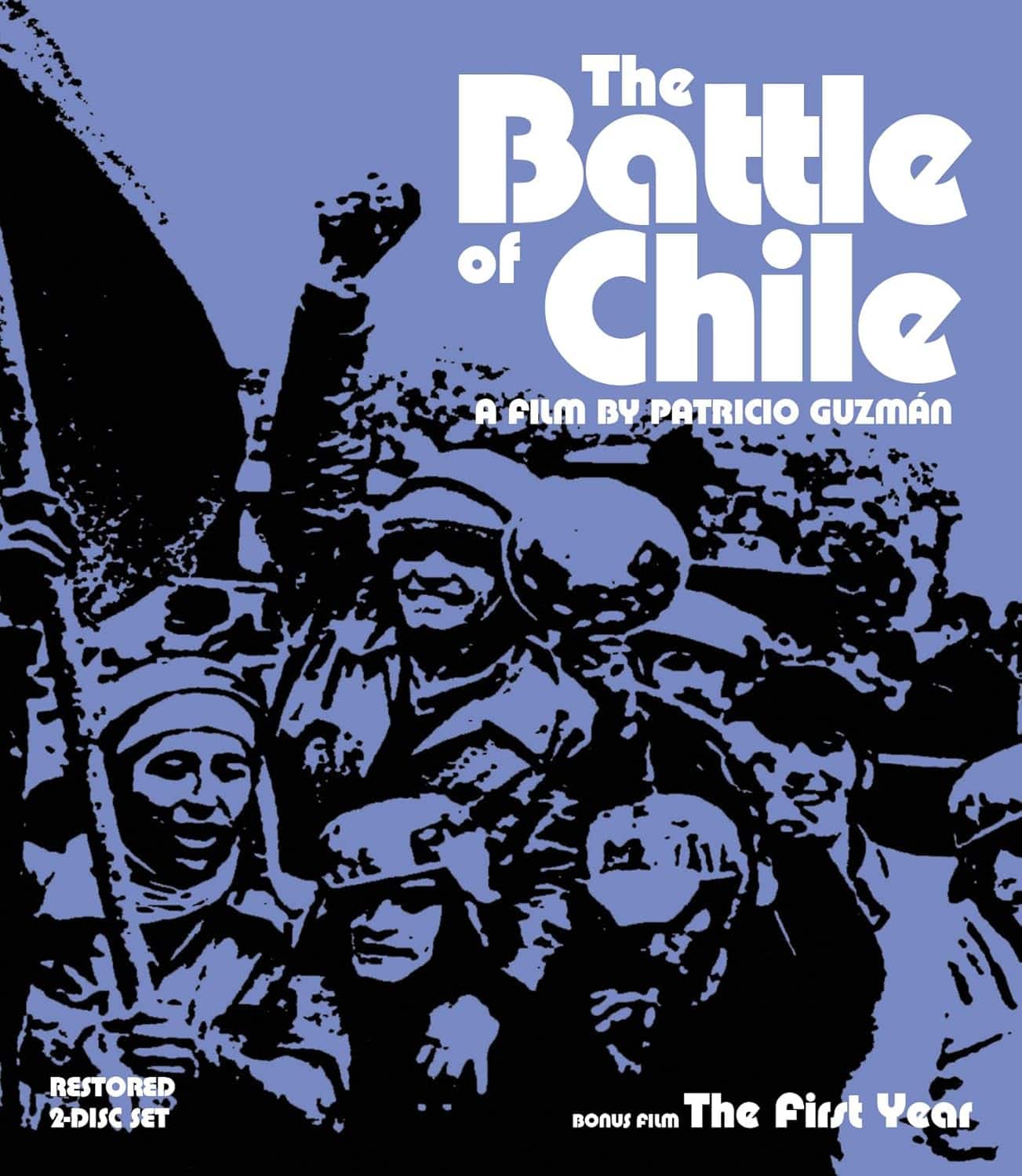
 A present-tense record of nation-splitting turmoil, Patricio Guzmán’s monumental documentary The Battle of Chile remains a landmark of activist cinema. Chronicling the events leading to the overthrow of Salvador Allende’s democratically elected socialist regime by a conservative military coup, it offers a staggering blend of history and narrative.
“The Insurrection of the Bourgeoisie,” the first of the film’s three parts, opens in the excitement of the 1970 election and closes in terror, as the street clashes between workers, students, and soldiers yield to bullets. Violence intensifies in the second part (“The Coup d’Etat”) as Allende’s government is besieged by business-controlled strikes and finally taken down by the Nixon/Kissinger-backed 1973 junta that placed Augusto Pinochet in power.
Edited from bits of often risky coverage taken during the period, the first two parts have the force of an early Roberto Rossellini picture. Attuned to the active political engagement of the Chilean people, the camera marches in rallies, rides with protestors in the back of trucks, and, in an unforgettable moment that embodies the commitment and the dangers of the crew’s reportage, is literally shot down during militarist interventions. Guzmán shapes the footage not with the agitprop montage of fellow Latin American cine-militants Santiago Alvarez and Fernando Solanas, but rather with a newsreel-verité urgency that’s both lucid and sweeping.
The events are presented with such you-are-there vividness that it’s not until the recap of the third part (“The Power of the People”) that one realizes that the film is also an elegy by exiles who documented a country’s upheavals firsthand only to be forced to analyze the ensuing oppression from afar. More than practically any other documentary, Battle of Chile posits film as mediator, witness, and participant in volatile historical landscapes.
Image/Sound
The 2K restoration presented on this release is stellar. The image is crisp, with no evidence of blurring across the grainy black-and-white footage largely filmed with handheld cameras. Details are vivid even in the widest of wide shots and nearly all signs of wear, and tear have been dutifully cleaned up. The First Year has also been restored, and while the image is a tad softer and contains more frequent signs of damage, it looks far better than one would typically hope for a film presented as a bonus feature. Audio for both films has the limitations innate to this kind of on-the-fly documentary filmmaking, though the dialogue is nicely cleaned up.
Extras
There are no interviews or commentaries on the disc, but the inclusion of Patricio Guzmán’s feature-length debut, The First Year, is a bonus in its own right. The film, which covers the first year of Salvador Allende’s presidency, captures the jubilancy of the Chilean people ahead of the upheavals depicted in The Battle of Chile. The package also includes a booklet with short 2023 New York Times reviews of The First Year and The Battle of Chile, by Devika Girish and J. Hoberman, respectively, and a longer piece by Michael Atkinson, who discusses the urgency and granular specificity of these films, positioning them as political acts of bravery.
Overall
Icarus Films’s release of The Battle of Chile comes outfitted with a beautiful 2K restoration and Patricio Guzmán’s preceding feature, which perfectly sets the stage for the main attraction.
Since 2001, we've brought you uncompromising, candid takes on the world of film, music, television, video games, theater, and more. Independently owned and operated publications like Slant have been hit hard in recent years, but we’re committed to keeping our content free and accessible—meaning no paywalls or fees.
If you like what we do, please consider subscribing to our Patreon or making a donation.