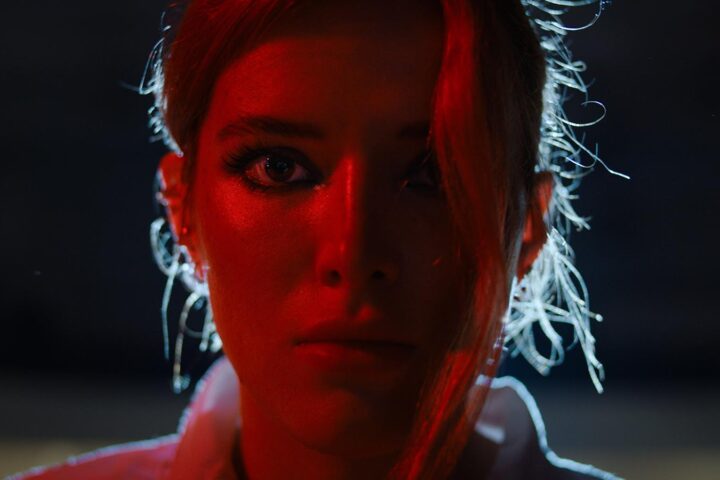
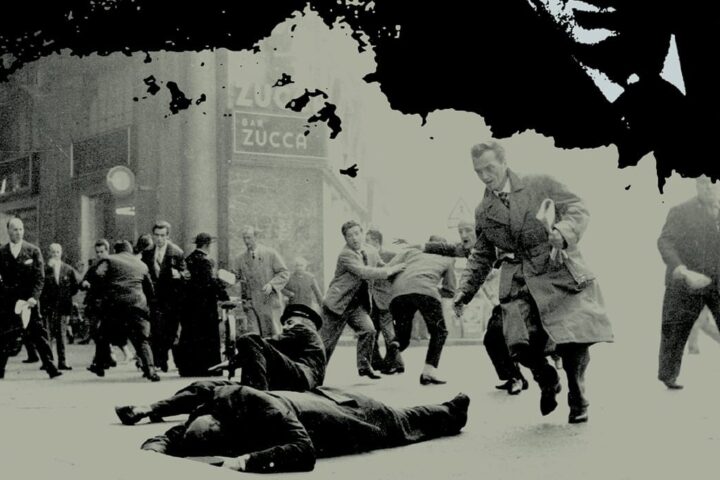
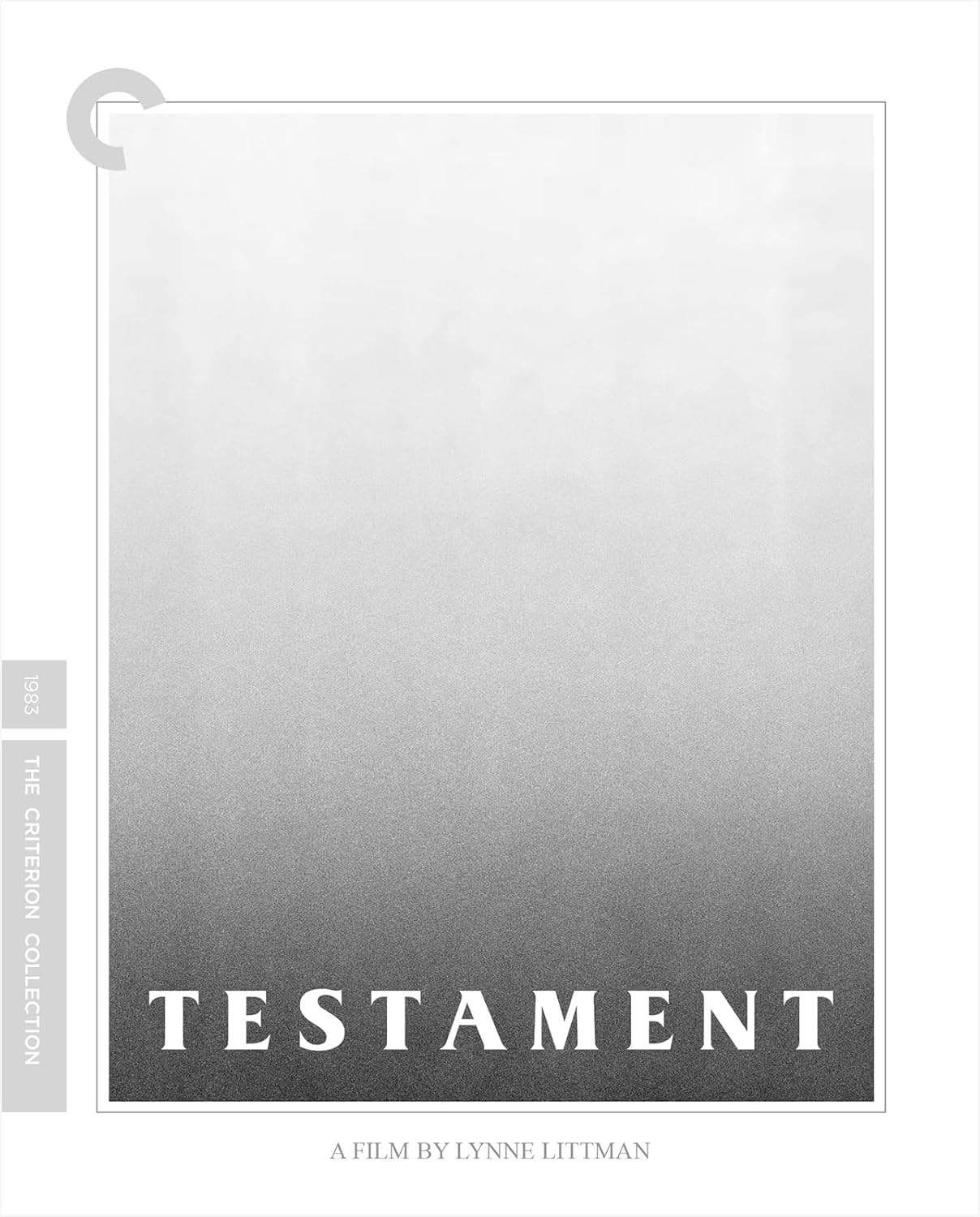
 Originally produced for PBS’s American Playhouse, Lynne Littman’s Testament is one of that program’s standout entries, a vision of nuclear apocalypse whose horrors are felt rather than seen. It takes place almost entirely within the confines of a quaint California suburb whose topography shelters it from the immediate effects of a nuclear war, leaving its residents doomed to the slower death from fallout as final witnesses to the Anthropocene.
Adapted from Carol Amen’s 1981 short story “The Last Testament,” John Sacret Young’s script centers on Carol Wetherly (Jane Alexander), a housewife left widowed by the nuclear attack who cares for the occasional orphaned child in addition to her own three kids. Carol sits between the extremities of the town’s young and old populations who are the first to succumb to radiation poisoning. By focusing on the woman, the film emphasizes the maxim that Nikita Khrushchev once uttered about the threat of nuclear annihilation, that “the living will envy the dead.”
Testament is expectedly stagy, but Littman uses the simplicity of her compositions and the sparsity of her sets to maximum effect. Each time the film returns to common locations like the local church or the street where the Wetherlys live, it calls subtle attention to the fewer and fewer people in the frame every time the film returns to these places. And while there are some indications of the panic and lawlessness that inevitably result from an apocalypse, the pervading mood is one of a blank numbness, a depiction of hell in its original Biblical sense as not a place of fiery punishment but one where God’s absence is most profoundly felt.
Testament ultimately homes in on the ways people claw back a shred of the normalcy uprooted by cataclysm. In one scene, Carol and a local priest (Philip Anglim) kiss near one of many mass graves, hoping to feel something besides grief. Elsewhere, in the film’s most beautiful scene, Carol’s teenage daughter (Roxana Zai) asks her mom what sex is like, both of them keenly aware that the girl will never get the chance to find out for herself. Knowing this, Carol speaks frankly about it, describing the ecstasy of the act and people’s anxieties around it. At its heart, Testament is a treatise on the value of dying well, suggesting that the best show of humanity may be going gentle into that good night instead of raging against the dying of the light.
Image/Sound
Sourced from a 4K restoration, Criterion’s transfer makes the most of Testament’s modest aesthetic. Steven Poster’s cinematography is as unfussy as the film’s structure, with the frame slowly growing darker as electricity gives way to candlelight and eventual surrender to the darkness of night. No matter how dim the image becomes, though, detail remains exacting. The color reproduction is naturalistic, and one can make out the subtle accumulation of dirt and sweat on clothes as time wears on. The mono soundtrack contains little other than dialogue and the occasional music cue, and these elements are consistently clear in the mix.
Extras
Criterion’s disc comes with several of Lynne Littman’s short documentaries, starting with her Academy Award-winning “Number Our Days,” a cheeky but empathetic portrait from 1976 about anthropologist Barbara Myerhoff’s research into an elderly Jewish community in California. Myerhoff discusses the project with the same clinical detachment that she says she previously brought to studies of other cultures, though she confesses she also sees a chance to prepare herself to be “an old Jewish lady.” Sadly, she never got the chance to find out, as charted in 1985’s “In Her Own Time,” which follows Myerhoff undergoing treatment for terminal cancer and connecting deeper with her Jewish roots as she prepares to die before her time. Her melancholic but calm acceptance of her fate makes the short as much a companion to Testament as her previous collaboration with Littman. A third documentary, 2003’s “Testament at 20,” finds Littman looking back on the film’s legacy and interviewing members of the cast and crew.
The disc also includes a new conversation between Littman and author Sam Wasson about the film, as well as an audio recording of Jane Alexander reading the short story on which Testament was based. In his booklet essay, critic Michael Koresky places the film in the context of other films about nuclear war, as well as highlights Littman’s role in pioneering efforts to raise the profile of women filmmakers in Hollywood.
Overall
Lynne Littman’s post-apocalyptic drama from 1983 receives a subtly beautiful transfer and a robust extras package from the Criterion Collection.
Since 2001, we've brought you uncompromising, candid takes on the world of film, music, television, video games, theater, and more. Independently owned and operated publications like Slant have been hit hard in recent years, but we’re committed to keeping our content free and accessible—meaning no paywalls or fees.
If you like what we do, please consider subscribing to our Patreon or making a donation.