Hot on the heels of their first collection of Shaw Brothers movies, Shout! Factory’s Shaw Brothers Classics Vol. 2 continues the ongoing, multi-label effort to restore and release notable entries in the Hong Kong studio’s vast catalog. As it did with their previous collection, Shout! limits the selections for this second box set to a concentrated period of the studio’s productions. Whereas the 1967-69 range of the first box showed the studio frantically capitalizing on the breakout success of The One-Armed Swordsmen with a slew of like-minded wuxia films, the broader selection here among the first half of the ’70s finds Shaw Brothers both setting and chasing after trends.
Shout!’s first volume demonstrated how the Shaw Brothers studio made so many functionally identical movies, between the revenge-based plots, sword-based action, and reused sets, that within two years of The One-Armed Swordsmen’s paradigm shift, the house brand was already getting stale. You can see that downturn continue in the early films of this set. Lady of Steel and Brothers Five, both from 1970, are cookie-cutter wuxia films, each entertaining in its fight choreography but lacking any standout energy or imagination to distinguish them from a dozen other peers made at the same studio at the same time. The latter was directed by Lo Wei, who also helmed 1971’s The Shadow Whip, which reunites Cheng Pei-pei and Yuen Ha from Come Drink with Me in a decidedly inferior film.
Still, the lack of epic sweep and philosophically minded drama is made up by Lo’s sturdy brutality, which works well for an entry in the wuxia subgenre of movies built entirely around the use of an unorthodox weapon. In this case, naturally, the weapon is a whip wielded by Cheng’s vengeful character, and Lo loads the film with some wild stunts, as when one warrior throws a spear at Cheng, who dodges it, coils her whip around his throat, and proceeds to throw him through the pole of his own instrument, killing him instantly.
The Shadow Whip is one of three oddball weapon movies in the set, the other two being Ho Meng-hua’s riotously gory The Dragon Missile, from 1976, and the legendary The Flying Guillotine from the previous year. Both films prefer decapitations and blood to subtext or philosophy, and both are among the most purely entertaining films in this set.
Still, a change was underway in the Hong Kong cinema landscape, and in particular Lo Wei would make a greater impact on Shaw Brothers in this timespan for movies he made for other studios. In 1971, he directed The Big Boss, Bruce Lee’s first major starring vehicle, for Golden Harvest, and just as quickly as The One-Armed Swordsmen had ushered in masculine, swashbuckling wuxia as the genre film of choice five years earlier, so, too, did this film’s massive success create a new demand for hand-to-hand-based martial arts movies.
You can see the rapid adjustment in 1971’s The Crimson Charm, which begins as yet another revenge story between warrior schools propelled by swordplay and even has the lead heroine, Yu Fang-Fang (Ivy Ling Po), lose her arm in a battle. With that injury, though, the Wong Fung-directed film shifts gears and adopts the hand-to-hand action that was increasingly favored. Even though the martial arts revert to weapons in the climax, you can see the studio testing the waters with what contemporary audiences were demanding from genre movies.
This shift in focus clearly benefited the studio’s most reliable filmmaker, Chang Cheh, who directed four of the films included here. The Delightful Forest, from 1972, tweaks the usual Shaw Brothers formula of this era: It begins with hero Wu Song (Ti Lung) wrapping up his quest for revenge and submitting himself to arrest for it, leaving the rest of the film to follow the strange exploits of the master martial artist as he’s recruited by his own jailers to handle local thugs they cannot displace. Chang stages a master class in martial arts filmmaking, blending intricate hand-to-hand choreography with fluid camera movement and logical cutting, and he embellishes the frame with expressionist slashes of lighting and blocking.
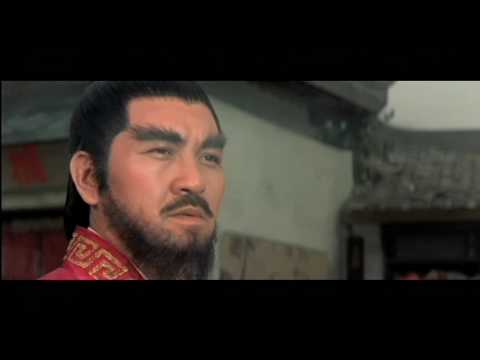
Yet The Delightful Forest is also quite funny thanks to Ti’s boisterous performance, which pitches Wu as both a morally uncompromising hardass who loves exactingly by an honor code and a vainglorious braggart who guzzles wine before every fight claiming it only makes him stronger. The film resembles the more blackly comic elements of Sergio Leone’s Dollars trilogy, and it even sports a parodic Morricone-like score of casual whistling and western twang.
Elsewhere, 1972’s Man of Iron and 1974’s Heroes Two demonstrate just how quickly Chang’s facility with a new kind of action choreography evolved. Though only two years separate these films, by the time of the latter, Chang has taken the mixture of elegant long takes and rapid-fire editing already on display in his earlier wuxia to new kinetic heights.
Heroes Two makes every strike feel like an impact on the viewers themselves, and it manages to maintain a sense of spatial coherence and an idea of which characters are still active in any given moment—no small feat for a film in which action scenes regularly involve dozens of performers. Even Chang’s weakest film in the set, 1972’s The Water Margin, is a fascinating outlier that finds him pushing himself out of his pure action focus and toward an epic of political intrigue and subterfuge. There are still action scenes, but they serve as punctuation for conflicts that mostly play out behind closed doors amid various parties of double-crossing social climbers.
In addition to Chang’s usual high-standard offerings, there are also a few engaging surprises among the set, several of which bring supernatural elements into the mechanics of the studio’s martial arts. Of those, Chou Hsu-Chiang’s The Bride from Hell, from 1971, is the least engaging movie in the collection, but its ghost-story construction offers a respite from pure combat in the form of corny special effects and a macabre spin on the studio’s revenge plots.
Far better in 1972’s The Devil’s Mirror. Despite director Sun Chung’s lack of experience (this was only his third movie, and his first for Shaw Brothers), he brings real energy to the film’s mix of wire-fu wuxia and black-magic mysticism. The Devil’s Mirror is so loaded with action sequences that the whole thing starts to resemble a particularly violent cartoon. Sun makes each scene distinct from the others, and he ramps up the gore to audacious extremes. Simon Hsu’s stunt choreography is consistently brilliant whether staging mass brawls, one-on-one sword duels, or physically impossible moments of bodies flying through the air, epitomizing the best of what Shaw Brothers had to offer as a purveyor of action cinema. This film, more even than any of Chang’s, points directly to the studio’s greatest triumphs of the late ’70s and early ’80s.
Image/Sound
Each of the films included in this set looks clean and vibrant. The earthen tones of soundstage rural backgrounds look suitably drab compared to the shocks of red from both building signs and gouts of prop blood. Film grain is evenly distributed throughout, and darker scenes show no major instances of crushing. The soundtracks are similarly clear, with the dubbed dialogue and exaggerated clang and thuds of action sound effects kept separate from one another.
Extras
Shout! Factory has again outdone itself with an avalanche of extras, starting with at least one commentary for each film and featuring contributions by Hong Kong cinema experts, critics, and historians. There are also interviews with surviving cast and crew members from the movies, as well as documentaries on various aspects of Shaw Brothers studio’s work from this time that can be revelatory in their detail. Of note is Tony Rayns’s primer on the studio’s horror movies, which is appended to the disc for The Bride from Hell and is possibly more entertaining than the film itself. Hours and hours of documentaries and commentaries provide an information overload about the studio, venerating its rapidly produced genre work as high art.
Overall
Shout! Factory improves upon its first set of Shaw Brothers classics with a stronger lineup of films and a staggeringly informative bevy of bonus features.
Since 2001, we've brought you uncompromising, candid takes on the world of film, music, television, video games, theater, and more. Independently owned and operated publications like Slant have been hit hard in recent years, but we’re committed to keeping our content free and accessible—meaning no paywalls or fees.
If you like what we do, please consider subscribing to our Patreon or making a donation.