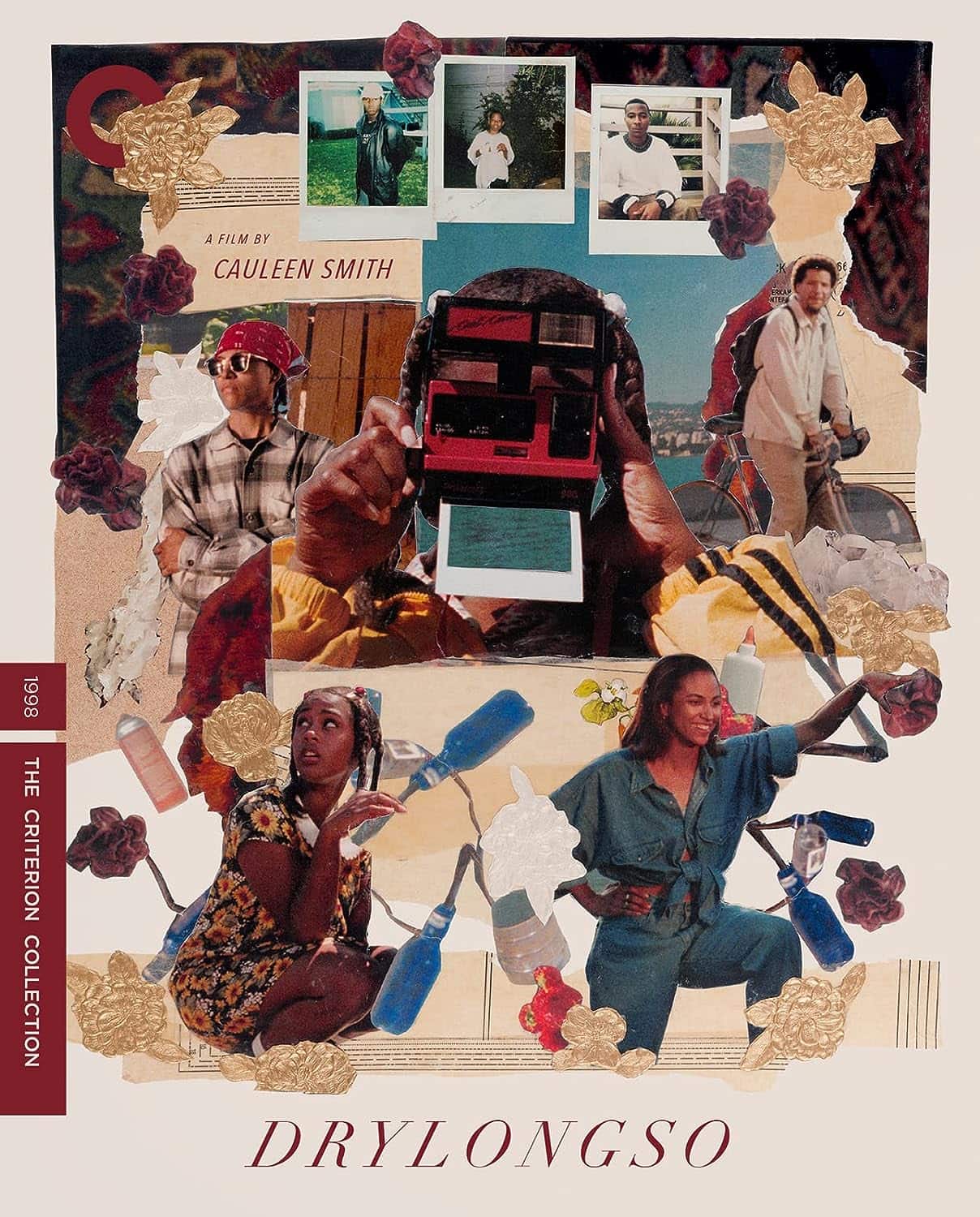
 Cauleen Smith’s capricious, slyly resourceful DIY feature debut, Drylongso, follows photography student Pica (Toby Smith) as she struggles to find her artistic voice in a school whose methodology is disconnected from the harsh realities of late-’90s Oakland. Countless Black men in her neighborhood have been victimized by police and gang violence or mercilessly swallowed by the prison industrial complex, and now there’s a serial killer on the loose targeting Black youth. In the film’s first scene, Pica even witnesses another young woman, Tobi (April Barnett), get beaten up in front of her house and abandoned by her boyfriend (Timothy Braggs).
Pica copes with, and confronts, these various forms of violence by taking Polaroid photos of as many Black men as she can, explaining to Tobi, whom she soon befriends, that it’s because they’re becoming an endangered species. A supportive teacher, Mr. Yamada (Salim Akil), appreciates Pica’s foresight but gently reminds her that the class is for 35mm photography and her iconoclasm, along with her frequent absences, isn’t going to help her pass the class.
When Pica sharply retorts, “You gotta have a 35mm camera to be expressive nowadays?,” one can imagine Smith herself—a former Oakland art student also striving to express herself through more limited means—saying exactly the same thing. That in the quarter century since Drylongso was made Smith hasn’t released another feature only further solidifies the film’s point about the excessive challenges specifically facing independent Black female artists.
While Drylongso’s purview is initially limited to the experience of a Black female artist, it nimbly expands its scope as Pica and Tobi’s friendship blossoms. Smith and co-writer Salim Akil highlight the women’s vulnerabilities, with Pica’s stemming from the dangers of her neighborhood and the general indifference of her mother (Channel Schafer), while the more middle-class Tobi is forced to hide from her abusive beau by dressing like a boy. Their shared wounds draw them closer and their female solidarity becomes a central theme of Drylongso.

As Pica begins to put her Polaroid photos, along with an array of found objects, to use, creating public shrines for all the Black men who’ve been killed in Oakland, she’s helped not only by Tobi, who helps her with the construction, and her mother, who caters for the exhibition opening, but a group of men who diligently protect the site from vandalism. For all the peril that Pica, Tobi, and other Black women like them face, it’s the camaraderie spurred on by Pica’s public art that inspires the community and strengthens their bonds.
Pica’s art celebrates the beauty and vibrancy of the neighborhood in which it’s made, and is part of an exhibition she calls “Evidence of Existence.” But more than evidence, her work, much like Drylongso, is a form of resistance to the despair that can destroy areas plagued by violence.
Image/Sound
Sourced from a recent 4K digital restoration, the transfer on this Criterion Collection release is sharp and detailed while retaining the heavier grain and textures of the original 16mm footage. Colors are uniformly vibrant, particularly the reds, purples, and yellows in the costumes and sets, and there’s a noticeable differentiation between the various color tones. The uncompressed audio isn’t anything to write home about, but the audio is clean and never overwhelmed by the background noises often present in the surrounding neighborhood.
Extras
In an enlightening new conversation with film scholar Michael B. Gillespie, Cauleen Smith discusses the cultural climate in 1990s Oakland that inspired the film, namely the violence enacted on Black men and women by police officers, gangs, and one specific serial killer. They also get into Smith’s cinematic influences, how she worked closely with members of the community in which the film was shot, and, most interestingly, how her looseness with genre mirrored the instability of the Black experience. The package is rounded out with six of Smith’s short films, a trailer, and a foldout poster/booklet with an essay by film scholar Yasmina Price.
Overall
Cauleen Smith’s overlooked DIY classic from 1998 is a potent examination of the power of art and love in the midst of social upheaval.
Since 2001, we've brought you uncompromising, candid takes on the world of film, music, television, video games, theater, and more. Independently owned and operated publications like Slant have been hit hard in recent years, but we’re committed to keeping our content free and accessible—meaning no paywalls or fees.
If you like what we do, please consider subscribing to our Patreon or making a donation.