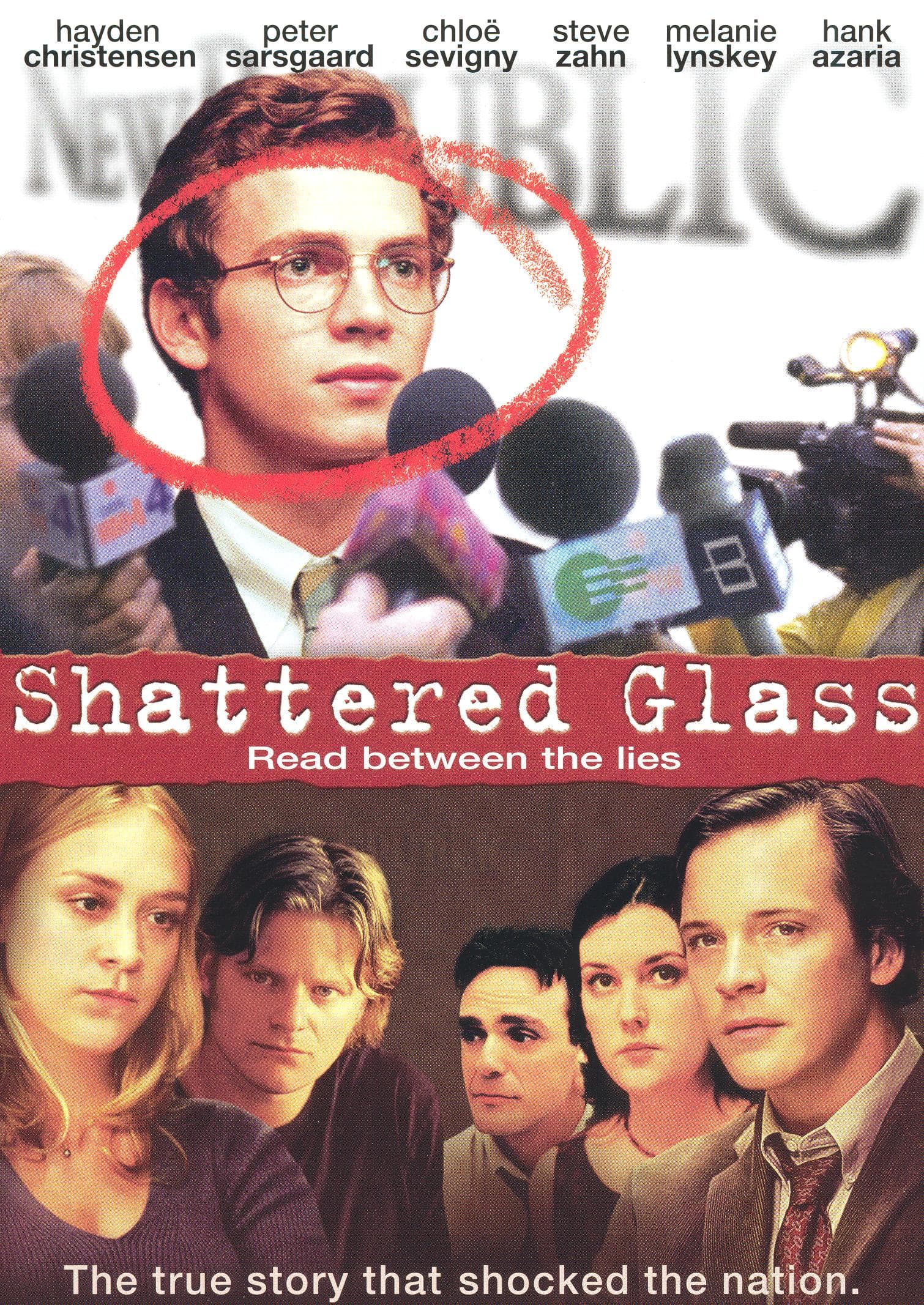
 There’s a bogus sort of genius to writer-director Billy Ray’s Shattered Glass, which recounts the events surrounding Forbes online journalists busting Stephen Glass for cooking up stories for The New Republic. The worst that can be said about the film is that it doesn’t concern itself with the nature-or-nurture anatomy of Glass’s crimes. Then again, can you imagine having to suffer through scenes showing, say, a young Glass living out Oedipal melodramas that would lazily explain his snarky, passive-aggressive personality?
As played by a remarkable Hayden Christensen, Glass kills his co-workers with thoughtfulness, an elaborate emotional con-job that not only speaks volumes about his guilt but also evokes the way he sculpts reality. Just as there’s no pretext to this madness, Ray doesn’t explain how fact checkers at The New Republic allowed one piece after another to fall through the cracks during Glass’s late-’90s stint at the magazine. That’s because Ray tells the entire film from the perspective of Glass’s friends and fellow journalists, who may as well be the doting parents children are continuously trying to impress and afraid of disappointing.
And because the audience never sees how the young man turned into a fabulist or how he pulled the wool over everyone’s eyes, Shattered Glass unfolds as an elaborate emotional set piece. Journalists who’ve ever feared handing in a story on time or scrounged desperately for a good idea will probably relate to the film more than others, but that’s to trivialize its appeal. For all its flaws (that empty class that’s ridiculously deployed as a metaphor, the schoolhouse sequences that obviously substitute for voiceovers, and the self-congratulatory, heartwarming bookends), this is a film that frighteningly speaks to our lingering juvenile fears.
As Glass, Christensen is a revelation. He nails both that cloying puppy-dog expressiveness that Glass uses to seduce the world around him and that moment of mental incapacitation that kicks in when you’ve been caught in a lie and your id struggles desperately to take over. Because watching the actor squirm under pressure is as frightening as it is entertaining, Shattered Glass speaks simultaneously to our humanity and sense of moral outrage.
Image/Sound
I promise never to complain about grain ever again, especially when it comes to indie films with docu-realist aesthetics. That said, there’s really no excuse (or explanation) for the amount of dirt visible on this print of Shattered Glass. I’ll take the specks during the interior New Republic scenes, but not the high school framing sequences or the vivid fabulist sequences. Overall: A fuzzy, somewhat lazy presentation, even though the lack of edge enhancement is to be admired. As for the Dolby Digital 5.1 surround track: The film is all talk, and since it’s more or less clear for at least 55% of the production, it also gets a passing grade.
Extras
Very strange. The reason to buy this Shattered Glass DVD is the commentary track by director Billy Ray and former New Republic editor Chuck Lane, and yet you won’t find it advertised on the back cover. This is an all-around great track: Ray makes excellent arguments for the film’s fantasy framing sequences and wishes the real Stephen Glass could have validated them, while a humbling Lane repeatedly reinforces just how scary his former employee’s deceptions really were. And who the hell needs a cheesy making-of documentary when Stephen Glass’s 60 Minutes interview covers all the bases? Unlike the insufferable Jayson Blair, Glass comes off as genuinely remorseful, and it’s this sad humanity that Christensen delicately tapped into.
Overall
Hayden Christensen is a revelation in the film, and this DVD is notable for the commentary track by director Billy Ray and former New Republic editor Chuck Lane
Since 2001, we've brought you uncompromising, candid takes on the world of film, music, television, video games, theater, and more. Independently owned and operated publications like Slant have been hit hard in recent years, but we’re committed to keeping our content free and accessible—meaning no paywalls or fees.
If you like what we do, please consider subscribing to our Patreon or making a donation.