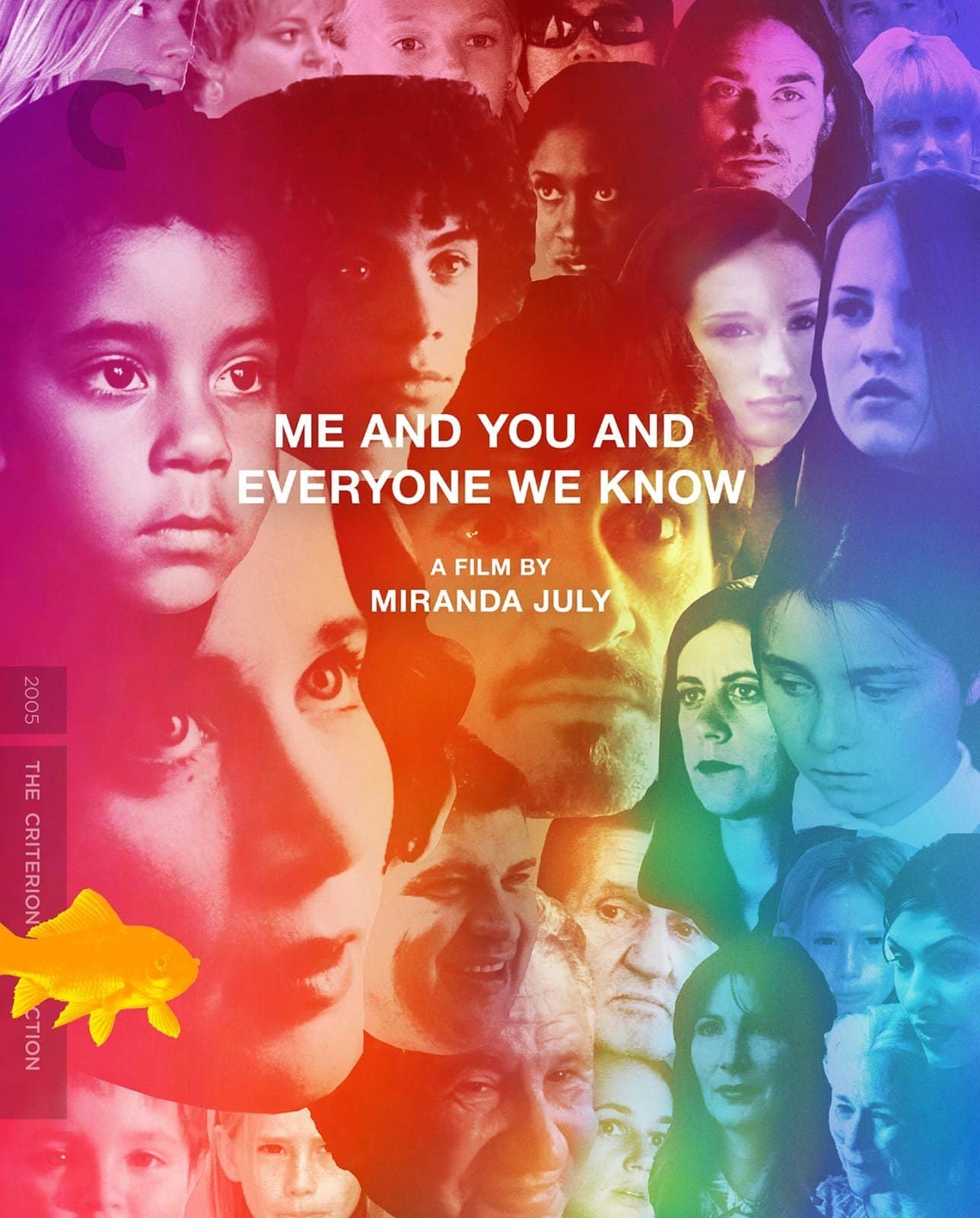
 When Miranda July’s Me and You and Everyone We Know arrived in theaters in 2005, critics were quick to pinpoint how it resembled Todd Solondz’s work in tone and theme. July, though, dismissed the similarities, telling The Independent that it was “a bizarre comparison” and noting that “maybe we’re just not the same.” While it’s difficult to know exactly what irked July without further elaboration on her part, it’s evident that each filmmaker treats the subject of adolescence with different aims. In Solondz’s Welcome to the Dollhouse, the nuclear family becomes a source of near psychotic frustration for its young protagonist, who feels the weight of her parents’ antipathy for her as an inescapable, ongoing nightmare. Me and You and Everyone We Know, on the other hand, sees the suburbs less as a torture chamber than a relatively harmless forum for kids to cut their teeth on the conditions of impending adulthood. Only sometimes, as in the case of six-year-old Robby (Brandon Ratcliff), who chats with a stranger online about “pooping back and forth, forever,” that awareness begins much earlier than expected.
The online chat, in which Robby creates the symbol “))<>((” as a visual shorthand for his idea of sex, encapsulates July’s acute eye for the innocence of adolescent desire, and demonstrates her willingness to walk a difficult tonal line in pursuit of a laugh about the fundamental awkwardness of trying to sound sexy through chat. When Robby’s chat partner asks if he’s touching himself, he looks down, sees his hands resting on top of one another, and replies, “Yes.” The film sees honesty in innocence and feels empathy for people willing to bear parts of their emotional selves in pursuit of meaningful companionship.
Other storylines help to flesh out how sexual development often occurs within the context of someone’s awkward attempt at displaying sensual prowess. Just down the street from Robby, teens Heather (Natasha Slayton) and Rebecca (Najarra Townsend) argue about which of them would be better at giving oral sex. Since neither has ever given it before, they recruit Robby’s 14-year-old brother, Peter (Miles Thompson), as their guinea pig. July directs the sequence’s focus toward smaller, less sexual details, like the individual pieces of peppermint candy that Peter places neatly on a towel for the girls after each has taken their turn. Much like Robby’s sense of sexual intimacy, Peter’s actual sexual experience—presumably his first—carries with it a sense of innocent discovery rather than shame or danger. Sex only becomes scary, the film implies, when one person takes willful and deceitful advantage of another.
July toys with this potential for criminal sexual acts by setting up both Heather and Rebecca to be victims of the much older Andrew (Brad William Henke), a possible pedophile who pastes signs on his living room window that describe the sex acts he’d like to perform on them. That Heather and Rebecca are enticed by the signs is a nearly surreal touch on July’s part given how patently wrong-headed Andrew’s actions are on the surface; indeed, no one else in the neighborhood seems to notice his clearly transgressive actions. In effect, the issue of visibility versus concealment—of making one’s desires public versus keeping them private—becomes Me and You and Everyone We Know’s major thematic identity.
It’s a testament to July’s thorough entwining of storylines that the film’s main arc involving Christine (July), an aspiring video artist and chauffeur for the elderly, and Robby and Peter’s shoe-salesman father, Richard (John Hawkes), doesn’t overwhelm the other narrative threads. In fact, though Christine anchors much of the story as the glue connecting the film’s characters, it’s only once Nancy (Tracy Wright), the curator at a local contemporary art museum, takes an interest in her work that the full scope of the connections between the characters begin to fall into place, not least because Nancy turns out to be Robby’s chatmate.
Once they do, Me and You and Everyone We Know reveals itself to have more in common with the hopeful cynicism relative to the torment of teenage years in Terry Zwigoff’s Ghost World than anything found in Solondz’s work. Even Christine and Richard, both adults in their 30s and 40s, respectively, respond to the possibility of their attraction with angsty aggression, whether its Richard moodily insisting that Christine get out of his car or Christine rolling around on her bed, saying to herself, “We have a whole life to live together you fucker, but it can’t start until you call.” July threads the various layers of her network narrative together by homing in on the yearning for physical intimacy that connects everyone; these characters, unlike those in Paul Haggis’s Crash, aren’t pawns on a chess board of coincidence, violence, and ham-fisted pathos. When lives collide in July’s creative hands, they’re salvaged by each person’s generally kind, well-meaning disposition. In the end, the film’s lasting image isn’t one of violence or tragedy, but that of Robby’s palm on Nancy’s cheek.
Image/Sound
This new high-definition digital master, approved by Miranda July, boasts a noticeably sharper image than the one on MGM’s 2005 DVD release, with the transfer serving the film’s palette of pinks, greens, and reds especially well. Outdoor sequences around the central neighborhood look particularly vibrant, and the close-ups during the film’s more intimate moments reveal more accurate skin tones and rich image detail. The only quibble is that the remaster hasn’t been conducted with either 2K or 4K technology, which means that, while the image looks consistently swell, there’s a nagging sense that it could look slightly richer and more detailed. The 5.1 surround DTS-HD soundtrack, however, is perfect, with Michael Andrews’s original score bursting its oddball, mellifluous electronic melodies through the speakers with an appropriate oomph. Dialogue is mixed and balanced evenly, as is the soundtrack as a whole.
Extras
The highlight of this disc’s extras is a conversation between July and filmmaker Lena Dunham about the former’s work, both before and after Me and You and Everyone We Know. July explains how her infatuation with Agnès Varda’s films, namely 1988’s Kung-Fu Master, gave her a feel for writing material in which children are involved in potentially sexual situations. July says that she’s always been most comfortable working with non-professional actors, which makes directing children a natural fit for her. July and Dunham also discuss how the “pooping back and forth, forever” symbol became a meme and popular tattoo after the film’s release; they also examine July’s notebooks and diaries from the making the film, and July details her experience working with the Sundance Film Lab and its effect on shaping her first feature.
The remaining extras include Open to the World, a new documentary about the 2017 interfaith charity shop and participatory artwork that July created in collaboration with Artangel, the London-based arts organization; July Interviews July: Deauville, 2005, a newly edited discovery from her archives; footage from July’s 2003 Sundance Director’s Lab work featuring commentary from the filmmaker; an assortment of her shorts, including 1998’s The Amateurist, 2000’s Nest of Tens, and four films from July’s Joanie 4 Jackie video chain letter series, as well as a documentary about the project. Finally, there are several deleted scenes and a pair of essays about the film by artist Sara Magenheimer and novelist Lauren Groff.
Overall
Criterion’s excellent HD transfer of Miranda July’s feature-length debut, along with a carload of extras, is surely cause enough to introduce a new generation of viewers to the sure-to-be-eternal concept of pooping back and forth, forever.
Since 2001, we've brought you uncompromising, candid takes on the world of film, music, television, video games, theater, and more. Independently owned and operated publications like Slant have been hit hard in recent years, but we’re committed to keeping our content free and accessible—meaning no paywalls or fees.
If you like what we do, please consider subscribing to our Patreon or making a donation.