Abel Gance’s first sound film is among the most notorious what-ifs of cinema alongside The Magnificent Ambersons and much of Erich von Stroheim’s filmography. The version that was released in theaters back in 1931 and which survives today represents a tattered remnant of its maker’s original vision: a three-hour opus intended to spread a message of world unity and pacifism as Gance’s final word on the aftershocks and moral lessons of World War I. But producers immediately took out the pruning shears, reducing the film to half its intended length and, in the process, muddying its bold, operatic themes.
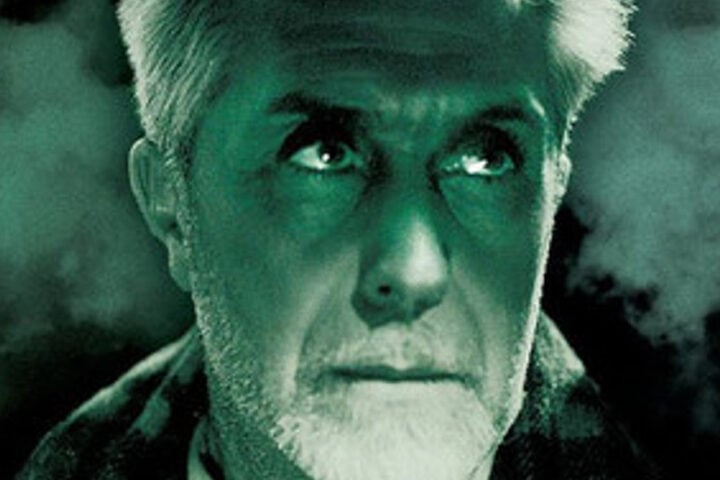
Compared to Gance’s towering silent epics, End of the World cannot help but feel like a curio. Still, it’s as if Gance knew the path that the film would take, as the first images of The End of the World consist of the director himself, as protagonist Jean Novalic, portraying Jesus in an passion play as Christ is set on the cross. Close-ups of Jean’s upturned, pleading face immediately communicate the man’s soulfulness and religious piety as he’s slowly slain by uncomprehending philistines.
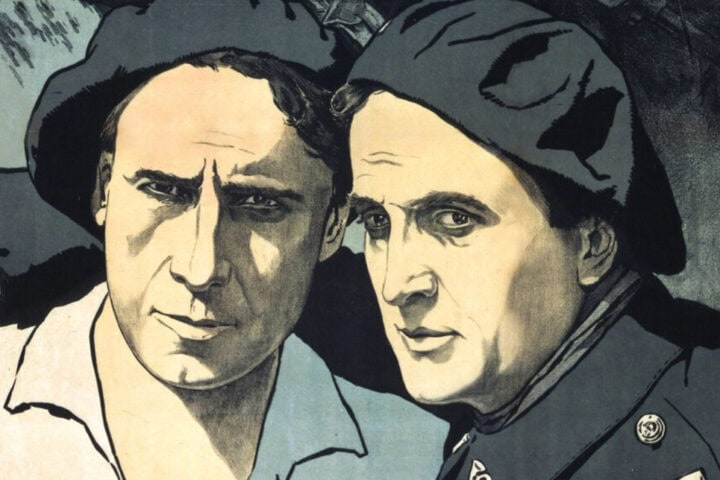
It’s then that the problems resulting from the film’s streamlining reveal themselves. A bafflingly convoluted romantic drama is set up between Jean and his paramour, Genevieve (Colette Darfeuil), who’s also being pursued by the wealthy but duplicitous Schomburg (Samson Fainsilber). Schomburg further complicates matters by appealing to Genevieve’s father (Jean d’Yd), a rival scientist to Jean’s own researcher father (Victor Francen). Within minutes, this clandestine war for the woman’s affections grows so twisted that despite the contained cast of players it becomes nearly impossible to follow. And then, Jean’s father discovers one night at his observatory that a comet is barreling toward the Earth, threatening all of mankind.
This abrupt tonal shift might have been played for irony and shock in a more modern film—one that might have abandoned the plot elaborately set up prior to the revelation of impending global doom. But the 95-minute End of the World attempts to fuse the two into a broader emotional statement about the need for both interpersonal love and human solidarity.
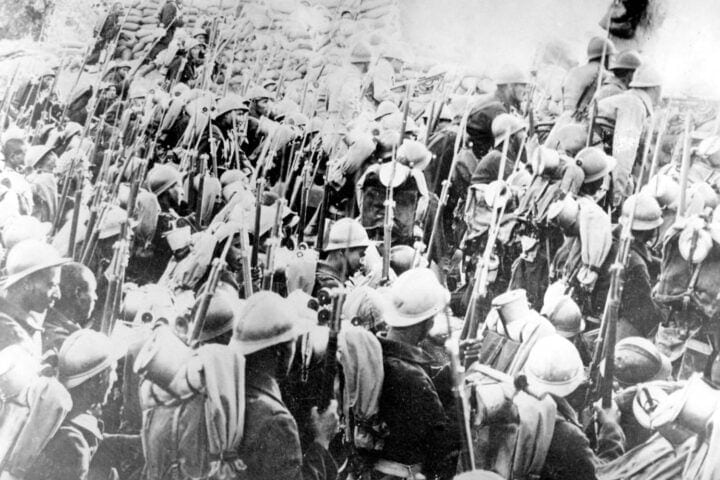
At first, this oneness manifests as a general panic and Dionysian frenzy that grips people around the world as the absolute certainty of death unleashes their most libidinous behavior. Footage of looting, riots, and orgies fills the middle section of the film, but there are also montages of a makeshift pan-religious call to grace and acceptance as sermons by priests and rabbis are interspersed with spiritual practices from non-occidental regions like Asia and Africa. At the same time, Genevieve attempts to rally a kind of one-world government to form to tackle the threat of the comet as a single, united people with a common purpose.
End of the World is the endpoint of Gance’s long-running attempt to grapple artistically and morally with the aftershocks of World War I, and there’s something poetic about such an early work of the talkie era using sound to nakedly call for universality in ways that anticipate Charlie Chaplin’s similarly open-hearted plea for tolerance and love in 1940’s The Great Dictator, a film that was made after the hopes of lasting post-WWI peace had fully collapsed.
But it’s perhaps unsurprising that Gance, a titan of the silent era, should communicate his ideas most directly and beautifully through the most visually driven segments. We see people’s thoughts via superimpositions over their heads and leap into their fantasies via wild, blurred montages of images that don’t fit together in a linear sense but connote a stream of consciousness that bridges multiple perspectives. The overlapping images communicate a coming together of minds far more effectively than the earnest but clumsy speechifying.
Still, even the most bravura sections of the film are undermined by moments where the narrative gaps are plainly visible. As such, End of the World remains a disjointed mess that careens into a finale too confusing to support its melodramatically joyous conclusion.
Image/Sound
Kino’s Blu-ray comes sourced from Gaumont’s 2K restoration, and while it does a fine job of preserving a nearly 100-year-old film, it fails to fully eradicate all instances of scratches and debris. There are numerous speckles and slight discolorations throughout the presentation, though none is obtrusive compared to the mostly strong images that reveal sharp detail in close-ups and stable contrast between black and white. This is likely the best the film will ever look.
The mono audio bears all the drawbacks of early film sound, with a persistent tinniness to all dialogue and sound effects and audibly artificial separation of elements in the post-sync dubbing. These are issues endemic to a technology that was then still in its infancy, but the general lack of hissing or pops attests to the level of clean-up work done on such an old track.
Extras
The disc’s sole extra is a discussion of End of the World with film historians Laurent Véray, Serge Bromberg, Christophe Gauthier, and Léon Rousseau. All four attest to the failure of End of the World in its existing form, but they also offer copious information about Abel Gance’s original vision, helping to fill in the major gaps evident in the released cut’s jumbled narrative. Their breakdown of what was either cut out by producers and destroyed or never shot to begin with only makes the absence of that potentially redeeming material all the more sorely missed.
Overall
Kino’s disc is another necessary reminder of the importance of film preservation, and the included extra does a careful job of detailing the film that never got to exist.
Since 2001, we've brought you uncompromising, candid takes on the world of film, music, television, video games, theater, and more. Independently owned and operated publications like Slant have been hit hard in recent years, but we’re committed to keeping our content free and accessible—meaning no paywalls or fees.
If you like what we do, please consider subscribing to our Patreon or making a donation.