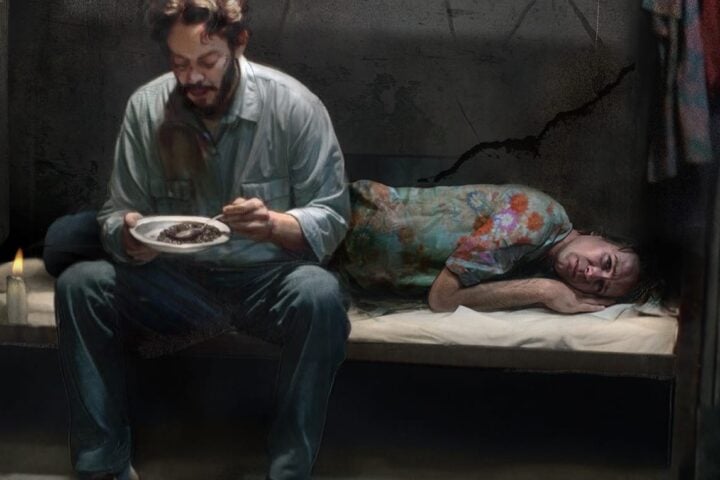
 Jean-Jacques Beineix’s Diva, a gene splice of wish-fulfillment love story and crime noir, hardly intends to deliver a conventional resolution. The film’s flair is palpable, as evidenced by the way two henchmen, the Priest (Dominique Pinon) and the West Indian (Gérard Darmon), drift in and out of the narrative, their goings-on often accompanied by Vladimir Cosma’s propulsive score. The world here suggests a simulacrum of the past, which partly explains why cultural theorist Fredric Jameson once called Diva “the first French post-modernist film.”
Postmodernism marks a moment when copies, simulation, and excess begin to feel more decisive than reality itself—a dynamic that Diva toys with from the start. Jules (Frédéric Andréi), a postman infatuated with an American soprano, Cynthia Hawkins (Wilhelmenia Wiggins Fernandez), who’s never allowed her singing to be recorded, slips into an auditorium and covertly makes a bootleg recording of her performance. As in Blow Out, released the same year, a man’s fixation on recorded sound turns dangerous, though Beineix keeps Diva largely buoyant, refusing the tragic arc of Brian De Palma’s masterwork.
Shot largely on the streets of Paris, Diva embraces a kind of everything-but-the-kitchen-sink realism. It’s often cited as the film that inaugurated what later came to be called “cinéma du look,” a loose constellation of ’80s titles that pulled French cinema toward the visual rhythms of music videos. Critics usually describe the movement as style-forward and surface-driven, more invested in velocity and color than in psychological depth or novelistic plotting. But that shorthand misses how sharply Diva marshals its surfaces. Here, audiovisual movement is the substance itself, creating a sensory world the viewer inhabits as much as watches.
Image/Sound
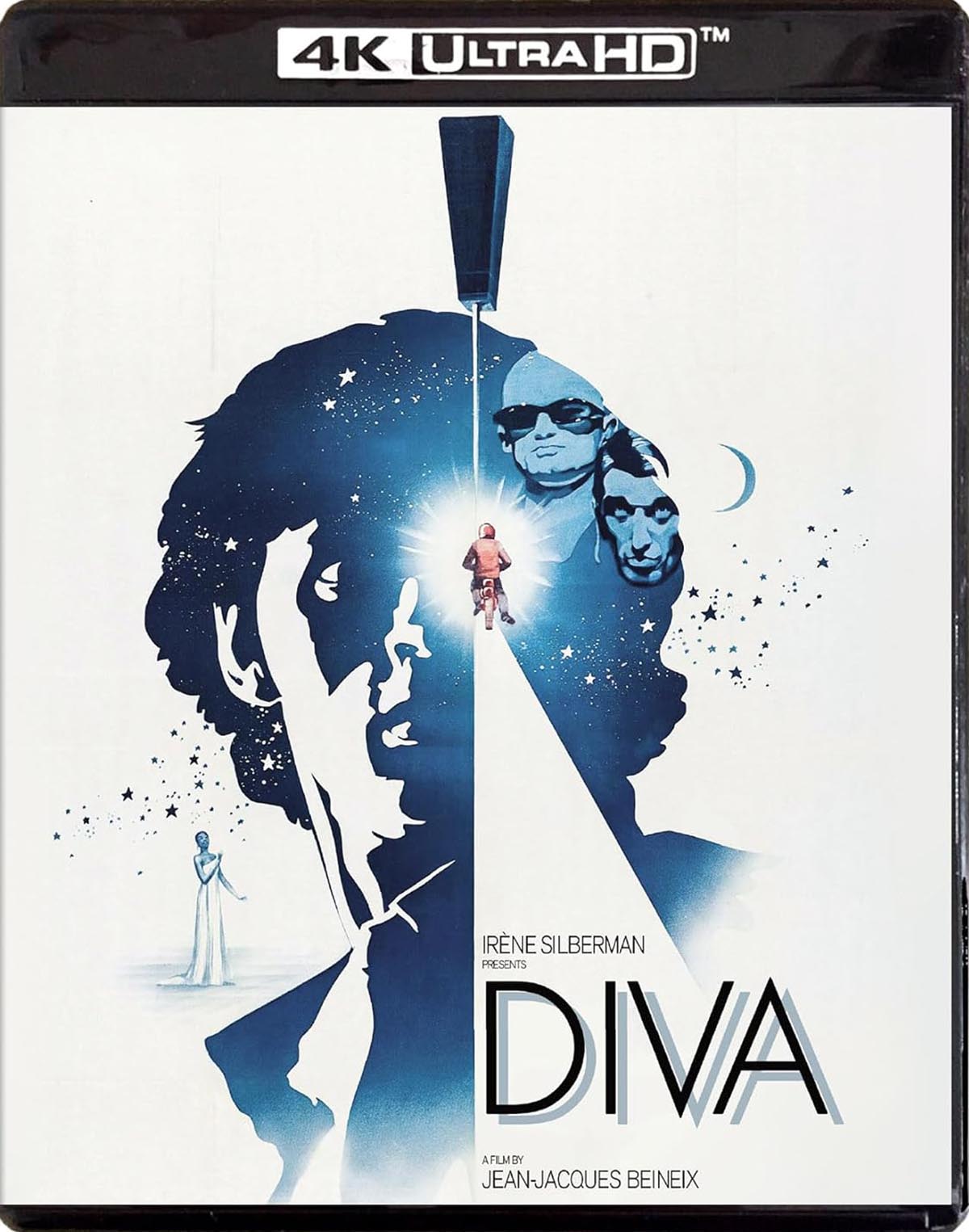
Kino Lorber’s UHD release of Diva presents a 4K restoration completed by TransPerfect Media on behalf of StudioCanal. The transfer is beautifully graded, with colors registering with a clarity and depth unseen in earlier home-video editions of Jean-Jacques Beineix’s film. Grain is very well controlled and blacks are stable throughout, and with no signs of crushing. The French audio track, meanwhile, is full and fitfully dynamic during the film’s more propulsive sequences, while ambiance fills the sound field in nuanced ways during quieter scenes.
Extras
This UHD release contains the same extras as Kino’s 2020 Blu-ray release. Alongside a scene-specific commentary by Jean-Jacques Beineix, the disc includes a smart, relaxed, and impressively researched full-length commentary by critic and author Simon Abrams. Also included are interviews with Beineix, composer Vladimir Cosma, actor Frédéric Andréi, cinematographer Philippe Rousselot, and other members of the cast and crew.
Overall
Between the excellent restoration and the wealth of extras, Kino’s 4K UHD release represents the definitive edition of Jean-Jacques Beineix’s cult classic.
Since 2001, we've brought you uncompromising, candid takes on the world of film, music, television, video games, theater, and more. Independently owned and operated publications like Slant have been hit hard in recent years, but we’re committed to keeping our content free and accessible—meaning no paywalls or fees.
If you like what we do, please consider subscribing to our Patreon or making a donation.