 Though it never sets foot in Southeast Asia, Cutter’s Way is a great Vietnam movie. Like many of the neo-noirs of the 1970s and ’80s, it’s a shaggy-dog story propelled by paranoia and justifiable fear, yet where other films of its ilk derive their tension from unseen omnipotent forces, director Ivan Passer’s opus stems directly from the lingering trauma of veterans and civilians alike. The film begins with the discovery of a corpse in a dumpster, and from there it spirals into the fevered imaginations of its protagonists, who don’t seek the perpetrator so much as someone to blame for their own miserable lives.
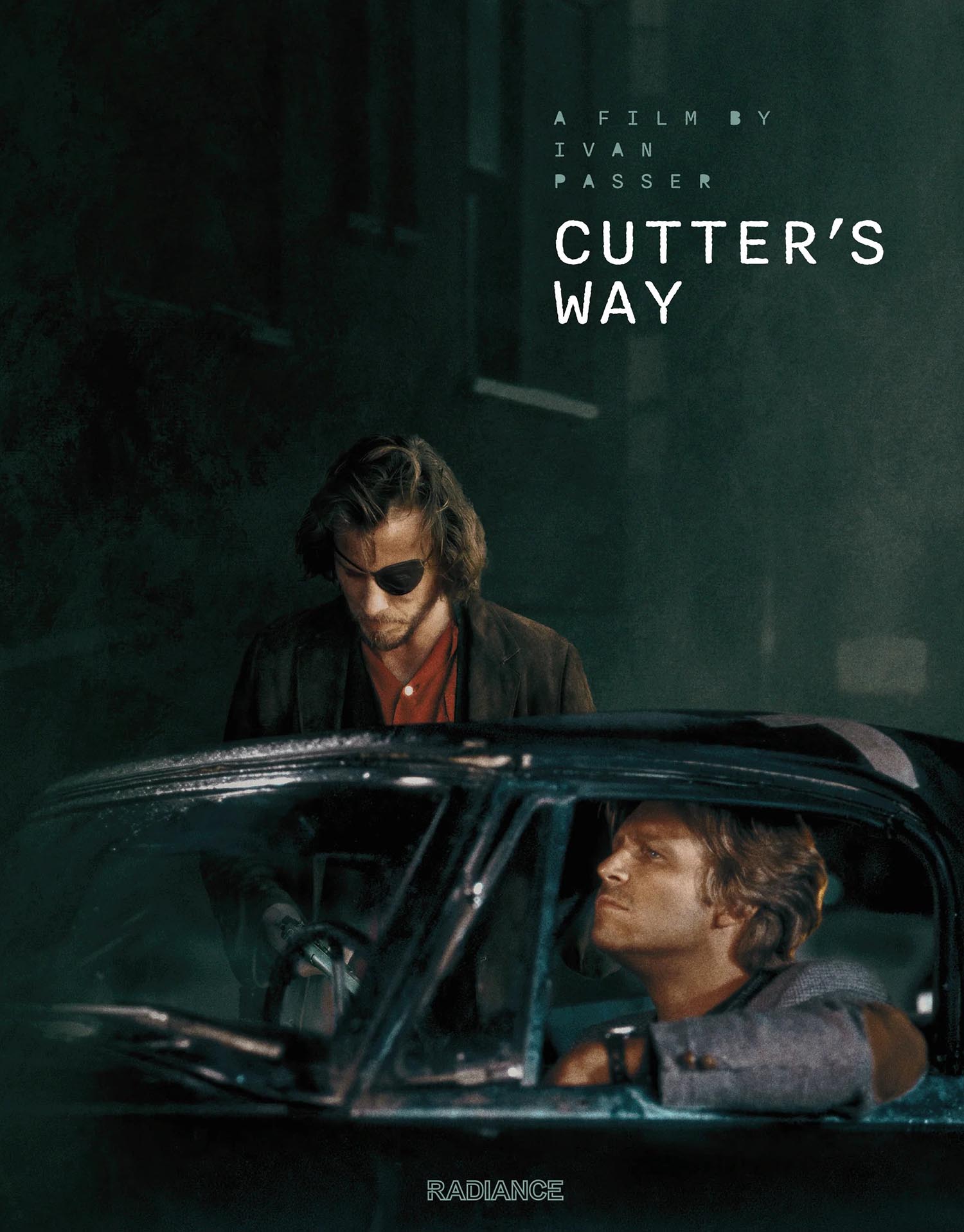
The body in question is found by Richard Bone (Jeff Bridges), a feather-haired gigolo introduced bumming some extra cash from a client and half-heartedly attempting to sell her on a boat. Feckless and aimless, Bone still seems well-adjusted when compared to his best friend, wounded vet Alex Cutter (John Heard). Cutter enters the film referencing Moby-Dick, and with his eye patch and artificial leg, to say nothing of his general furious stupor, he immediately marks himself as an Ahab in search of revenge for his maiming. When Bone tells Cutter of the body, his friend sets out in search of a culprit and quickly settles on J.J. Cord (Stephen Elliott), a local oil magnate.
It’s clear that Cutter’s deduction skills are specious at best, and Bone spends most of the film following along with his friend, less out of conviction than a lack of anything better to do. In a subversive turn, Bridges renders his handsomeness and taciturn delivery as anomie. Bone doesn’t even seem to satisfy his clients, who gaze at his physique post-coitus with a look of mild perplexity, as if they expected more from him. He’s the embodiment of the Me generation at the end of a failed decade, running on fumes and engaging in hedonism out of pure instinct.
Cutter, meanwhile, is trauma incarnate. He’s almost never vertical, either drunkenly sprawled into couches and chairs or hunched over his cane, enhancing his conspiratorial, scheming look as he justifies his hatred for Cord. The friends represent the two polarities of response to the decade, one passive, one aggressive, and together they plot a spectrum of hopelessness.
In the middle lies Mo (Lisa Eichhorn), Cutter’s wife. Drained of life by the stress of tending to her husband and his manic rage, Mo sees so few options for escape that she doesn’t even find camaraderie with Bone, whom she fairly views as someone wasting potential of his own volition instead of being trapped. She forms the top point in a triangle between the two men, above both in intellect and self-regard, but forced to rely on them for support. Throughout, Eichhorn brings an acidic, icy despair to her line deliveries. When Mo tells her husband that she’s like his lost limb, something that his brain only vestigially recognizes, the truth of her statement is so overwhelming that Cutter strikes her out of horrified self-realization more than anger.

In the absence of an unseen force to commit evil against the characters, the film leaves in plain sight the implication that everyday people are as responsible for the state of things as events beyond their control. The question of Cord’s guilt is ultimately incidental, as the evidence for and against his culpability collapses against Cutter’s single-minded desire for revenge against anyone who made it out of the ’70s in better shape than when they went in. If Cord is evil, and the finale approaches that subject ambiguously, it’s of a type both more outlandish and more quotidian than murder, and the response it provokes is as desperate as it is futile.
Image/Sound
There are fundamental limits to how much one can dress up Jordan Cronenworth’s deliberately ugly, desaturated cinematography, but Radiance’s 4K transfer, sourced from an in-house restoration, represents a significant upgrade in picture quality over the previous Blu-ray editions from Twilight Time and Fun City Editions. The browns and yellows of the earthy color palette look richer. The clearest sign of improvement can be found in the hazy exterior shots, which are less blown out by natural light than they were on the previous releases. The mono soundtrack sounds the exact same as it did on the prior Blu-rays, its uncomplicated, dialogue-centric mix still free of any discernible hiss or other artifacts.
Extras
Radiance’s disc ports over Julie Kirgo and Nick Redman’s commentary from the Twilight Time Blu-ray, and the discussion remains an engaging listen for the film historians’ unpacking of the actor-led story and the wider artistic and historical trends of the time. We also get the commentaries from the Fun City Editions release, one by novelist Matthew Specktor and one by assistant director Larry Franco and production manager Barrie Osborne. Specktor focuses heavily on the source material and the film’s renown, while the crew members offer more personal memories of working on Cutter’s Way and how its color-drained look was achieved.
The rest of the disc is loaded up with archival extras, including introductions by Jeff Bridges and French director Bertrand Tavernier and interviews with various members of the cast and crew. A new featurette unpacks the film’s continued influence, with modern crime writers like Megan Abbott and Jordan Harper discussing formative viewings of the film and how it has helped shape their own vision. An accompanying booklet contains new and archival essays by a host of critics who approach the film from angles ranging from the importance of its Santa Barbara setting to Bridges playing against type as an amoral scumbag. A 1995 interview with Passer gets into remarkably granular detail on how he approached the project, from the leeway he gave the actors to shape directorial choices to minute decisions like obscuring the labels of alcohol bottles to prevent even unintended promotion of the poisons killing the characters by degrees.
Overall
Radiance’s UHD of Ivan Passer’s masterful neo-noir is the film’s definitive home video presentation, boasting a new and improved transfer and a bevy of new and old extras.
Since 2001, we've brought you uncompromising, candid takes on the world of film, music, television, video games, theater, and more. Independently owned and operated publications like Slant have been hit hard in recent years, but we’re committed to keeping our content free and accessible—meaning no paywalls or fees.
If you like what we do, please consider subscribing to our Patreon or making a donation.