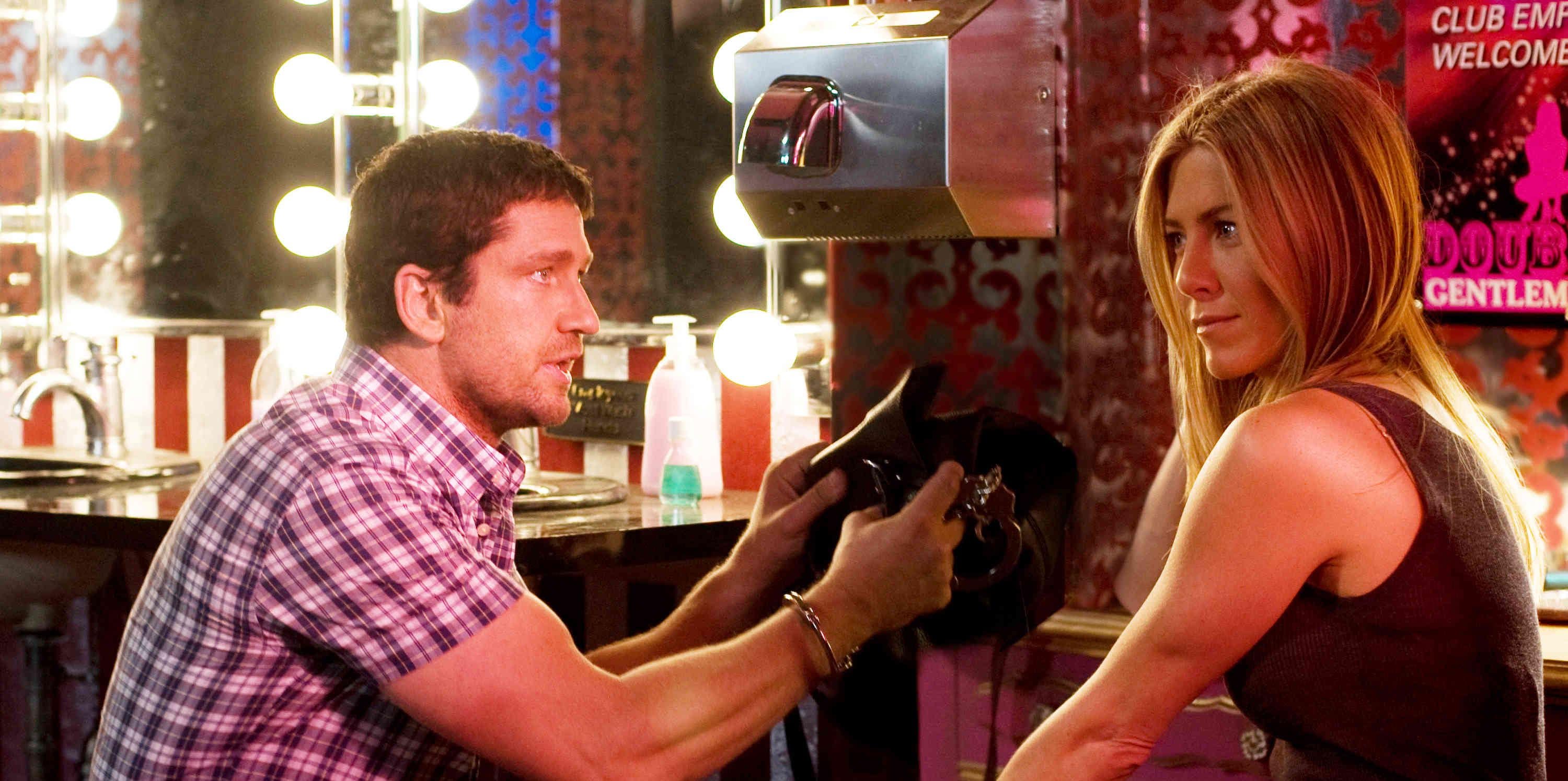
To open Greenberg with a close-up of terminally cute hipster indie starlet Greta Gerwig set to the sounds of the insufferably lame Steve Miller Band’s “Jet Airliner” is to court this particular critic’s immediate ire. And yet as proven by his prior Margot at the Wedding, feel-good affection for his characters isn’t high on Noah Baumbach’s list of priorities, a fact once again evident in his latest, about an inveterate complainer named Greenberg (Ben Stiller) and his on-again, off-again romance with Florence (Gerwig). She’s the personal assistant to the titular character’s successful brother (Chris Messina), who while away on business with his family leaves his L.A. home in the care of Greenberg, a New York transplant and carpenter who’s recently finished up a stay in a mental hospital (apparently caused by his mom’s death), and is now apparently content to “do nothing” except write angry handwritten letters to whatever corporation (Starbucks, American Airlines) has angered him. He’s a glass-half-empty grouch, which is why his former friends Eric (Mark Duplass) and Ivan (Rhys Ifans)—both of whom were in a band with Greenberg before the crank blew it up over egomaniacal artistic-integrity anxieties—greet his return with all the enthusiasm of a sleeping dog, even though Ivan nonetheless exhibits faint interest in reconciliation.
Teaming Stiller with Gerwig and Duplass is Baumbach’s transparent attempt to meld Big Hollywood with mumblecore, but it’s an ill-advised marriage that highlights the fidgety slacker faux-naturalism of the latter’s typical performance style as well as accentuates the affected gravity of Stiller’s “serious” mode. Baumbach is clearly after discomfiting humor, but in Greenberg, laughs come not from squirmy moments but via the times Stiller is allowed a cleverly written outburst or one-liner. Those instances are few and far between, alas, as the story rambles from one slight scenario to the next, whether it be Greenberg and Florence going on a date that ends in an abruptly halted bit of cunnilingus, or an awkward birthday dinner in which Greenberg invites Florence and then, upon her arrival, ditches the table to call his ex (Jennifer Jason Leigh) in the idiotic hope of rekindling their long-dead relationship. It’s all so much mopey-dopey dramedy lacking in import, and while Greenberg’s incapacity for emotional or psychological stability often rings true in a case-study sense (his hang-ups are, if nothing else, consistently conceived in relation to each other and his backstory), it’s nonetheless a mundane stuck-in-a-rut condition of little significance.
Which is, really, a softer way of saying that Baumbach fails to create a compelling case for investing oneself in Greenberg’s quest for self-actualization, even as the film increasingly revolves around its screw-up protagonist’s attempts to halt his screw-uppery. Despite beginning by focusing squarely on Florence, and then opening up its narrative to divide its attention between its two main characters, Greenberg eventually disregards Florence as a three-dimensional figure, relegating her to merely a plot device for Greenberg’s will-he-or-won’t-he personal development. This shortchanges Gerwig, whose discombobulated flightiness grows more endearing as the story ventures into its looser, more natural second act. But more pressing still, it turns the proceedings monotonous, fixated as they become on Stiller’s unmoving portrait of self-destructive lost-soul miserablism.
Shot with strikingly tremulous cinematography awash in discomfiting L.A. sunlight by Harris Savides, the film is honest to itself and its characters, yet that alone isn’t enough to counter the routine droopiness of its premise or execution. Weirdo peripheral players, a pay-attention-to-me pop soundtrack, and—worst of all—a climactic epiphany spurred by the image of a red balloon-man blowing in the noonday wind (shades of American Beauty) strive to inflate the consequence of Greenberg’s saga. Such gestures are all for naught, helpless to elevate what is finally just another trifling tale of a man striving to grow and open up.
Since 2001, we've brought you uncompromising, candid takes on the world of film, music, television, video games, theater, and more. Independently owned and operated publications like Slant have been hit hard in recent years, but we’re committed to keeping our content free and accessible—meaning no paywalls or fees.
If you like what we do, please consider subscribing to our Patreon or making a donation.