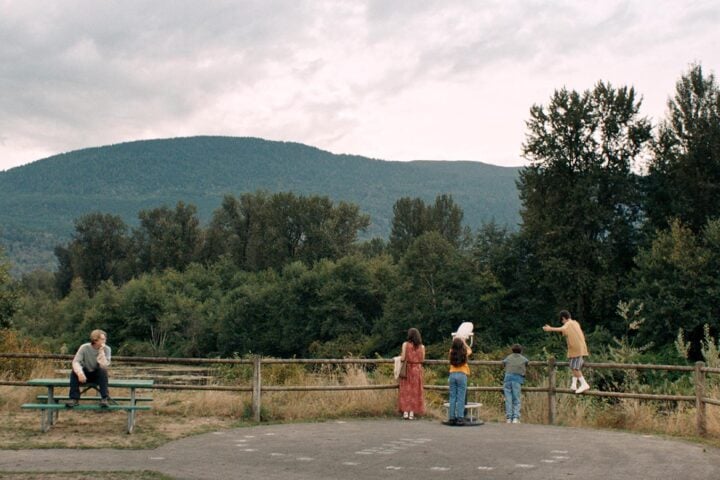
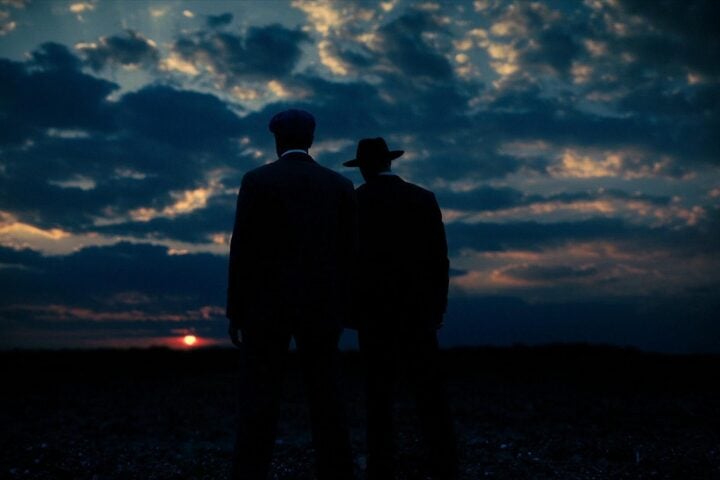
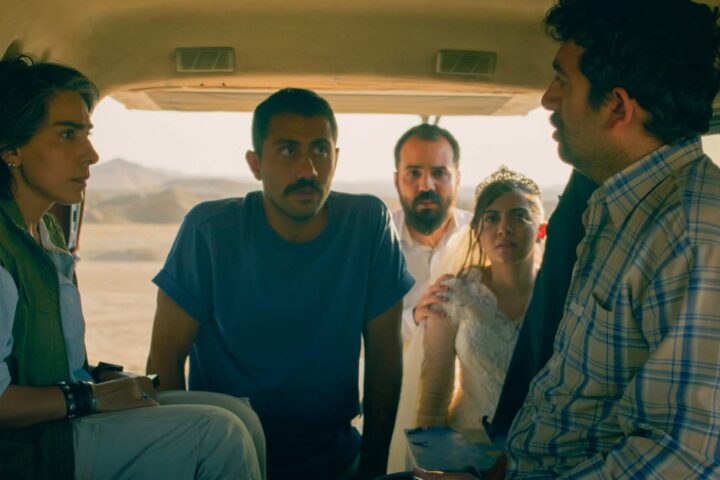
The auteurs had it in 2011, which delivered such a feast of fantastic domestic and international cinema that it’s difficult to remember a year in which it was harder to compile a consensus Top 25. Nonetheless, best-of-year rankings wait for no critic, and our list is practically overflowing with films by young and old masters at the apex of their games, be it Terrence Malick’s sumptuous spiritual odyssey The Tree of Life, Edward Yang’s long-unreleased 1991 classic A Brighter Summer Day, or Abbas Kiarostami’s formalist masterwork Certified Copy. Not that there weren’t new faces making headway into the cinematic upper echelon, as Radu Muntean’s gripping Tuesday, After Christmas and Asghar Farhadi’s blistering A Separation (2010 and 2011 New York Film Festival alums about marital chaos, respectively) signaled the arrival of two major new voices who married aesthetic rigor with empathetic narrative complexity. The year’s most heralded film that no one saw, Margaret, received scant support from Fox Searchlight, leading our own Jaime Christley to start a December petition for the studio to provide screenings and screeners for critics, but plenty of praise from those few fortunate enough to experience Kenneth Lonergan’s epic drama. Many other small, powerful indies (In the Family, Tomboy, Extraordinary Stories) received a similarly undeserved unseen fate, further proving the need for more creative alternate means of new-release distribution. Yet even those with access only to the most marquee art-house offerings were blessed with strong new efforts from David Cronenberg (A Dangerous Method), Pedro Almodóvar (The Skin I Live In), and Martin Scorsese (Hugo). So bountiful was 2011 that it could even sustain a relative dearth of revelatory horror and documentary gems—though from the desolate Tinker Tailor Soldier Spy and barren Meek’s Cutoff to the apocalyptic Take Shelter, there remained, throughout the year’s many great films, no shortage of palpable real-world and existential dread. Nick Schager
Editor’s Note: Click here for individual ballots and list of the films that came in 26—50.
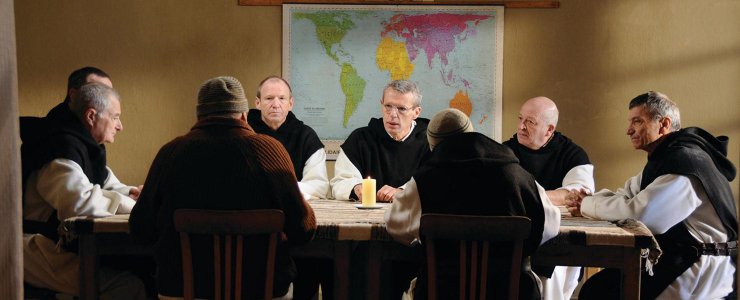
25. Of Gods and Men
“Why is faith so bitter?” pleads one of the eight Trappist monks whose moral crisis animates this humanist drama of devout individuals valuing their lives through an increasingly firm refusal to make saving them a priority. When their contemplative life of prayer and self-sufficiency, along with service to Algerian mountain villagers who rely on them for scarce medical attention and new sneakers, comes under imminent threat of annihilation by a band of local terrorists, writer-director Xavier Beauvois doesn’t render the men as martyrdom-ready saints. Mortal peril doesn’t unhinge them, but is reconciled within the parameters of their religious identities and with the ideal of universal love implicit in their vows. Beauvois is careful to acknowledge the primary suffering of the Muslim population at the hands of the extremists, and the legacy of French colonialism in the monks’ plight, not in guilt-ridden checklisting but as part of a tough, tender vision of an aspiration to healing grace. Of Gods and Men reaches an apex in a late sequence where the brothers share wine and a Tchaikovsky recording, having achieved a resolve that, in a montage of close-ups, shows an existential joy washing over fear. Bill Weber
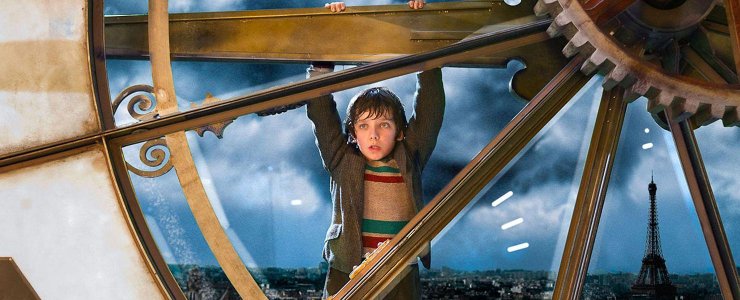
24. Hugo
Hugo, the tale of the titular boy (Asa Butterfield) in 1930s Paris who meets a forgotten but eventually legendary filmmaker, is Martin Scorsese’s most beautiful and entrancing fictional film since his idiotically rejected Kundun. Of course, this film is catnip for cinephiles, as the filmmaker that Hugo encounters is eventually revealed to be Georges Méliès (Ben Kingsley), the magician-turned-director who is said, with A Trip to the Moon, to have made the first science-fiction movie. Méliès’s story is tied in nicely with Hugo’s search for the missing part of his dead father’s automaton, but Scorsese is clearly more concerned with staging a very thinly veiled plea for the kind of film preservation that he’s been tirelessly championing all of his life. While that’s undeniably important and resonant, Hugo touches on a broader truth of greater urgency: the rapid erosion of shared cultural heritage in a contemporary world that prizes disposable quips and sound bites above all else. For two hours, a master filmmaker restores hope in a seemingly endangered medium. Chuck Bowen

23. The Skin I Live In
Pedro Almodóvar’s adaptation of Thierry Jonquet’s novel Tarantula is his most emotionally thorny and complex melodrama since Bad Education. The film’s layered narrative floats the idea that our bodies are, more often than not, the thin membrane that helps us to form our respective identities. If you puncture, reshape, or damage your bodies, we become monsters. Antonio Banderas’s deranged plastic surgeon secretly experiments on a mysterious but alluring victim (Elena Anaya) in his enormous personal estate. And while he plays God, we watch, through a delicately balanced series of interwoven plot threads, as his life and the people who are most immediately affected by his actions fall apart. The Skin I Live In is a yo-yoing cycle of violence where characters struggle to become new people only for their lives fall apart again. The characters’ tragic imperative to fix, to alter, and to recklessly right wrongs by affecting other people’s bodies—Pedro really brings the pathos this time around. Simon Abrams
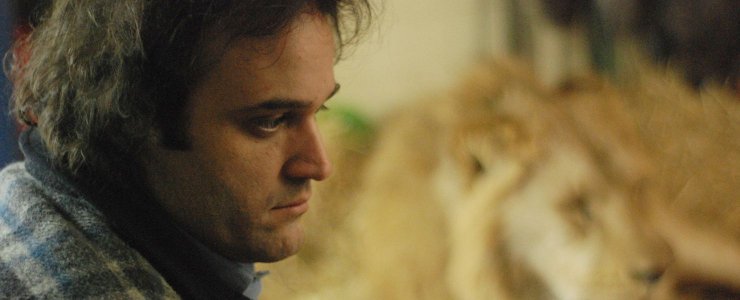
22. Extraordinary Stories
A 240-minute pick-up game between verbal and visual storytelling, Extraordinary Stories begins with a deal gone wrong, frustratingly captured in a static long shot on grainy low-def digital. From there, director Mariano Llinas devotes himself to repeatedly confounding expectations, and each unconventional move—whether it’s conveying reams of story entirely through narration, torrents of language with which subtitles struggle to keep up, trapping a primary character alone in a hotel room for a good chunk of the story, or depicting the movie’s most exciting scene through La Jetée-style still photos—provides the occasion for another nifty bit of sleight of hand, another dazzling escape from a complicated situation. The result is a kind of small masterpiece that also feels warmly overstuffed, bursting with ideas and concepts, an addictive film so full of stories and life that it feels like it could go on forever. Jesse Cataldo
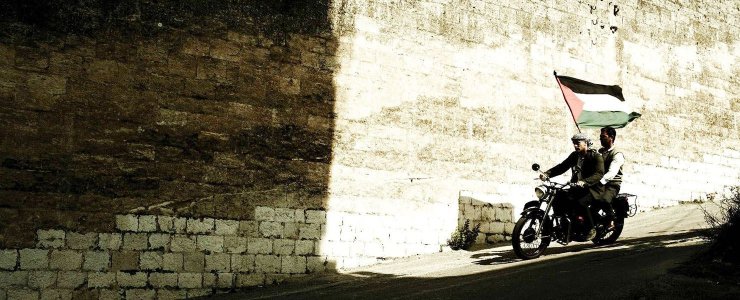
21. The Time That Remains
Everything is a complex allegory enacted by the simplest of all setups in Elia Suleiman’s film about Palestinians living as aliens in their own territory. Although structured similarly to Jacques Tati’s deadpan tableaux and comedy sketches, The Time That Remains’s is a humor more rooted in the acerbic simplicity of popular jokes, that spring up organically as emblems of a culture, than anything cinema has carefully crafted. Like the ones told by the old, mustachioed, wife beater-wearing neighbor in the film who stops by every once in a while to repeat a short anecdote, whenever he’s not unsuccessfully setting himself on fire. Neighbors, in fact, play a large role in the film, coming and going in one another’s homes in a tellingly unceremonious laissez-passer. They are more like functions than actual people, their presences triggering not much more than collective neurasthenia. Beyond its socio-political gravitas, The Time That Remains works so beautifully just as a series of poetic motifs: two men go fishing at night (completely unaffected by lazy calls from guards for identification); a woman writes a letter about yearning to see the clean streets of Amman; a child gets scolded for calling America imperialistic; a school teacher blocks a film projector as it shows a scene of passionate heterosexual kissing (“Girls, he is like a brother to her!”). Diego Costa
20. Tinker Tailor Soldier Spy
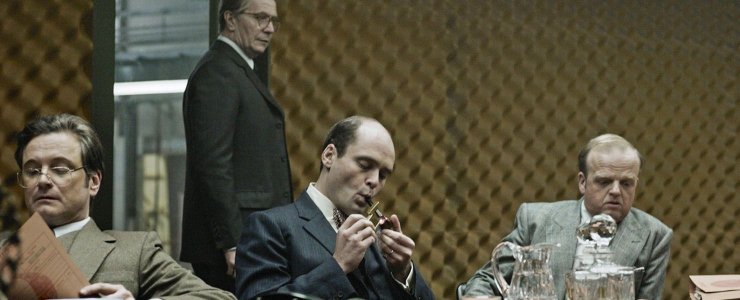
The best episode of Mad Men never made, Tomas Alfredson’s smoke-and-beige-lacquered film of John Le Carre’s 1974 novel doesn’t just focus on Well-Dressed Overgrown Boys, it also locates much of the same sense of proportion, and down-is-up layering of priorities, that underwrites the belief structure of each world. Me before you, ego before country, secrecy before loyalty, bureaucracy and shitty vindictiveness above all. In a deliciously rendered husk of post-imperial Great Britain, Alfredson performs the miracle of transforming Le Carre’s prose—aggressively obfuscatory when it’s not quietly purple—into a tapestry of fragments, half-heard conversations, and indelible details. Almost every actor in Tinker Tailor Soldier Spy is cast against type (Gary Oldman the church mouse, Tom Hardy a mop-topped ragamuffin, Mark Strong a largely decent fellow with a slight case of soul-sickness), but nobody is denied their moment in the sun. Jaime N. Christley
19. Meek’s Cutoff
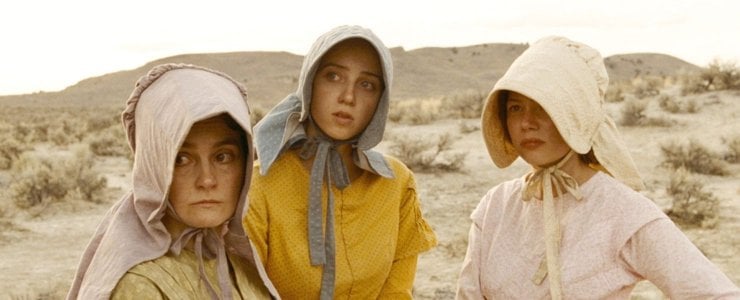
After stripping and reassembling the male-bonding journey movie with Old Joy and the neo-realist weepie with Wendy and Lucy, Kelly Reichardt set her sights this year on the western, perhaps the hoariest and most loaded of American genres. In Meek’s Cutoff, her barebones approach is impressively realistic, imagining a cross-country journey through arid, featureless Eastern Oregon as an exercise in numbing frustration, an approach that more importantly lays the groundwork for the film’s core gender conflict. Preserving the mystical status of the Old West as a place for allegorical fables and origin stories, she shapes this dusty journey into a parable of feminist agency. The westbound wagons of Meek’s Cutoff represent not only the creeping vines of a still-growing nation, but the occasion for one woman’s development, as Emily Tetherow (Michelle Williams) progresses from dissatisfied frontier wife to rifle-wielding voice of reason, a welcome corrective to decades of decisive, bravely trailblazing male heroes. Cataldo
18. Leap Year
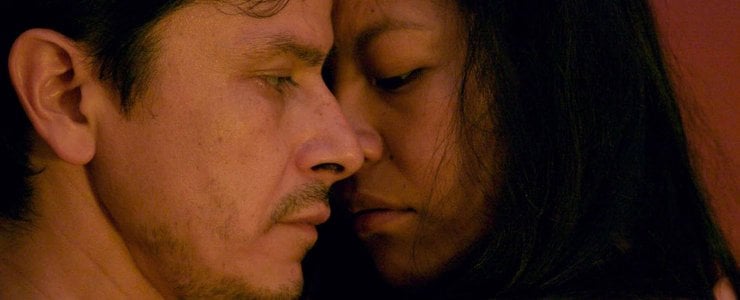
The perversions that take shape when nobody is watching pervades Leap Year, Michael Rowe’s perfectly concise film about an ordinary woman (Monica del Carmen) alone in her apartment in Mexico City. She spends her time eating canned noodles, picking her nose, staring at the walls or at the neighbors, sometimes masturbating to their most banal gestures of intimacy, and, most symptomatically, having sex with strangers who always leave too soon. The rituals, the repetitions, the horror of solitude, as well as the ridiculous fantasies that it harbors—she could be Jeanne Dielman if she charged for her body, or a New Yorker with a Craigslist account. Del Carmen’s realistic portrayal of a seemingly ordinary woman with supposedly extraordinary needs exposes the massive chasm between the performance of everyday life and the existential agony that underpins it. Leap Year is also an astute rumination on Latin American temporality and kinship. Here, time is tracked by whether or not one has already had lunch or dinner, and the family both haunts and suffocates even when, or especially when, it’s the least physically present. Costa
17. A Dangerous Method
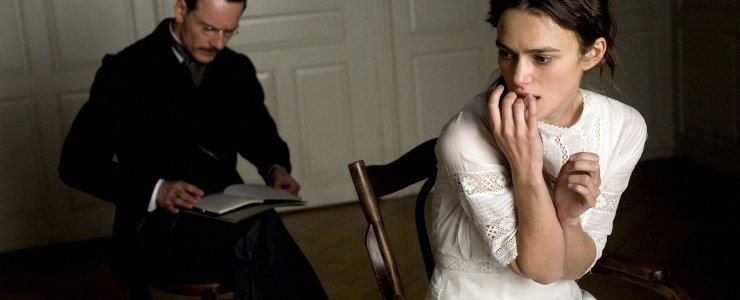
For all the repression and freaky sexuality and obsession and caning Keira Knightley across the ass, A Dangerous Method might be David Cronenberg’s sunniest take on the question of “the new flesh” in all the 40-odd years he’s been contemplating it. Mildly heartbreaking that it should also seem to look forward to two World Wars. It’s also the case that Cronenberg hijacks very proper and very dry prestige material and, in the very act of giving said material the deluxe, clean-lined, hi-fi treatment, finds what may be Patient Zero of all the perversions and blasphemies to come, right in the fabric of the film. It begins with Michael Fassbender’s faithful husband and good doctor Carl Jung applying the “talking cure” to Knightley’s hysterical Sabina Spielrein, who seems beyond help. With perverse precision and spotless period detail, Cronenberg performs the talking cure on his own film at the same time as Jung performs his, unraveling and redeeming the 20th century even as it’s only getting just started. Christley
16. El Sicario, Room 164
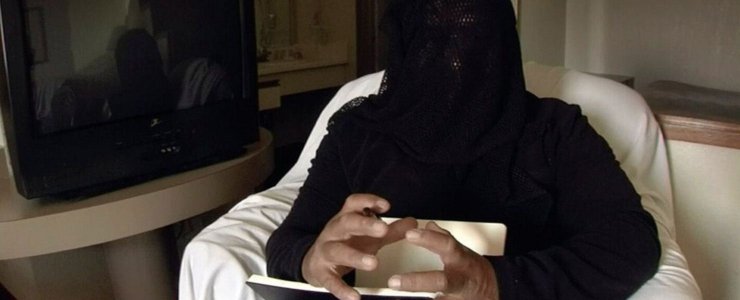
El Sicario, Room 164, one of the most revealing and shocking documentaries ever made about the drug trade, is mostly a series of fixed shots of a masked man talking to a camera. The sicario’s story is a familiar, eerily three-act rise-and-fall crime saga: A young poor child is seduced by a Mexican’s cartel’s vast power and gradually evolves from performing petty errands and crimes to kidnapping and torturing people for maddeningly vague reasons. Eventually tiring of the lifestyle’s accompanying drug abuse and alcoholism, the assassin becomes a pariah in danger of winding up on the wrong end of a gun himself. There are haunting, inventive touches that quietly speak to the matter-of-factness of his dehumanization: The former killer sketches accompanying images on a pad while talking, and he occasionally rises from his chair to pantomime some of his more outrageous acts. These simple gestures, which speak of the effectiveness of elegantly pared filmmaking, suggest a truth, and a disturbing empathy, that more enraged, self-righteous documentaries rarely manage: the terrifyingly casual roots of evil. Bowen
15. Beginners
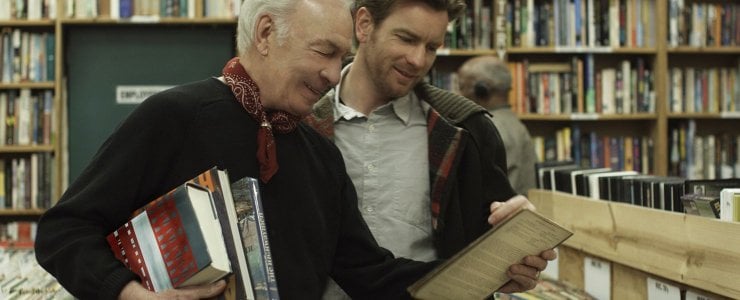
The past—familial, historical, collective—haunts the contemporary in Mike Mills’s beautifully modulated, crystal-eyed Beginners, a relationship drama that employs a fractured flashback structure to precisely situate the present. Built around a trio of superb performances, Mills’s film details Oliver Fields’s (Ewan McGregor) inability to commit to girlfriend Anna (Mélanie Laurent) because of the tensions in his own parents’ marriage, largely the result of his father’s (Christopher Plummer) gayness. But the film is concerned with far more than this somewhat reductive psychology; it’s about the precision of individual experience , which Mills evokes with astonishing exactitude, whether detailing the elder Fields’s late-life involvement in the Los Angeles gay community or in constructing wonderfully offbeat scenes, as when Oliver dons a Sigmund Freud costume (and persona) for a party. Beyond its understanding of individual interactions, though, Beginners views its characters as players in a shifting socio-historical drama, one in which familial roles and concepts of queerness evolve and define the life of a country and its citizens. The series of contextualizing voiceover montages that Mills concocts—melancholic snapshots of different eras—not only entwine the personal and political, but get at the raw heart of lives lived under the shadow of the past, poised for new beginnings. Andrew Schenker
14. Tomboy
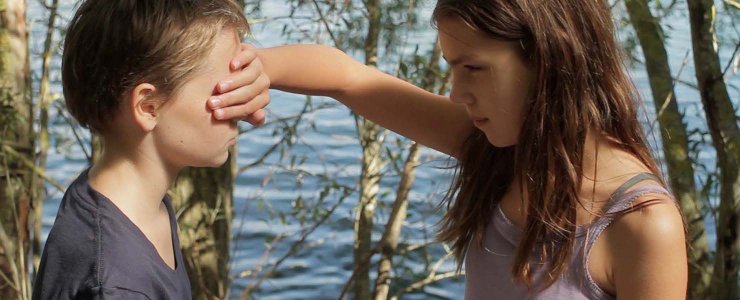
What’s in a name? A kindred spirit of Andre Téchiné, Céline Sciamma is an astute chronicler of difficult emotional terrain and a subtle explorer of young people’s bourgeoning sexual identity. Tomboy, a work of almost bucolic serenity filled with poignant glimpses of the bonds of sisterhood, begins with prepubescent Laure (Zoé Héran) bathed in the Edenic glow of family, a force so mesmeric as to convince anyone of feeling invincible to pain and heartache. And so, after moving to a new town with her parents and sister, a cherubic little thing ostracized by her youth from the very world her older sis seeks to belong to, the sensitive Laure, confused for a boy by a neighbor girl who might not want her if she knew Laure was developing breasts of her own, introduces herself as Michaël. What follows is a tense, impeccably detailed study of all the lies, compromises, and secret negotiations that must take place for Laure to maintain the illusion of belonging to a world dominated by the games forbidden to girls by boys. Ed Gonzalez
13. In the Family
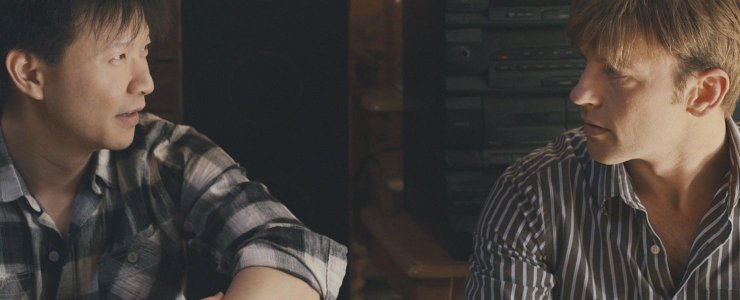
This year saw the release of many impressive debut films, but they all feel weightless compared to Patrick Wang’s ambitious, compassionate, and devastating three-hour masterpiece. The story may seem small and contained on the surface: interior designer Joey (Wang) loses his partner Cody (Trevor St. John) in a car accident, which upends his paternal relationship with Cody’s young son and isolates him further from a surrogate family who were once so close. But there’s nothing minor about the brilliant way In the Family handles regional identity and societal contradictions, themes that are explored during dialogue-driven set pieces where humility and understanding can be found in every pause. With an Ozu-like attention to detail and silence, Wang establishes a palpable sincerity toward Joey’s disintegrating sense of family that never trivializes or moralizes his suffering or scorn. Instead, the film values conversation, the impact of waiting, and the power of optimism. Unlike most sentimental Hollywood schmaltz, In the Family earns its tears by spending long amounts of time with characters we care about, those who speak to each other and not at each other. Most notably, in Wang we have found a major talent, a chronicler of complex emotional collisions and reflections who expresses himself profoundly without resorting to theatrics. Glenn Heath Jr.
12. Film Socialisme
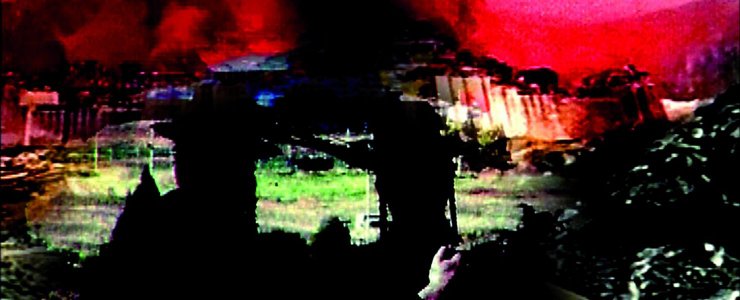
Manny Farber wrote over 40 years ago that no filmmaker matched Jean-Luc Godard in making him feel like an ass. Farber is gone, but Godard, now past 80, continued to intimidate and divide with this latest provocation, a video essay that, particularly in light of world events since its debut, seems inescapably about the end of Europe as we’ve known it. Its first half full of rich metaphorical fun aboard a cruise ship tooling around the Mediterranean, Film Socialisme’s technical palette encompasses stunning HD frames of churning surf and low-grade phone cam to capture neon-lit dancing and drinking, as shadowy characters and a narrator ponder the history of Egypt, Palestine, Odessa, Greece, Naples, and Barcelona. On dry land, a family operating a gas station is embroiled in politics and media attention, though it’s hard to say for certain why a llama and a mule are tethered to the tanks out front, since Godard supplied only “Navajo subtitles” running an average of three words to translate the English-language release. Repeated viewings figure to enlighten, flummox, and assify contemporary Farbers, but Godard’s cryptic travelogue through the past is ambitious and elegiac enough to ponder for the rest of this epoch. Weber
11. Take Shelter
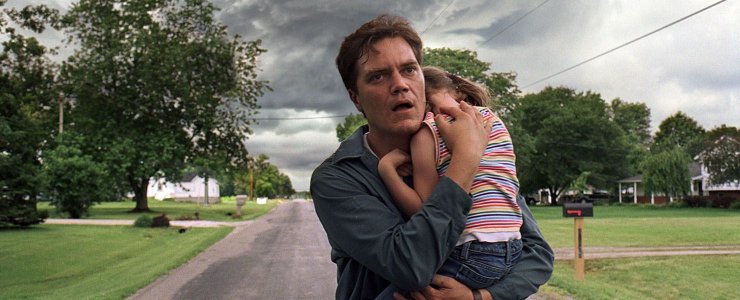
Much has been made of the very last scene in writer-director Jeff Nichols’s powerhouse follow-up to Shotgun Stories. But if this confusing and mostly negligible ending were more important, it wouldn’t be the film’s coda. Take Shelter is more of a study of the fractured psyche of blue-collar family man Curtis (a more-haunted-than-usual Michael Shannon) than it is about the apocalyptic visions that he’s afflicted with. The puissance of the trauma that he experiences is more important than whether or not these nightmarish daydreams actually mean something. Suggesting Hour of the Wolf set in heartland America, Take Shelter is about the working-class Southern gothic milieu that engenders Curtis’s hallucinations. It’s also about how Curtis’s problems immediately threaten his family. Jessica Chastain gives one of the year’s best performances as Curtis’s concerned wife and partner, and the scene where she and Shannon argue about whether or not they should open their cellar’s storm doors is devastating. Abrams
10. Poetry
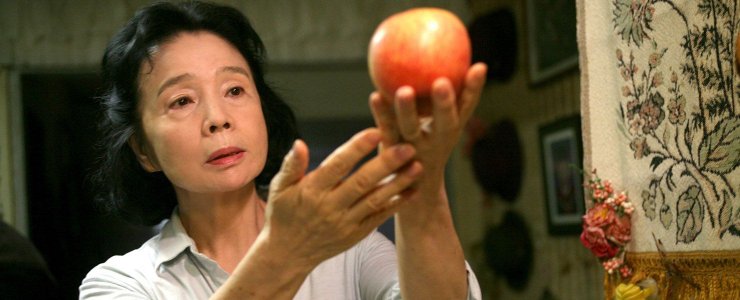
In Lee Chang-dong’s Poetry, a forgetful grandmother (Yun Jung-hee) finds for the first time, at sixtysomething, pleasure beyond self-effacement in her attempt to craft a poem for a writing class. This is an endeavor judged by her acquaintances as either too futile or lofty for someone of her status: “You’re taking a what class?” She seems undaunted in the search for inspiration even when her grandson, for whom she is the de facto mother, takes part in an unspeakable crime. Like Bon Joon-Ho’s Mother, Poetry places the Korean mother as unconditional devotee to her offspring to the point of incestuous sacrifice. They build their diseases together. The son’s heinous wrongdoing works in both films as pleas for proof of a maternal affection that’s never articulated through speech—pleas that are promptly answered by mothers willing to do absolutely anything to save the child, especially if it will keep them from ever growing up. In Poetry, this wordless game is psychosomatized in the grandmother’s Alzheimer’s disease, but also recovered through a kind of linguistic redemption when she begins to give poetic license for apples, flowers, or a flaccid elderly penis, to be something other than themselves. Costa
9. Nostalgia for the Light
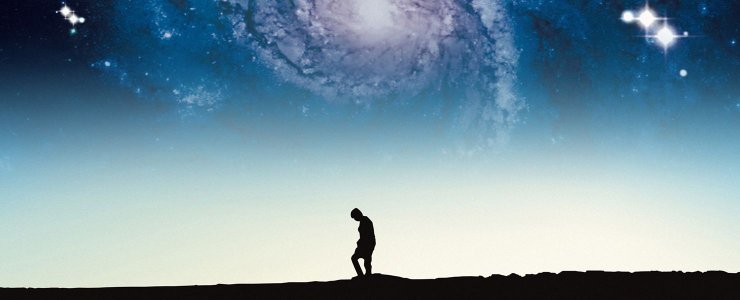
Celestial wonder and terrestrial atrocity make for instructive points of comparison in Chilean filmmaker Patricio Guzmán’s probing, contrapuntal documentary. Set amid the Atacama Desert in the director’s native country, the film follows two groups of searchers, the astronomers who take advantage of the distant locale’s unique propensity to facilitate stargazing, and families of victims from former dictator Augusto Pinochet’s regime who search for the remnants of their loved ones buried deep beneath the land’s arid surface. The legacy of the post-Allende reign of terror has long been Guzmán’s chosen subject, but here he contextualizes the era’s brutality not historically, but philosophically, weaving a rich web of meditations on past and present, the corporeal and the spiritual, the infinite and the achingly human-scale. Although some of Nostalgia for the Light’s compare-and-contrast juxtapositions seem a little too on the nose, this is a work of significant moral and intellectual power, a movie that celebrates humankind’s relentless thirst for knowledge or closure—or really anything larger than itself—and regards that unquenchable need with both awe and a resigned weariness born of too much history. Schenker
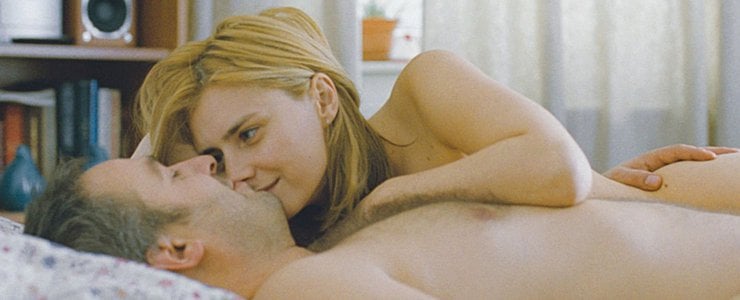
8. Tuesday, After Christmas
I’m not going to lie to you and tell you that Radu Muntean’s Scope-framed portrait of an imploding marriage moves at the breakneck pace of something like Asghar Farhadi’s A Separation. Tuesday, After Christmas is constructed of a series of very, very long takes, and the actors play their scenes at what you might call “life speed,” and there are no Martha Marcy May Marlene-esque violent outbursts that have you dreading the third act. But somehow, unbelievably, in the harmony that comes from the interplay between these two rhythms (glacial camera, uninflected day-to-day domestic life), Muntean’s clear-eyed portrait of a family in trouble—in trouble, but, you know, getting on with their lives—exerts a palpable force on the viewer that makes one feel, for once in a year of concept this and concept that films, like you made an organic connection. Christley
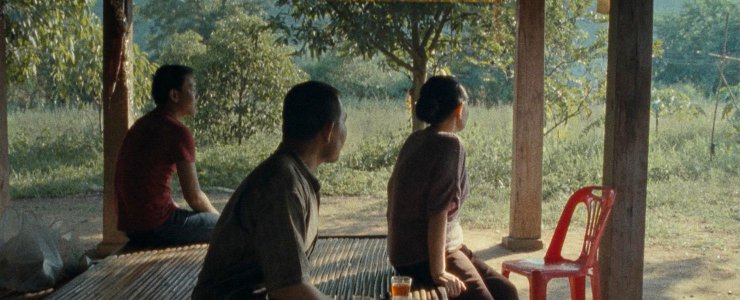
7. Uncle Boonmee Who Can Recall His Past Lives
Man’s intrinsic relationship to animals and nature form the backbone of Apichatpong Weerasethakul’s Uncle Boonmee Who Can Recall His Past Lives, a hazy, hallucinatory work about a bee farmer whose fatal tropical malady summons both the spirit of his dead son—who’s mated with a red-eyed Ghost Monkey to become a furry creature himself—and the ghost of his deceased wife. Politicized notions of silence and guilt creep into the film’s portrait of the past’s influence on the present, and eventually come to the fore through a mesmerizing narrative blending of time and space. Building upon the filmmaker’s favored thematic concerns, Weerasethakul’s latest is defined by its directorial style, full of languorous cinematography and immersive sound design, which creates a hypnotic otherworldly mood of both horror and hope. Just as its characters are in a constant state of physical and spiritual evolution, so too does the film prove a small but stunning progression forward in Weerasethakul’s hauntingly ethereal cinema. Schager
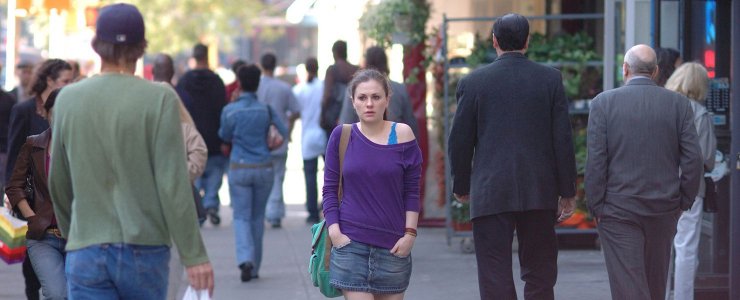
6. Margaret
In Margaret, the eyes have it. Kenneth Lonergan’s follow-up to the infinitely more polite You Can Count on Me begins in tears, with a woman, horrifically run over by a bus and dying in the arms of young Lisa (spectacularly played by Anna Paquin), asking if her eyes are open, and ends with the teen and her mother (a resplendent J. Smith-Cameron) reaching for each over in mutual understanding across a river of tears. And seeing is believing what comes between Margaret’s two operatic bookends: a two-and-a-half-hour snapshot of fear and loathing, conviction and compromise, longing and alienation, in post-9/11 New York City, presented through the point of a view of a teenage girl whose almost sadistic self-absorption is both agony and ecstasy. Bearing the battle scars of a contentious six-year journey from script to screen, Longergan’s film maudit is all frayed nerves, every bit as messy, crazed, and alive with the promise and imagination of its main character. See them, for they may change the world. Gonzalez
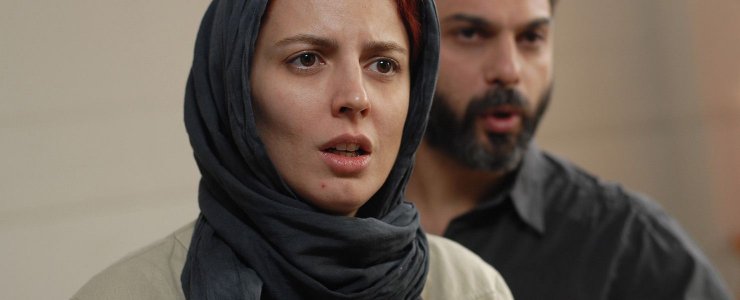
5. A Separation
A Separation opens with a two-shot that quietly informs every other event that will soon transpire in the film. An Iranian couple, Simin (Leila Hatami) and Naader (Peyman Moaadi, in one of the year’s best performances) are appealing to an unseen representative of a family court for a separation. Simin wants to leave the country with Naader and their daughter, but he refuses to leave his father, who’s in the grips of advanced Alzheimer’s. Simin pleads, baring her frustrations and resentments while Naader tries to conceal his confusion and heartbreak to retain a semblance of traditionally masculine dignity. The court representative, apparently immune to the squishy, gray, unquantifiable emotions of the matter, only speaks of cut-and-dried rules and formalities. Sitting side by side, we can tell by their looks and gestures that this couple is still very much in love, but they’ve reached a perhaps fatal impasse. To reveal much more would be unfair, but Asghar Farhadi’s devastating and extraordinary film isn’t a predictable swipe at an antiquated, chauvinistic regime, but a more complex and human exploration of the varying standards—social, sexual, political, monetary—that insidiously imprison all of us. Bowen
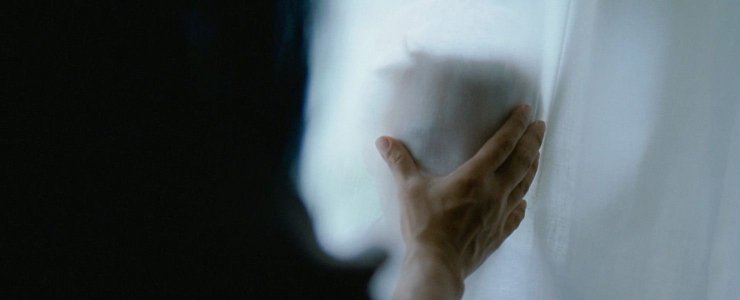
4. The Tree of Life
Terrence Malick returns to the beginning of everything with his latest magnum opus, a spellbinding work that spans eons and comingles the ancient, recent, and present as a means of addressing the writer-director’s guiding preoccupation with the inexorable continuum of life. Throughout, the cosmic is the microcosmic, with The Tree of Life eventually wending its way from the Big Bang to the 1950s Waco, Texas home of the O’Briens (a not-so-subtle proxy for Malick’s own clan) and, specifically, to young Jack (a remarkably candid Hunter McCracken) and his struggle to reconcile his tumultuous inner division between cold nature (represented by Brad Pitt’s hard father) and loving grace (Jessica Chastain’s angelic mother). Working in an elliptical manner that suggests James Joyce and William Faulkner, Malick dispenses with conventional narrative in favor of a free-floating poeticism that casts the material as shards of personal memories ripped from its maker’s subconscious—recollections that, culminating on an otherworldly beach, seem to have been pieced together in a desperate attempt, embodied by sequences of Sean Penn as adult Jack, to achieve a measure of reconciliation, salvation, and transcendence. Schager
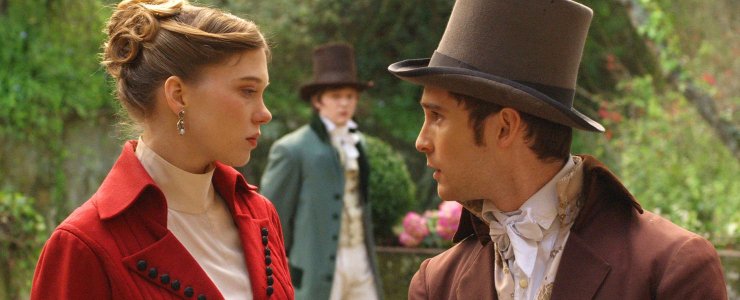
3. Mysteries of Lisbon
Rarely does a cinematic experience swallow you whole, but Mysteries of Lisbon, maybe the closest any film has come to being an epic poem, does just that. Chilean director Raúl Ruiz, who passed away this year at the tender age of 70, injects his simmering passion play about hidden identities and repressed memories with a graceful kinetic rhythm, a sense of cyclical movement that allows an ornate 19th-century Portugal to become an ocean of unrequited love and tragedy. It’s a densely layered filmic landscape where textured interiors and sublime natural light surround an array of diverse characters—orphans, priests, soldiers, pirates, aristocrats—torn between emotional duress and philosophical enlightenment. The film’s demanding temporal and spatial aesthetic, captured by haunting long takes and overlapping audio, creates a narrative Rubik’s cube that keeps turning and twisting until each character has been aligned with their necessary fate. Yet despite its four-hour running time and laundry list of shape-shifting players, Mysteries of Lisbon is a breezy cinematic dream, a film that effortlessly mixes grand ideas (national trauma, historiography) with small emotional truths, ultimately revealing how one can perfectly mirror the other. Heath Jr.
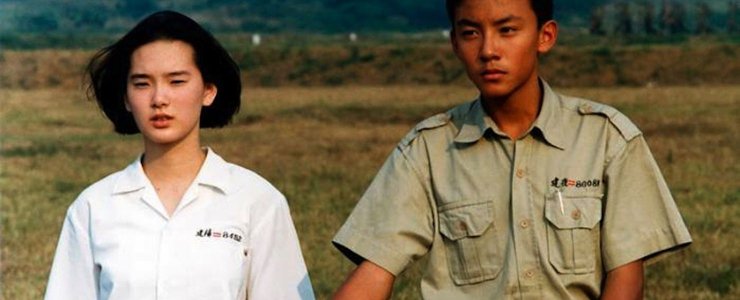
2. A Brighter Summer Day
At last receiving an American release 20 years after its production, the late Edward Yang’s drama of Taipei teenagers and their displaced mainland parents in the early 1960s is an austere, intensely emotional epic. Using only diegetic music (the sounds of Elvis and his western pop peers, heard on radio, phonograph, or covered with phonetic precision by idolatrous Taiwanese youths), it feels like Rebel Without a Cause or Cruel Story of Youth stripped of their lurid melodramatic filter, with gang violence and sexual awakenings viewed at an unromanticized, almost clinical distance, in the shadows of night, by flashlight or streetlamp. Its bursts of juvenile aggression are abrupt and messy (a brick to the head, a kick in the balls, wildly brandished swords) while the chief adult subplot, the unraveling of the central family’s patriarch when the secret police grill him on past associates in Shanghai, climaxes with slow sadism in a spartan interrogation chamber. At nearly four hours, Yang’s evocation of the time and place of his adolescence never plods, but lingers sadly over the gaps between home and exile, desire and madness. Weber
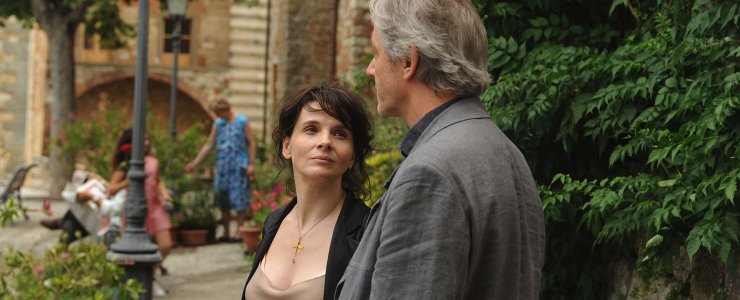
1. Certified Copy
The year’s most subtly intriguing cinematic puzzle is also its best film, a roaming two-hander that’s by turns haunting, confounding, uplifting, and sad. Unnamed art-dealer She (Juliette Binoche) and visiting author James Miller (William Shimmell) wander through the streets of a rustic Italian village, encountering presumptuous baristas, sacred shrines, and hordes of hopeful brides, who blow into the frame like gusts of windblown flowers. Under the guiding hand of an eminent humanist like Abbas Kiarostami, what’s essentially a rambling argument between two often-unlikable people turns into an extended examination of authenticity and imitation, expanding its characters’ love for copies from art to architecture to humanity itself, an open tap endlessly spewing reproductions of itself. Less formally explosive than The Tree of Life, Certified Copy nevertheless solidifies Kiarostami’s reputation as an international director, capable of porting his usual wistful themes and rigorous style onto a modern European setting, telling a story that’s achingly specific but also beautifully universal. Cataldo
Since 2001, we've brought you uncompromising, candid takes on the world of film, music, television, video games, theater, and more. Independently owned and operated publications like Slant have been hit hard in recent years, but we’re committed to keeping our content free and accessible—meaning no paywalls or fees.
If you like what we do, please consider subscribing to our Patreon or making a donation.